
Creating Space for Lens-Based Work in London’s Student Art Community
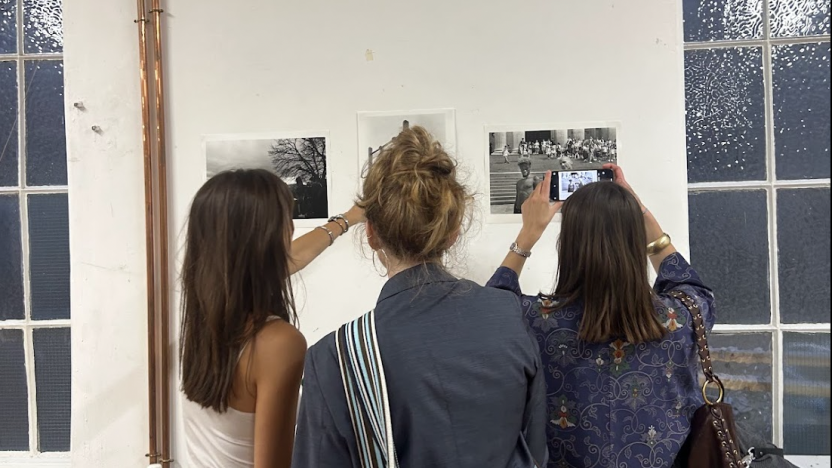
In June 2026, a sparse white room with exposed copper piping became the unlikely home of one of the most talked-about student-led exhibitions in the capital. I’m Nobody! Who Are You?, a photography showcase and moving-image exhibition, brought together eleven emerging artists from art schools across London. The project was organized by Bella Ramón and Rea Tonelli, two MA Art and Business students at the Courtauld Institute of Art, who identified a persistent gap in the student art community and set out to close it themselves.
Their story offers practical lessons for any emerging artist, curator, or student wondering how to build exhibition experience without waiting for institutional permission. Below, we examine why the showcase was needed, how it came together, and what the process teaches about curating, entrepreneurship, and the state of the UK art scene today.
Have you organized a student exhibition, or are you planning your first project? Share your experiences in the comments below and help other readers learn from your journey.
Why Photography Needed a Dedicated Student Platform
The idea for the showcase began with conversations, not a grand plan. Bella, who lived with two photographers, repeatedly heard the same frustration: there were almost no student-led opportunities dedicated to exhibiting photography and moving-image work. Painters and sculptors could find student exhibitions with relative ease, but lens-based artists were largely left out.
This absence has deep roots. Photography has long occupied an uneasy position in the art world, often struggling to receive the same institutional recognition and prestige as traditional mediums such as painting. Although the market for photographic work has matured considerably in recent decades, that legacy of marginalization still shapes how opportunities are distributed across UK art schools.
Bella and Rea believed the situation no longer made sense. Lens-based practices, they argued, provide some of the most compelling ways to engage with the anxieties, joys, and complexities of contemporary life. Both share a longstanding personal interest in analogue photography, and much of their academic work in art history has focused on the histories and innovations of photographic practice. Their solution was characteristically direct: rather than waiting for someone else to create the platform, they would build it.
Choosing a Title That Speaks to Emerging Artists
The exhibition’s name, drawn from Emily Dickinson’s poem I’m Nobody! Who Are You?, reflects the position many emerging artists occupy at the start of their careers: talented and committed, yet largely unknown beyond their immediate circle. The title also hints at the showcase’s purpose — transforming anonymity into connection by gathering photographers who might otherwise exhibit alone, if at all.
From Open Call to Exhibition Night: How the Photography Showcase Came Together
Once the decision was made, the two curators launched an open call and began working out what it would take to bring the project to life. The tasks were numerous and varied: coordinating with artists, managing logistics, overseeing installation, producing a catalogue featuring the curatorial statement and a showcase map, and promoting the event to London’s student art community.
The exhibition that resulted was diverse in both medium and subject. Visitors encountered Andrew Willms’s First-day jitters, a sculptural still life combining a radiator, sprigs of pampas grass, and butterfly wings; Roya Powers’s street photography, which drew small groups of friends studying each frame; and paired black-and-white works by Iñaki Malvido Prada (Ahora Soy Un Sahuaro) and Sasha Smithie (When I close my eyes this is what I see). A moving-image programme featured Yashashree Rajendra Chakole’s Cycle of Self-Silencing, projected onto the gallery wall as visitors circulated with catalogues in hand.
The full list of participating artists included Alejandro Perez Torres, Mu-Chen Lee, Alexandra (Sasha) Kudelnikova, Andrew Willms, Esmé Matthews, Yashashree Rajendra Chakole, Roya Powers, Sasha Smithie, Iñaki Malvido Prada, Oscar Edwards, and Bowen Tang — a lineup that demonstrates how a single open call can surface remarkable breadth of talent within the emerging artist community.
Turning Classroom Knowledge into Curatorial Practice
Organizing the showcase required the two students to translate skills gained through the Courtauld’s MA Art and Business programme from the classroom into a real-world setting. Co-led by Stephanie Dieckvoss and Tom Stammers, the course covers both the history of the art market and the business structures that shape the contemporary art world. Classes were supplemented by talks from gallerists, artists, and other industry professionals, giving students direct exposure to how the art world actually operates.
Planning the exhibition allowed Ramón and Tonelli to put this knowledge to work: artist liaison, installation management, and promotion are all tasks that art business graduates encounter in commercial galleries and advisory roles. For students weighing postgraduate options, the case illustrates an important point — the value of an art business degree lies less in theory than in its application to live projects.
Are you weighing whether a programme in art business or curation is right for you? Explore our related articles for further reading on postgraduate pathways into the UK art world.
“Stay Hungry”: The Advice That Sparked the Project
One moment proved decisive. During a talk with their cohort, Courtauld alumnus Jeremy Epstein, co-founder of London’s Edel Assanti Gallery, reflected on organizing pop-up exhibitions with friends and fellow artists early in his career. His emphasis on creating opportunities — no matter how underprepared you feel — resonated with the two students. His message was simple: stay hungry.
The showcase grew from that same spirit of entrepreneurship and initiative. For emerging artists and students across the UK, the lesson is transferable: most exhibition opportunities do not arrive fully formed. They are built by people who decide that a gap in the community is also an opening.
Know a student artist who needs the reminder? Share this article with a peer who has been waiting for permission to start.
Five Lessons for Curating Your First Student Showcase
Reflecting on the project, the curators identified several takeaways that apply to almost any student-led exhibition or emerging artist initiative:
- Just go for it. Neither organizer had undertaken a project of this scale before. Seeing an idea develop into a successful public exhibition generated pride and momentum that planning alone never could.
- Trust your instincts and stay flexible. Mistakes happened along the way, and things did not always go to plan. Remaining adaptable mattered more than being perfect.
- Expect to learn by doing. Confidence came from making decisions under pressure — a form of professional development no seminar can replicate.
- Invest in supporting materials. A printed catalogue featuring the curatorial statement and showcase map gave the exhibition a professional frame and gave artists a tangible record of their participation.
- Put community at the centre. The showcase’s real achievement was connection: photographers and moving-image artists meeting peers, sharing work, and discovering an audience.
Have questions about curating your first showcase or mounting a photography exhibition as a student? Write to us — we read every message and answer where we can.
What the Showcase Signals for UK Art News and Emerging Artists
Beyond its immediate success, the exhibition reflects broader currents visible in UK art news. Photography’s institutional standing continues to rise, with major collections and galleries devoting increasing attention to lens-based media. At the same time, postgraduate programmes in art business are producing graduates who treat curation as entrepreneurship — creating platforms rather than waiting for them.
Commentators across art blogs UK audiences follow have noted similar student-led projects appearing in other cities, suggesting a wider shift. For the student art community, this is encouraging: each successful showcase lowers the perceived barrier for the next. For emerging artists, it means more routes to visibility outside commercial galleries, which often require existing exhibition histories before they will take a chance on new names.
There is also a lesson here for institutions. The gap that Ramón and Tonelli filled existed partly because photography’s historical status made it an afterthought in student programming. Universities, art schools, and galleries that want to support emerging artists would do well to examine which mediums remain under-served in their own exhibition calendars.
Starting Your Own Photography Showcase: A Practical Checklist
Inspired to act? Based on the Courtauld students’ experience, here is a concise framework for anyone planning a student-led photography showcase:
- Identify a genuine gap. Talk to peers in your student art community and confirm that demand exists for the medium or theme you want to exhibit.
- Issue a clear open call. Specify submission requirements, deadlines, and selection criteria to attract serious emerging artists.
- Secure a space and a budget early. Pop-up venues, university halls, and shared studios can keep costs manageable for a first project.
- Plan the supporting materials. A catalogue, curatorial statement, and exhibition map elevate the event and benefit participating artists long after closing night.
- Promote where artists and audiences already are. Student mailing lists, art blogs UK readers trust, and social channels focused on emerging artists will outperform generic advertising.
- Document everything. Installation shots, press coverage, and artist testimonials become the foundation for your next, larger project.
The Final Word: Nobody Becomes Somebody
Emily Dickinson’s poem toys with the idea that being “Nobody” is a kind of privacy worth defending. For emerging artists, however, the poem’s title poses a genuine question — and the Courtauld students answered it by introducing the “nobodies” of London’s photography scene to one another, and to an audience. The result was not only a successful photography showcase but proof that the student art community can build the platforms it needs.
For readers studying art history, business, or practice, the takeaway is grounded rather than grand: opportunities in the UK art world increasingly go to those who organize, not only those who wait. Whether you are an artist seeking your first exhibition or a future curator testing your instincts, the first step is the same — start.
Planning your own showcase or looking for open calls for emerging artists? Subscribe to our newsletter for UK art news, student exhibition announcements, and practical guides delivered straight to your inbox.