
Courtauld Gallery Announces 2027 Exhibitions: Paula Rego, Turner and Georgia O’Keeffe Lead the Programme
The Courtauld Gallery has announced its full programme of 2027 exhibitions and displays, and it stands among the most significant pieces of UK art news this year. Three headline exhibitions, devoted to Paula Rego, to Turner and the great generation of British watercolourists, and to Georgia O’Keeffe’s New Mexico landscapes, will run at the London gallery throughout 2027, accompanied by a rolling series of focused displays covering everything from Flemish drawing to the Bloomsbury Group.
For regular visitors, students and anyone who follows contemporary exhibitions in the UK, the programme offers a rare chance to see several bodies of work that have never been shown in Britain. Below is a guide to each show, along with practical advice for planning a visit to the gallery at Somerset House. For the latest dates and booking information, check the Courtauld Gallery’s official What’s On page before finalising any travel plans.
Why the Courtauld Gallery’s 2027 exhibition programme matters for UK art
The Courtauld occupies a distinctive position in London’s museum ecosystem. Based at Somerset House on the Strand, it houses one of the finest art collections in the UK, strong in Impressionist and Post-Impressionist painting, Renaissance works and master drawings, within a deliberately intimate, human-scaled building. Unlike the large national museums, the Courtauld concentrates on tightly focused exhibitions built around serious scholarship, and that is precisely what its 2027 programme delivers.
The announced line-up balances three large-scale temporary exhibitions with an ambitious sequence of displays in the gallery’s smaller spaces. Contemporary commissions and a student-curated exhibition round out the year, ensuring that historic and living artists appear side by side. That mix has become a signature of the institution and a benchmark against which other contemporary exhibitions in the UK are increasingly measured.
Paula Rego: Dog Woman (5 February – 23 May 2027)
The year opens with the first retrospective dedicated to the Dog Woman pastels, the series that Paula Rego (1935–2022) created in 1994–95. These large-scale works count among the most striking, sensual and unsettling of her career: crouching, animalistic female figures rendered in rich pastel that revolutionised how women are represented in art.
The series cemented Rego’s reputation as one of the most radical and influential artists of recent decades, and these works have never before been gathered in a single exhibition. Anyone who has followed Rego’s posthumous reception, which has grown steadily since her death in 2022, will recognise this as a defining moment. Expect strong demand for tickets; the Courtauld’s modest scale means capacity is limited, and popular shows routinely sell out at peak times.
Running concurrently in the Project Space is Paula Rego: Pendle Witches (5 February – 23 May 2027), a display of the etchings and aquatints Rego made in 1996 in response to poems by the writer Blake Morrison. The prints draw on the history of the Lancashire witch trials, filtered through Morrison’s recurring themes of grief, violence, misogyny and sexuality. Rather than illustrating the poems directly, Rego built her own narratives from them, a useful insight into how the artist absorbed and transformed her source material.
Turner and the Landscape Generation: Journeys in Watercolour (18 June – 5 September 2027)
The summer exhibition, staged as the Griffin Catalyst Exhibition, gathers four artists who reshaped British art: J.M.W. Turner (1775–1851), John Constable (1776–1837), Thomas Girtin (1775–1802) and John Sell Cotman (1782–1842). Together they formed the pioneering generation that turned landscape watercolour from a minor, topographical craft into a central and ambitious art form, placing the British landscape at the heart of the nation’s artistic identity.
The exhibition traces the journeys that shaped their work: Turner’s travels in Switzerland and Germany, Cotman’s tour of Yorkshire, Constable’s trips to the Lake District, and the Welsh journeys made by Girtin, Turner and Cotman. Masterpieces from the Courtauld’s own collection will appear alongside loans from major UK collections, making this the rare show that reads like a map of Britain and Europe as much as a gallery of pictures.
For anyone interested in how landscape became the defining subject of British art, this will be the essential exhibition of the summer season.
Georgia O’Keeffe: Ghost Ranch (1 October 2027 – 30 January 2028)
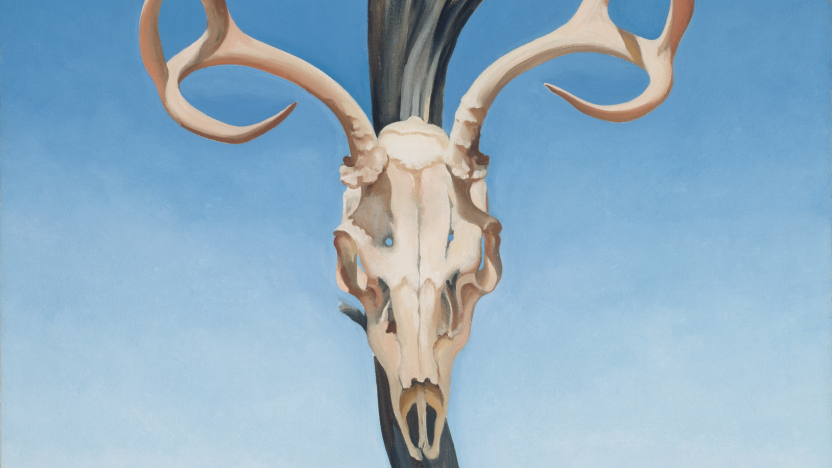
The autumn brings a genuine first: the first exhibition devoted to the landscapes Georgia O’Keeffe (1887–1986) painted at and around Ghost Ranch, her home and studio in New Mexico. Produced over two decades from the mid-1930s to the 1950s, these paintings form one of the most significant and original groups of landscape works of the twentieth century, transcending the conventions of the genre with their bone-dry forms, distant mesas and vast skies.
Nearly two dozen works will travel to London, most of them for the first time. For UK audiences, who have rarely had the opportunity to see this group of O’Keeffe’s paintings together, this is arguably the most significant show in the entire 2027 programme.
A companion display, Georgia O’Keeffe: Photographs at Ghost Ranch, will present around 20 photographs of the artist at her New Mexico home, taken by Philippe Halsman and John Loengard for Life Magazine in 1948 and 1966. Alongside previously unpublished images and rare colour work, it offers a revealing study of how O’Keeffe’s public image was constructed and marketed, an angle that will interest anyone thinking about artists and self-presentation.
The 2027 displays: Bruegel, Rubens and a Bloomsbury rediscovery
Beyond the three headline exhibitions, the Courtauld’s smaller galleries will host a rolling series of displays, a format that suits the collection’s outstanding holdings in works on paper.
Drawing in the Age of Bruegel: New Discoveries (5 February – 16 May 2027)
In the Gilbert and Ildiko Butler Drawings Gallery, this display brings together an exceptional selection of drawings by Flemish artists of the 16th and early 17th centuries, with Pieter Bruegel the Elder (1526/27–1569) as its pivotal figure. Bruegel’s sweeping panoramas and keenly observed scenes of daily life remain astonishing nearly five centuries on, and the display promises new insights into one of Europe’s most influential artistic periods.
Rubens: The Master and his Circle (26 May – 12 September 2027)
Peter Paul Rubens (1577–1640) presided over one of the most dynamic artistic workshops of 17th-century Europe, and drawing sat at the centre of his practice, functioning almost as a way of thinking. This display sets the master’s rapid pen sketches and chalk studies alongside work by the artists who learned from him, including Anthony van Dyck, Jacques Jordaens and Abraham van Diepenbeeck. It is a portrait of a creative network as much as of an individual, and a concise education in how Baroque art spread across Europe.
Vanessa Bell: A Rediscovery (October 2027 – February 2028)
Perhaps the most intriguing display of the year: a pair of painted wooden panels attributed to Vanessa Bell (1879–1961), made at the Omega Workshops in London between 1913 and 1916. Originally the doors of a wardrobe, the panels feature two stylised female figures wearing dresses sold at the Omega from mid-1915. Unseen in public for over a century and held by a single family since 1919, they were generously donated to the Courtauld and have undergone a major conservation project. The display adds a striking new chapter to the gallery’s leading collection of Bloomsbury Group art.
Contemporary commissions and student curation
The programme also keeps the Courtauld connected to living artists and emerging professionals. Artist Ella Walker’s monumental, site-specific canvases in the entrance and ticketing halls, part of the annual Courtauld Commission series, are free to view and remain on display into 2027. From 18 June to 28 September 2027, the Project Space will also host an exhibition curated by students on the Courtauld Institute’s MA Curating programme, a reliable barometer of where curatorial practice is heading.
Planning your visit to the Courtauld Gallery in 2027
A few practical points will help anyone organising a trip around these 2027 exhibitions:
- Diary the dates now. The three main exhibitions run in sequence: Rego in spring, Turner in summer, and O’Keeffe from October into January 2028. The displays change on roughly the same rhythm.
- Book ahead for headline shows. The gallery’s intimate size is part of its appeal, but it also limits capacity. Advance booking is strongly advisable for the Rego and O’Keeffe exhibitions in particular.
- Consider membership for priority access. Becoming a Member of the Courtauld offers a straightforward route to priority entry and repeat visits, which makes sense if you plan to see several shows in one year.
- Look for free access options. Parts of the gallery, including the entrance hall commissions, are free to visit, and the Courtauld runs dedicated programmes for schools, young people and families.
- Combine displays with the permanent collection. The displays are included in a visit, and pairing them with the collection’s Manets, Van Goghs and Renoirs makes for an efficient and rewarding few hours.
To stay informed about ticket releases and programme updates, sign up to the gallery’s newsletter and bookmark its What’s On page; announcements and booking windows often appear there first.
What the 2027 programme reveals about the UK art scene
Read together, the 2027 exhibitions point to several currents in British museum practice. First is the continued rise of historical reassessment: Rego’s Dog Woman pastels and Bell’s Omega Workshops panels are both cases of work being re-examined decades, or centuries, after it was made. Second is the strength of the single-subject, scholarship-led exhibition model at which the Courtauld excels, a format that continues to draw committed audiences even as spectacle-driven shows multiply elsewhere. Third, the pairing of historic painting with photography and contemporary commissions signals a broader trend: contemporary exhibitions in the UK increasingly frame historical material through a present-day lens rather than treating past and present as separate conversations.
For writers, critics and anyone publishing on UK blogs about art and culture, the programme offers rich material throughout 2027, from the Rego retrospective’s questions about gender and representation to the O’Keeffe show’s study of place, image-making and the marketing of an artistic persona.
A standout year ahead at Somerset House
The Courtauld Gallery’s 2027 programme is tightly curated, historically grounded and genuinely ambitious: a first-ever Rego retrospective, a landmark assembly of the British watercolour generation, and the UK debut of O’Keeffe’s Ghost Ranch landscapes, all within a single year. Few institutions of any size can match that line-up, and it confirms the Courtauld’s standing as one of the most consequential galleries in the country.
If you plan to attend, the advice is simple: choose your season, book early, and allow time for the displays, as the Bruegel drawings, the Rubens workshop and the Vanessa Bell panels are as likely to linger in the memory as the main exhibitions.
Which of the 2027 exhibitions interests you most, Rego, Turner, O’Keeffe or the displays? Share your plans in the comments below. And for further reading on London’s galleries and the wider UK art scene, explore our related articles.