
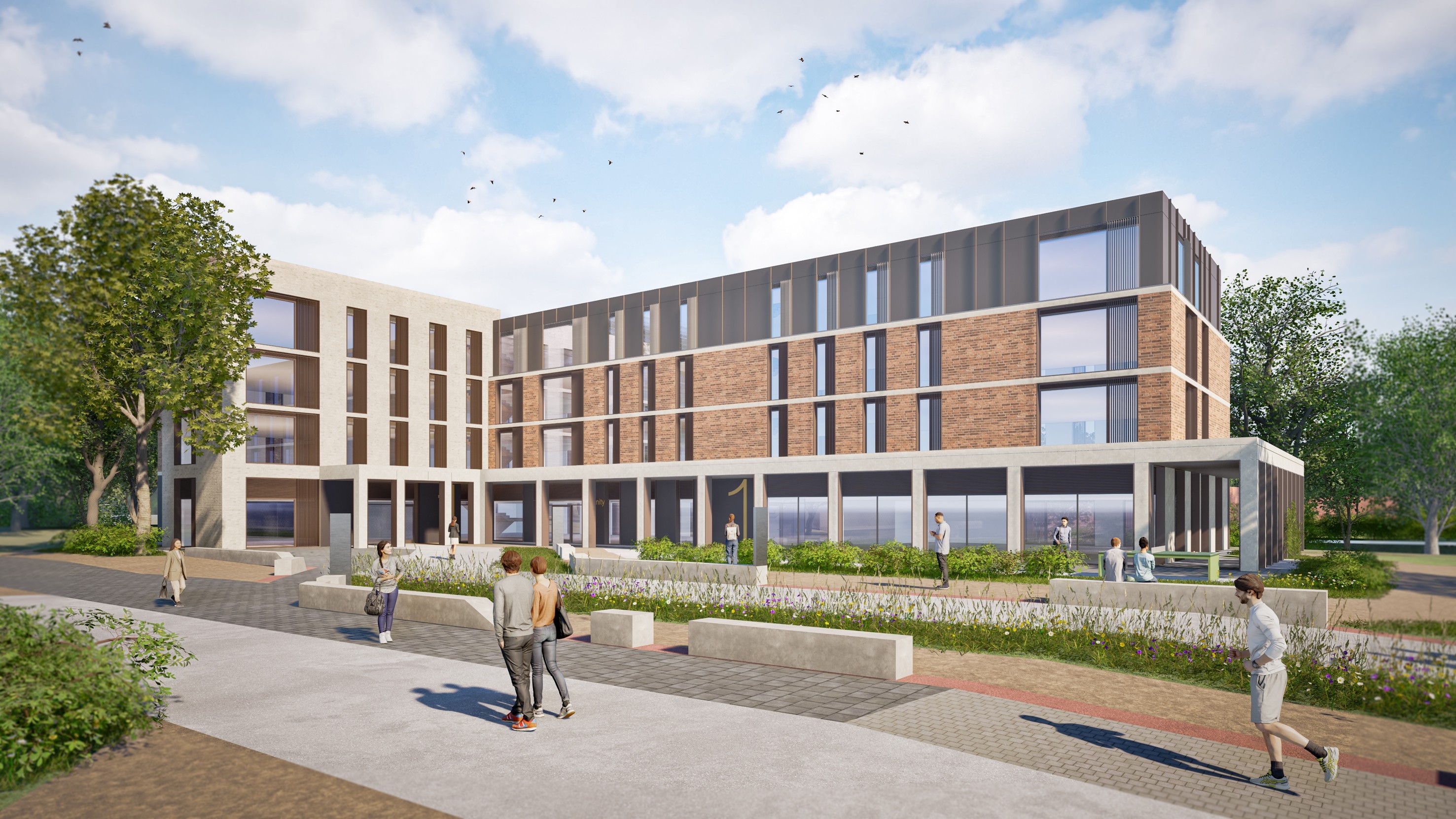
Loughborough University has announced that its newest hall of residence, currently under construction at the heart of its East Midlands campus, will be named after Baroness Sue Campbell, one of the most influential women in sport. The Sue Campbell Hall of Residence will be the first new hall built on campus in seven years, providing just over 550 en-suite bedspaces across five blocks. This development not only addresses the growing demand for high-quality student accommodation but also serves as a lasting tribute to a career that has reshaped British sport at every level, from grassroots coaching to the governance of the Olympic and Paralympic Games.
For prospective students, current applicants, and anyone interested in the intersection of sport, education, and leadership, the story of Baroness Campbell and her connection to Loughborough offers valuable lessons about career progression, the importance of institutional support, and the expanding opportunities for women in sport. This article explores the significance of the new hall, the remarkable career it honours, and what it means for those considering studying at an institution widely recognised as the world’s number one university for sport.
Why Loughborough University Named Its New Hall of Residence After Baroness Sue Campbell
The decision to name the hall after Baroness Campbell reflects far more than a ceremonial gesture. As Professor Nick Jennings, Vice-Chancellor of Loughborough University, explained, the naming recognises “the very significant contribution that Sue Campbell has made to sport, and particularly women’s sport, over the course of her career.”
Baroness Campbell’s journey began at Loughborough itself. She joined the University in 1976 as its first female lecturer in Physical Education, having previously worked as a PE teacher and competed as a national netball player. Her subsequent career path reads like a roadmap of modern British sports administration: Regional Officer for the East Midlands at the Sports Council of Great Britain, CEO of the National Coaching Foundation, CEO of the Youth Sport Trust, and adviser to Government in both the Department for Culture, Media and Sport and the Department for Education and Skills.
In 2003, she was appointed Chair of UK Sport, where she oversaw the successful performance of Team GB and ParalympicsGB at the 2012 London Olympic and Paralympic Games. She later moved to The Football Association in 2016 as Director of Women’s Football, playing a decisive role in appointing Sarina Wiegman as England Women’s head coach, a decision that contributed to England’s triumph at UEFA Women’s EURO 2022. In 2025, she was appointed Chair of England Netball, returning to the sport where her competitive career began.
Her honours tell their own story: an MBE, CBE, and DBE for services to sport, a seat on the crossbenches of the House of Lords as Baroness Campbell of Loughborough since 2008, and an Honorary Doctor of Technology from Loughborough. She was inducted into the Loughborough University Hall of Fame in 2019.
“Sue has long been one of the most influential people in the sector, and a powerful champion for sport education and development, as well as for Loughborough University. It seems fitting to name the hall in honour of someone who has not only helped to shape sport in the UK but also played such an influential part in our own journey to becoming the world’s number one university for sport.”
— Professor Nick Jennings, Vice-Chancellor, Loughborough University
What the Sue Campbell Hall of Residence Offers Students
Beyond its symbolic importance, the new hall represents a substantial investment in the student experience. Scheduled to open from the start of the 2027/28 academic year, the development will provide rooms for both new and returning undergraduate students.
Accommodation Facilities and Location
The hall’s design prioritises both comfort and community. Key features include:
- Over 550 en-suite bedspaces spread across five blocks, ensuring students have private bathroom facilities.
- Self-catered accommodation, giving students flexibility and independence in managing their own meals and budgets.
- Shared study and social spaces designed to foster collaboration, friendship, and a sense of belonging.
- Central campus location, within easy reach of the Edward Herbert Building, DigiLabs Central, the Library, Powerbase, and the Students’ Union.
Professor Russ Marshall, Acting Pro Vice-Chancellor for Education and Student Experience, emphasised the importance of this proximity: “We know that where our students live, and the facilities they have on their doorstep, are important parts of university life. Hall life fosters a real sense of community and belonging, helping to build friendships, networks and connections that last through our students’ years here at Loughborough and beyond.”
For students passionate about sport, living minutes away from some of the best training facilities in the country is a practical advantage. Loughborough’s reputation for sport is built on decades of investment in coaching, sports science, and athlete development, and the new hall places students at the centre of that ecosystem.
Lessons in Leadership: What Baroness Campbell’s Career Teaches Aspiring Sports Professionals
Baroness Campbell’s career trajectory offers a masterclass in how to build influence in the sports sector. Her path was neither linear nor predictable, and that is precisely what makes it instructive.
Start with Practical Experience
Before becoming one of the most powerful administrators in British sport, Sue Campbell was a PE teacher and a national netball player, coach, and team manager. This grounding in practical sport gave her credibility and insight that pure policy experience could not have provided. For students considering careers in sport, this highlights the value of combining academic study with hands-on involvement, whether through coaching, volunteering, or playing.
Build Across Sectors
Campbell’s career moved fluidly between education, grassroots development, elite performance, and government. She understood that influence in sport requires fluency in multiple arenas. A degree from a sport-focused institution like Loughborough provides exactly this multidisciplinary foundation, combining sport science, pedagogy, policy, and business.
Champion the Next Generation
One of Campbell’s most lasting legacies is her work with the Youth Sport Trust, which she led as CEO, and her role in elevating women’s football at the FA. Her appointment of Sarina Wiegman, herself a Loughborough honorary graduate, demonstrates the compounding effect of investing in people. Institutions that prioritise mentorship and leadership development create ecosystems where future leaders emerge.
Students who want to follow a similar path should seek out universities with strong links to national governing bodies, professional clubs, and sports organisations. Loughborough’s placement rates in the sports industry and its network of alumni in senior positions across UK Sport, the FA, and beyond make it a compelling option for those serious about a career in sport.
The Growing Opportunities for Women in Sport
The naming of the Sue Campbell Hall comes at a moment when women’s sport in the UK is experiencing unprecedented growth and visibility. England’s Lionesses won UEFA Women’s EURO 2022 under Wiegman, and attendances and broadcast deals for women’s football, netball, rugby, and cricket continue to rise.
For young women considering careers in sport, whether as athletes, coaches, administrators, scientists, or medics, the landscape has never offered more opportunity. Yet Baroness Campbell’s career is a reminder that these opportunities were hard-won. She became Loughborough’s first female lecturer in Physical Education in 1976, at a time when leadership positions in sport were overwhelmingly held by men. Her progression through roles that had rarely, if ever, been occupied by women required persistence and excellence.
Universities play a crucial role in continuing this progress. Programmes in sport management, sports science, and physical education are producing graduates who increasingly reflect the diversity of the sporting world. Choosing an institution with visible female leadership, both historically and in the present, signals an environment where ambition is supported.
Why Accommodation Matters in Choosing a University
It might seem tangential, but the quality and location of student accommodation genuinely affects academic and personal outcomes. Research consistently shows that students who feel a sense of belonging in their living environment are more likely to persist through their degree, engage in extracurricular activities, and build the professional networks that shape their careers.
The Sue Campbell Hall of Residence is designed with this in mind. Self-catered en-suite rooms appeal to students who want independence, while shared social and study spaces encourage the informal collaboration that often leads to the strongest friendships and, later, the most valuable professional connections. Proximity to the Library, DigiLabs Central, and the Students’ Union means less time commuting and more time engaged in campus life.
For prospective students weighing up their options, here are a few practical considerations:
- Visit in person. Attend an open day and walk the route from accommodation to teaching buildings, the library, and sports facilities. Distance matters more on a rainy February morning than in a prospectus photograph.
- Ask about hall communities. Different halls develop different cultures. Speak to current students about where they lived and what they valued.
- Consider catered versus self-catered. Self-catered accommodation offers flexibility and can be more economical, but requires time management and cooking skills.
- Check application timelines. Popular halls fill quickly, so apply for accommodation as soon as you receive and accept an offer.
Studying Sport at a University That Shaped the Sector
Loughborough University’s self-description as the world’s number one university for sport is backed by consistent top rankings in global sport science subject tables. The University’s influence extends well beyond league tables: its alumni and staff have shaped national policy, led Olympic performance programmes, and driven the professionalisation of women’s sport.
Baroness Campbell is one thread in a broader tapestry. Sarina Wiegman holds an honorary graduate title from the institution. Loughborough athletes and coaches have been integral to British success at successive Olympic and Paralympic Games. The University’s research in sports science, physical activity, and health informs practice at elite and grassroots levels alike.
For students, this means learning in an environment where the curriculum is informed by people who are actively shaping the sector. Guest lectures, placements, and research projects often connect directly to the organisations, governing bodies, and programmes that govern British sport.
Key Facts About the Sue Campbell Hall of Residence
For those researching Loughborough accommodation options, here are the essential details:
| Feature | Detail |
|---|---|
| Name | Sue Campbell Hall of Residence |
| Location | Centre of the East Midlands campus (Loughborough) |
| Capacity | Just over 550 en-suite bedspaces |
| Configuration | Five blocks, self-catered, en-suite rooms |
| Shared facilities | Study and social spaces |
| Nearby facilities | Edward Herbert Building, DigiLabs Central, Library, Powerbase, Students’ Union |
| Opening | Start of the 2027/28 academic year |
| Eligibility | New and returning undergraduate students |
This is the first hall to be built on campus in seven years, underlining the University’s investment in meeting demand for on-campus living. Students applying for 2027 entry and beyond should monitor Loughborough’s accommodation pages for application details and allocation policies.
Applying to Loughborough University: Practical Guidance
If Baroness Campbell’s story and the University’s sporting reputation have sparked your interest, here is a realistic roadmap for turning interest into application:
1. Research Your Course Thoroughly
Loughborough offers a wide range of sport-related degrees, including Sport and Exercise Science, Sport Management, Physical Education, and combined programmes. Review module descriptions carefully, as course structures vary significantly. Consider whether you prefer a science-heavy curriculum, a business and policy focus, or a blend.
2. Attend an Open Day
There is no substitute for experiencing campus in person. Open days allow you to tour facilities, speak to academic staff and current students, and see the accommodation options, including, from 2027, the Sue Campbell Hall itself.
3. Prepare a Strong Application
Admissions tutors look for genuine engagement with your subject. If you are applying for a sport degree, relevant experience, such as coaching qualifications, volunteering with local clubs, or competitive participation, strengthens your personal statement. Reflect on what you learned from these experiences rather than simply listing them.
4. Understand the Accommodation Process
Once you hold an offer, familiarise yourself with the accommodation application timeline. New halls like the Sue Campbell Hall will likely attract high demand, so early application improves your chances of securing a place in your preferred option.
5. Explore Funding and Scholarships
Investigate the full range of funding options, including sports scholarships for talented athletes. Loughborough’s support for high-performance athletes is well established, and combining study with structured athlete development is one of the University’s distinctive strengths.
The Broader Significance of Naming Halls After Sporting Pioneers
University buildings named after individuals do more than honour the past; they shape the aspirations of everyone who lives and works within them. When a student walks into the Sue Campbell Hall of Residence, they encounter a daily reminder that careers in sport can begin in a PE classroom and extend to the House of Lords, to Wembley Stadium, and to the Olympic Games.
For female students in particular, seeing a hall named after a woman whose career broke barriers at every stage sends a clear message: leadership in sport is attainable. Representation in institutional symbols matters, and Loughborough’s choice reflects a broader commitment within UK higher education to recognising contributions that have historically been overlooked.
It also reinforces the connection between university life and the wider sporting ecosystem. Students living in a hall named after the former Chair of UK Sport and Director of Women’s Football at the FA are, metaphorically and often literally, neighbours to the networks that govern their future industry.
Looking Ahead: The Future of Sport Education at Loughborough
The opening of the Sue Campbell Hall in 2027 will coincide with a period of continued growth for sport in the UK. Major events, expanding women’s leagues, and increasing recognition of the economic and social value of sport are creating demand for graduates who combine scientific knowledge, business acumen, and leadership capability.
Loughborough’s investment in accommodation is part of a wider strategy to attract and support talented students from all backgrounds. By pairing world-class academic provision with high-quality living environments, the University positions itself to remain at the forefront of sport education globally.
For the students who will call the Sue Campbell Hall home from 2027 onwards, the opportunity is considerable: to live at the centre of a campus that produced one of British sport’s most influential figures, surrounded by the facilities, networks, and culture that make such careers possible.
Conclusion: A Fitting Tribute and a Foundation for the Future
The naming of Loughborough University’s new hall of residence after Baroness Sue Campbell honours a career that has shaped British sport across education, elite performance, and public policy. It also represents a significant investment in the next generation of students, offering modern, well-located accommodation designed to foster community and belonging.
For prospective students, the message is twofold. First, Loughborough’s reputation as the world’s leading university for sport is grounded in the achievements of people like Baroness Campbell, and studying there places you within that tradition. Second, careers in sport, particularly for women, have never offered more pathways, and the right educational environment can make a decisive difference.
If you are considering a future in sport, whether on the field, in the lab, or in the boardroom, explore what Loughborough University has to offer. Attend an open day, speak to current students, and picture yourself as part of a community that has shaped, and continues to shape, the sporting landscape of the United Kingdom.
Frequently Asked Questions
When will the Sue Campbell Hall of Residence open?
The hall is scheduled to begin opening from the start of the 2027/28 academic year, with rooms available to both new and returning undergraduate students.
Who is Baroness Sue Campbell?
Baroness Sue Campbell is a Loughborough alumna and one of the most influential figures in British sport. She was the University’s first female lecturer in Physical Education, later served as Chair of UK Sport overseeing the 2012 London Olympic and Paralympic Games, and was Director of Women’s Football at The FA, where she appointed Sarina Wiegman as England Women’s head coach. She holds an MBE, CBE, and DBE, and sits in the House of Lords as Baroness Campbell of Loughborough.
What facilities does the new hall offer?
The hall will provide just over 550 self-catered, en-suite bedspaces across five blocks, with shared study and social spaces. It is located centrally on campus, within easy access of the Library, DigiLabs Central, Powerbase, the Edward Herbert Building, and the Students’ Union.
How many new halls has Loughborough built recently?
The Sue Campbell Hall is the first hall of residence to be built on Loughborough’s campus in seven years, making it a notable addition to the University’s managed accommodation portfolio.