
University of Kent and LASE Launch: What the New Four-Campus Access Means for Students
The University of Kent has entered a new chapter. On Monday 7 September 2026, the London and South East University Group (LASE) officially launched, bringing together the University of Kent and the University of Greenwich under a single multi-university group model. For prospective and current students, this is not just an administrative restructuring. It changes what it means to study at Kent in practical, day-to-day ways, from library access to student support services to where a degree might take you after graduation.
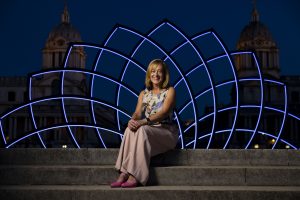
At the heart of the launch celebrations is a giant illuminated sculpture, known as the ‘LASE Gateway’, which began its journey at the University of Greenwich and will tour each of the Group’s four campuses across London, Medway and Canterbury throughout launch week, arriving at the Canterbury campus on Thursday. The sculpture symbolises something more significant than a public art installation: a coming together of four diverse campuses, 50,000 students and 7,000 staff into one connected academic community.
What Is the London and South East University Group?
LASE is a new kind of structure in UK higher education. Rather than a straightforward merger in which one university absorbs another, it operates as a multi-university group. Students still apply to, study at and graduate from their chosen institution, either the University of Kent or the University of Greenwich. Behind the scenes, however, both universities now operate under a single group umbrella with shared strategic direction.
The model took a year of intensive work to develop and required approval from the Department for Education and the Office for Students. On 1 August 2026, the merger legally completed and all Kent and Greenwich staff became employees of LASE, while retaining their existing terms, conditions and pensions. The launch on 7 September marked the public beginning of the Group, timed deliberately ahead of the first academic term so that students would feel the benefits from day one.
For anyone researching UK universities, this development is worth watching closely. Vivienne Stern, chief executive of Universities UK, described LASE as a bold, trailblazing model that other institutions may follow, particularly given the sustained financial pressures facing the university system across the country.
Four Campuses, One Student Community
The most immediate change for students is access. From launch day, all 50,000 students across Kent and Greenwich can access all four campuses in the Group. In practical terms, this means:
- Library access across locations. A Kent student in Canterbury can use the libraries at Greenwich, Medway and the Group’s London sites, and vice versa.
- Student support services where you need them. Students requiring support services can request them at the location of their choice rather than being tied to their home institution.
- Expanded opportunities over time. The LASE leadership team has committed to placing students front and centre of the new Group-wide strategy being developed during the founding years, with services expected to expand beyond the initial offer.
For students, this flexibility can make a real difference. A part-time job in London no longer means losing access to study spaces during the week. A placement in Medway does not cut you off from the support network you have built in Canterbury. The Group model is designed to remove friction between campuses rather than create it.
Why the Illuminated Sculpture Matters
Public art might seem like an unusual centrepiece for a university launch, but the ‘LASE Gateway’ sculpture serves a clear purpose. It makes an abstract organisational change visible and tangible. As the sculpture tours Greenwich, Medway, Canterbury and the Group’s London locations, it creates a shared moment for staff, students and local communities at each site.
Professor Jane Harrington, LASE’s founding Vice-Chancellor and CEO, explained the intention behind the celebration: the sculpture marks what has been achieved to reach this point, welcomes 50,000 students and 7,000 staff, and acknowledges the many thousands more people across the region who stand to benefit. Launch events at Greenwich, Medway and Canterbury brought together university, sector and civic leaders, while Friday 11 September saw the first Group-wide staff gathering, bringing together colleagues from both universities formally for the first time.
For prospective students visiting campuses during open days and tours in the coming months, the sculpture is likely to remain a visible landmark of the Group’s identity, and a useful reminder that the university landscape they are joining looks different from the one their parents knew.
The Financial Context Behind the Merger
Understanding why LASE exists requires understanding the pressures on UK higher education. Professor Harrington was candid about the financial backdrop: domestic tuition fees were frozen between 2017 and 2025, a period that also included significant inflation, the Covid-19 pandemic and a major cost of living crisis. The result has been substantial financial pressure across the sector. More recently, international student recruitment has been affected by changes in government policy and wider geopolitical uncertainty.
Against that backdrop, both Kent and Greenwich spent a year ensuring they were independently in stable financial health before entering the merger. As Professor Harrington put it, this allowed them to come together from a position of strength rather than necessity. The Group model is intended to build on collective strengths, deliver greater benefits for students, and enable more strategic work with industry partners to develop employment opportunities.
Universities UK’s Vivienne Stern framed the launch in a wider context: university leaders across all four nations of the UK are finding creative ways to ensure their institutions can grow and thrive. LASE, built on a 20-year partnership between Kent and Greenwich, is presented as an example of that creative thinking turned into practice, creating a stronger financial foundation that lets both universities build on their strengths and increase their impact.
What This Means for Prospective Students
If you are considering applying to the University of Kent, either as an undergraduate or postgraduate, here is how the LASE launch affects you in practice:
Your Degree Is Still a Kent Degree
You apply to, study at and graduate from the University of Kent. The group structure does not change your qualification, your academic school or the character of your chosen campus. What changes is what surrounds that experience.
Wider Access, Sooner Than Expected
Unlike many institutional changes that take years to reach students, campus access across all four LASE locations began on launch day. If you start at Kent this academic year, you can already use libraries and request support services at any Group campus.
Employment Connections Across a Larger Network
One of the stated ambitions of LASE is to work with industry partners and organisations more strategically, developing stronger employment opportunities for students. A larger group with campuses in London, Medway and Canterbury can engage with a broader range of employers, from capital city industries to regional businesses, and connect students to placements, internships and graduate roles across that footprint.
A Model Built During Financial Uncertainty
It is worth noting for applicants and parents evaluating universities: both institutions entered this partnership from independently stable financial positions. In a period when university finances are under scrutiny, that stability matters for the long-term quality of teaching, facilities and student support.
Questions to Ask at Your Next Open Day
The launch of LASE raises useful questions for any prospective student to explore. If you are attending an open day or campus tour at Kent, consider asking:
- How will cross-campus access develop beyond libraries and support services?
- What does the Group-wide student strategy mean for clubs, societies and social life?
- How will industry partnerships work across the four campuses, and what placements might that unlock?
- Will there be opportunities to study modules or access facilities at other LASE locations?
The founding years of the Group are when the student strategy will be developed, which means current applicants have a genuine opportunity to shape what LASE becomes. Student feedback during this period carries real weight.
A Blueprint for UK Higher Education?
LASE is not operating in isolation. The UK university sector faces a common set of challenges, and institutional leaders are responding in varied ways. The University of Kent and the University of Greenwich have chosen collaboration over competition, building on two decades of partnership to create a structure that both preserves institutional identity and pools resources.
Whether this becomes a blueprint, as Professor Harrington hopes, remains to be seen. But for the 50,000 students who now study within the Group, the immediate reality is straightforward: more campuses, more services and a wider professional network, all while keeping the university they chose as their academic home.
For students in Kent, London and the wider South East, the illuminated sculpture touring the region this week is more than a light display. It marks the moment their university experience expanded.