
University of Exeter’s LEEP Institute at 10: Advancing UK Research on Environmental Challenges, Sustainable Agriculture and Biodiversity Economics
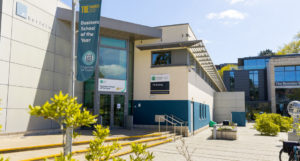
When researchers, policymakers and business leaders gather at the Xfi building at the University of Exeter this September, they will mark ten years of work that has changed how the UK accounts for land. The Land, Environment, Economics and Policy Institute (LEEP), part of the University of Exeter Business School, was founded on a premise that sounds simple but alters everything that follows: food security, climate change and biodiversity loss are not separate problems. They are one problem viewed through different lenses, and the thread that ties them together is how we use land.
The institute’s tenth-anniversary event, “LEEP@10: A Decade of Impact, A Future of Change,” will bring together voices from government, business and academia to review what integrated environmental economics has achieved over the past ten years and to present the ideas that will shape its second decade. For anyone following UK research on environmental challenges—whether as a prospective postgraduate student, a policy professional or a sustainability lead in business—the milestone is worth examining closely, because it shows how rigorous scholarship becomes practical decision-making.
Those considering study or collaboration in this field can explore the University of Exeter’s environmental research and programmes to see where their own interests align with the institute’s agenda.
Why Land Use Sits at the Centre of Environmental Challenges
Every major environmental question of this century eventually arrives at the same decision: what should this hectare be used for? A field can grow food, sequester carbon, host woodland, support pollinators, absorb floodwater or welcome visitors—but rarely all at once, and never without trade-offs. Climate policy, agricultural policy and nature recovery all compete for the same finite area, and decisions made without weighing those trade-offs tend to solve one problem while creating another.
LEEP was built to address exactly this. Its founding principle holds that the central challenges of the twenty-first century are united by land, and its response has been to bring natural science, physical science, economics and social science into a single research programme. Professor Ian Bateman, LEEP’s Co-Director, has described the institute’s focus as turning academic excellence into practical, real-world tools that allow business and government to bring the environment into their decision-making.
Interdisciplinary by design
The approach matters because environmental problems resist disciplinary boundaries. An ecologist can model species decline; an economist can price ecosystem services; a data scientist can map both across millions of hectares. LEEP’s structure places these skills side by side, so that a single analysis can account for carbon storage, food production, water quality, recreation and biodiversity at the same time. That integration is now standard practice in much UK research on environmental challenges, and much of that standardisation traces back to work carried out in Exeter over the past decade.
From Research Papers to Working Tools: ORVAL and NEVO
Research influences policy only when it is usable, and this is where LEEP’s record is strongest. Over ten years, the institute has developed decision-support tools that translate complex environmental and economic data into formats that policymakers, land managers and businesses can actually apply.
ORVAL: measuring the benefits of outdoor recreation
ORVAL, the Outdoor Recreation Valuation tool, helps policymakers quantify the benefits people derive from visiting the natural environment—from health and wellbeing gains to the value of time spent in parks, forests and along coastal paths. Because the tool links those benefits to specific locations, it allows planners to test how changes in land use, such as new woodland or restored habitat, would affect the wellbeing of nearby populations. That converts an abstract commitment to “nature” into numbers that can sit alongside cost estimates in a business case.
NEVO: mapping land-use trade-offs
NEVO, the Natural Environment Valuation Online tool, takes a broader view. It models how alternative land-use decisions affect a range of outcomes simultaneously, including agricultural output, greenhouse gas emissions, recreation and biodiversity. A local authority weighing tree planting against farmland retention, or a development body assessing environmental impacts, can use the model to compare options before committing resources. Both tools embody the same principle: environmental challenges become manageable when their consequences can be measured and compared.
If your organisation faces decisions where land, environment and economics intersect, leave a comment or write to us—our readers include policymakers and practitioners who have worked through exactly these trade-offs.
Biodiversity Economics Moves From the Margins to the Mainstream
Ten years ago, applying economic analysis to biodiversity was a niche concern. Today it informs corporate disclosure requirements, government spending reviews and international agreements, and the University of Exeter has contributed substantially to that shift.
LEEP hosts the Dragon Capital Chair in Biodiversity Economics, a major and distinctive initiative dedicated to reducing the impact of economic activities on biodiversity. The chair’s work addresses a gap at the heart of environmental policy: biodiversity loss is driven overwhelmingly by economic activity, yet economic decisions rarely price the damage. Building the methods to measure that damage—and the benefits of avoiding it—is the discipline known as biodiversity economics, and Exeter is one of the few institutions treating it as a core research priority.
The institute’s regional work points in the same direction. LEEP was a leading research partner in the South West Partnership for Environmental and Economic Prosperity (SWEEP), a collaboration that helped government bodies, businesses and civil society organisations across South West England factor nature into investments and decisions. A separate project with the National Trust and Forestry England examines the economic relationship between natural environments and heritage sites, asking how visits to historic landscapes generate value and how that value can be sustained for future visitors.
Six Centuries of Farming Records Inform Sustainable Agriculture
Among LEEP’s more distinctive projects is one that looks backwards to plan forwards. Researchers are examining 600 years of agricultural records, running from the Middle Ages to the Victorian era, to build the basis for a guide to land use for UK agriculture now and in the future.
What the Past Harvests project reveals
The Past Harvests project treats historical farm accounts, manorial records and estate archives as a long-run dataset on how British agriculture has responded to climate shocks, price swings, disease and changing demand. That history carries practical weight. Periods of extreme weather in the medieval and early modern periods show how cropping patterns, livestock systems and land management adapted—or failed to adapt—when conditions shifted. As UK farming faces hotter summers, wetter winters and volatile input costs, those records offer evidence about which strategies have historically preserved both yields and soils.
For anyone researching sustainable agriculture, the project also demonstrates a methodological point: data-driven environmental research is not limited to satellite imagery and field sensors. Six centuries of archival documents can inform twenty-first-century policy.
Indoor prawn farming and the future of seafood
A second agriculture-focused project looks in a different direction. LEEP researchers are studying how farming prawns indoors on UK farmland could support a thriving, more sustainable seafood industry. The initiative unites land and sea environments in a single analysis: it asks whether agricultural buildings could house aquaculture systems that reduce pressure on wild fish stocks, shorten supply chains and create new revenue streams for farming businesses. It is a clear example of the institute’s habit of testing unconventional ideas against economic and environmental evidence rather than dismissing them outright.
Woodlands, Net Zero and the Next Decade of UK Research
The anniversary programme closes with a subject likely to dominate the institute’s next ten years: trees. LEEP is home to NetZeroPlus, an interdisciplinary research project examining the planned expansion of UK woodlands as part of the government’s commitment to reach net zero greenhouse gas emissions by 2050.
The project’s central insight is that not all woodland delivers the same benefits. Where trees are planted, which species are chosen and what the land was used for beforehand all shape the carbon, biodiversity, water and recreational outcomes of afforestation. NetZeroPlus exists to give policymakers that full picture before large-scale spending and land commitments are made. On 11 September, immediately after the LEEP@10 event, the “NZ+ Live: From Evidence to Action in UK Woodlands” conference at the University of Exeter will bring researchers and practitioners together to discuss how that evidence reaches planting decisions on the ground.
What a Decade of LEEP Means for Students and Professionals
The anniversary carries practical implications for three groups. Prospective postgraduate students interested in environmental challenges should note that the most consequential work in this field now sits at the intersection of economics, ecology and data science—precisely the combination the University of Exeter Business School has built its research around. Policy professionals and analysts will find that the tools and methods developed at LEEP, from natural capital valuation to land-use modelling, are increasingly the standard against which government analysis is judged. And businesses facing sustainability reporting requirements can look to biodiversity economics as the emerging framework for measuring environmental impact credibly.
Three lessons from ten years of impact
- Integration beats silos. The problems that matter—food security, climate change, biodiversity loss—cannot be solved one discipline at a time.
- Tools travel further than papers. ORVAL and NEVO have shaped decisions because they were built for users, not just for citation counts.
- Long-term data pays off. From medieval farm records to decade-long regional partnerships, patience with evidence produces findings that short projects cannot.
As LEEP enters its second decade, the questions it set out to answer have only grown more pressing. Which environmental challenge do you believe should shape UK land-use policy first—carbon, food production or biodiversity? Share your view in the comments below.
For regular coverage of UK research, sustainable agriculture and environmental policy, subscribe to our newsletter, or explore our related articles on biodiversity economics and net zero woodland expansion to continue reading.