UK Tourism Economics Research Gains National Recognition as Surrey Professor Elected Academy Fellow
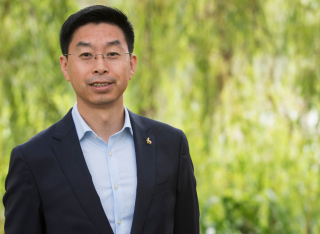
Tourism economics research in the UK has reached a significant milestone. Professor Gang Li, a leading tourism economist at the University of Surrey, has been elected as a Fellow of the Academy of Social Sciences — one of the highest honours available to social scientists in the United Kingdom. The announcement is noteworthy news not only for the University of Surrey but for the wider field of tourism economics, a discipline that increasingly shapes how governments, businesses, and destinations respond to an unpredictable global environment.
Professor Li’s election recognises two decades of research that has helped governments and the tourism industry forecast travel demand, evaluate the effects of tourism policies, and prepare for economic shocks ranging from pandemics to political volatility. For students, researchers, and professionals following developments in UK tourism and economics, this recognition offers a valuable case study in how rigorous academic research translates into real-world impact.
If you are interested in following more developments in tourism economics and applied social science research, explore our related articles covering UK tourism research and industry trends.
Why the Academy of Social Sciences Fellowship Matters
The Academy of Social Sciences is a prestigious body whose Fellowship comprises approximately 1,700 leading social scientists drawn from academia, the public sector, private enterprise, and the third sector. Election to the Fellowship is not something individuals can apply for; candidates are chosen through a process of independent peer review, based on the quality of their work and the tangible public benefit it delivers.
This distinction is important. It means that Professor Li’s election reflects not merely academic output — publications, citations, and conference presentations — but demonstrated influence on policy, industry practice, and public understanding. In a discipline like tourism economics, where research findings feed directly into government decisions on taxation, investment, and destination management, that emphasis on public benefit carries particular weight.
For the UK’s research community, the Fellowship also serves as an indicator of where social science is heading. The Academy brings together economists, sociologists, geographers, psychologists, and management scholars, creating opportunities for cross-disciplinary collaboration. Professor Li himself noted that the Fellowship offers a chance to engage with a community of like-minded thinkers across disciplines and to make the case for the value of socio-economic research in confronting global challenges.
Two Decades of Tourism Forecasting Research
Professor Li’s research career has focused on one of the most persistent problems in tourism: predicting the unpredictable. The tourism industry is uniquely vulnerable to shocks. Pandemics, climate-related disruptions, currency fluctuations, and political instability can all cause sudden and dramatic shifts in travel patterns. Over the past twenty years, Professor Li has developed methods for forecasting tourism demand trends and volatility, giving governments and businesses tools to anticipate — rather than merely react to — these changes.
What distinguishes his approach is the combination of systems thinking and spatial econometrics. Rather than treating tourism demand as a simple input-output relationship, these methods analyse how tourists behave and move across regions, how destinations develop in relation to one another, and how wider economic and social forces shape mobility. This framework has been applied to questions of risk, destination resilience, migration, quality of life, and the broader social and economic effects of tourism.
The value of this work became especially visible during recent global disruptions. When international travel collapsed during the pandemic and then rebounded unevenly across regions, organisations with access to robust forecasting models were better positioned to plan recovery strategies, allocate resources, and support affected businesses. Research of this kind turns what could be crisis-driven guesswork into evidence-based planning.
From Academic Methods to Real-World Policy Decisions
One of the most striking aspects of Professor Li’s career is the breadth of organisations that have used his research. His work has informed decisions at the European Commission, the World Bank, the OECD, the Pacific Asia Travel Association, VisitBritain, and VisitScotland. These are institutions responsible for policy affecting millions of travellers and billions of pounds in economic activity.
Specifically, his research has contributed to decisions on tourism taxation, accessibility policy, investment appraisal, and destination marketing across multiple countries. This is a useful illustration of how academic economics research moves from theory to practice. A forecasting model developed at a university in Guildford can ultimately shape how a national tourism board allocates its marketing budget, or how a government structures taxes on the visitor economy.
For readers considering careers in tourism economics or applied research, this demonstrates an important point: the path to influence runs through methodological rigour combined with a clear understanding of what decision-makers actually need. Professor Li’s methods succeeded because they addressed genuine operational problems — demand uncertainty, policy evaluation, shock preparedness — faced by real organisations.
Those interested in how leading UK universities train the next generation of tourism and economics researchers can learn more about tourism economics programmes and research opportunities at UK institutions.
How Tourism Economics Shapes the UK Economy
Tourism is a cornerstone of the UK economy. The sector supports millions of jobs across hospitality, transport, cultural attractions, and related services, and it generates substantial tax revenue and export earnings. Yet despite its size, tourism is often under-analysed compared with other economic sectors. That is where tourism economists play a critical role.
Accurate demand forecasting helps destinations manage capacity, plan infrastructure investment, and smooth out the seasonal peaks and troughs that strain local economies. Policy evaluation research allows governments to understand whether interventions — such as tax changes, visa reforms, or marketing campaigns — actually achieve their intended effects. Resilience research helps destinations prepare for shocks, whether environmental, epidemiological, or geopolitical.
Professor Li’s leadership roles at Surrey, including his position as Director of the Centre for Competitiveness of the Visitor Economy and Associate Head of School for External Engagement, reflect this bridging function between academic research and industry needs. The Centre’s work exemplifies how UK universities increasingly organise research around real economic challenges rather than narrow disciplinary boundaries.
What This Recognition Signals for the Social Sciences
In his comments following the election, Professor Li made a compelling argument for why social sciences matter: the most pressing challenges facing society are, at their core, human challenges. Climate change, demographic shifts, artificial intelligence disruption, and global mobility all ultimately revolve around how people make decisions. Social science research helps societies understand those decisions so that meaningful adaptations become possible.
This framing is particularly relevant for tourism, an industry defined entirely by human decisions about where to go, when to travel, and how to spend. As climate change alters destination appeal, as populations age in some regions and grow younger in others, and as technology reshapes how travel is booked and experienced, the demand for rigorous social science analysis of tourism will only increase.
University leaders at Surrey emphasised this point in their congratulations. The Dean of Surrey Business School highlighted the Fellowship as an opportunity to champion the value of socio-economic research, while the University’s Pro-Vice-Chancellor for Education noted that Professor Li’s forecasting work has shaped policy internationally — exactly the kind of real-world impact that modern research institutions strive to achieve.
What are your views on the growing importance of tourism economics in policymaking? Share your thoughts in the comments below.
Lessons for Aspiring Tourism Economists and Researchers
For students and early-career researchers inspired by this news, Professor Li’s career offers several practical lessons.
First, longevity and focus matter. Two decades of sustained research on a clearly defined problem — tourism demand forecasting and volatility — produced a body of work substantial enough to earn national recognition. Depth of expertise, built over years, is difficult to replicate and highly valued by both academia and industry.
Second, methodological versatility creates opportunity. By combining systems thinking with spatial econometrics, Professor Li developed tools applicable across many questions: risk analysis, resilience planning, migration studies, and quality-of-life research. Researchers who master multiple methods can address a wider range of problems and collaborate across disciplines.
Third, engagement multiplies impact. Research that sits in journals influences few people; research that reaches the European Commission, the World Bank, and national tourism agencies shapes decisions affecting millions. Aspiring economists should seek opportunities to work with practitioners, contribute to policy consultations, and communicate findings beyond academic audiences.
Finally, the recognition itself — election as a Fellow of the Academy of Social Sciences — demonstrates that the UK research ecosystem does reward public benefit alongside academic excellence. For those weighing career paths in applied economics, that is an encouraging signal.
For regular coverage of UK tourism developments, economic research breakthroughs, and higher education news, subscribe to our newsletter to stay informed.
Looking Ahead for UK Tourism Research
Professor Gang Li’s election to the Academy of Social Sciences arrives at a pivotal moment for tourism. The industry is rebuilding after years of disruption while simultaneously confronting structural challenges: climate pressures, evolving traveller expectations, and technological transformation. The forecasting methods, policy evaluation frameworks, and resilience research championed by economists like Professor Li will be essential to navigating this landscape.
For the University of Surrey, the honour reinforces its position among the UK’s leading institutions for tourism and business research. For the wider community of tourism economists, policymakers, and industry professionals, it is a reminder that rigorous social science research delivers measurable value — informing taxation decisions, guiding investment, and helping destinations withstand shocks.
As the Academy’s Fellowship brings together 1,700 of the UK’s foremost social scientists, the inclusion of a tourism economist within its ranks signals the discipline’s growing centrality to national and global policymaking. Readers who want to dig deeper into the methods and institutions shaping this field are encouraged to explore our in-depth resources on tourism economics and UK research institutions.
The news from Surrey is, ultimately, about more than one individual achievement. It reflects the maturing of tourism economics as a discipline, its demonstrated value to governments and businesses, and the increasing recognition that understanding human behaviour — the essence of social science — is fundamental to addressing the challenges of the modern world.
Have questions about tourism economics research or career pathways in the field? Write to us — we welcome enquiries from students, researchers, and industry professionals alike.