
Signapse and the University of Surrey Earn THE Awards 2026 Shortlisting for Deaf Accessibility Through AI Innovation
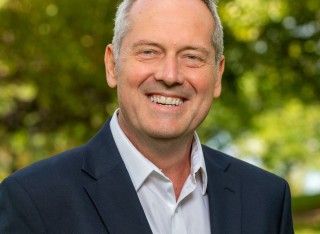
In a significant milestone for both the technology sector and the global Deaf community, Professor Richard Bowden and Signapse.ai have been shortlisted for the Knowledge Exchange / Transfer Initiative of the Year category at the THE Awards 2026. This recognition highlights how university-led AI innovation can move beyond the laboratory and deliver measurable, life-changing impact. For the estimated 70 million Deaf sign-language users worldwide, the work being recognised represents a meaningful step toward closing a long-standing accessibility gap in digital and public spaces.
This UK news story matters far beyond academic circles. It demonstrates how research institutions can translate cutting-edge computer vision and machine learning into practical tools that address real-world exclusion. In this article, we explore what Signapse does, why the THE Awards shortlisting matters, and what this development signals for the future of Deaf accessibility technology.
Why the THE Awards Shortlisting Matters for AI Innovation
The Times Higher Education (THE) Awards are among the most respected accolades in UK higher education. Each year, they recognise outstanding contributions across research, teaching, leadership, and knowledge exchange. The Knowledge Exchange / Transfer Initiative of the Year category specifically celebrates projects that successfully transfer academic research into tangible benefits for society and the economy.
Being shortlisted in this category is not simply a matter of technical achievement. It signals that the judging panel found clear evidence of real-world impact — in this case, the deployment of AI-powered sign-language translation in environments where Deaf people have historically been excluded from timely information.
For universities and research teams, the shortlisting also serves as a case study in how to build innovation ecosystems that prioritise societal benefit alongside commercial outcomes. The University of Surrey’s approach — nurturing a spinout company from academic research and deploying it in critical infrastructure — offers a model that other institutions are watching closely.
Want to stay informed about breakthrough developments in accessibility technology and UK research? Subscribe to our newsletter for regular updates on the innovations shaping inclusive technology.
Understanding the Digital Exclusion Challenge for Deaf Sign-Language Users
To appreciate the significance of Signapse, it helps to understand the scale of the problem it addresses. Around 70 million people worldwide use sign language as their primary means of communication. Despite advances in digital technology, the vast majority of online content, public announcements, and time-critical information remains inaccessible to this population in real time.
Consider a common scenario: a traveller at a busy railway station hears an announcement that their platform has changed or their train has been cancelled. For a hearing person, this information arrives instantly. For a Deaf sign-language user, that same announcement may go completely unnoticed — potentially causing missed connections, safety risks, and significant daily frustration.
Human interpreters provide an invaluable service, but they cannot be present in every station, airport, hospital, or public venue at all times. The cost and logistics of providing continuous human interpretation across thousands of locations have made universal accessibility an impractical goal — until developments in AI changed the equation.
The Limitations of Earlier Approaches to Sign-Language Translation
Prior efforts at automated sign-language translation relied heavily on graphical avatars. While these represented an early step forward, they struggled to capture the nuance, fluidity, and subtlety of human sign language. Sign languages are not merely sequences of hand shapes; they incorporate facial expressions, body posture, rhythm, and spatial grammar that convey meaning as much as the signs themselves.
Avatars that miss these subtleties risk producing translations that feel robotic, unnatural, or — worse — misleading. For Deaf users, this creates a barrier of a different kind: technology that technically “works” but fails to communicate with the fluency and cultural authenticity that effective communication requires.
This is precisely the challenge that Signapse set out to solve differently.
How Signapse Delivers Photo-Realistic Sign-Language Translation
Signapse, a University of Surrey spinout company, has developed technology that automatically translates text — both online and offline — into real-time, photo-realistic sign-language videos. Rather than relying on animated avatars, the system produces videos featuring realistic human motion, preserving the natural subtleties that make sign language comprehensible and culturally authentic.
The implications are substantial. Where a graphical avatar might render a phrase in stilted, mechanical motion, Signapse’s approach generates translations that feel genuinely human. This distinction is not cosmetic — it directly affects whether Deaf users can rely on the translations in high-stakes situations.
Professor Richard Bowden, Professor of Computer Vision and Machine Learning at the University of Surrey, has emphasised that the goal is not to replace human interpreters or translators. Instead, Signapse aims to provide accessibility where it is currently not available — filling gaps in provision that have persisted for decades.
Currently, the technology is already deployed in a practical, high-impact setting: translating time-critical travel announcements in UK railway stations and international airports. This deployment demonstrates that the technology can operate reliably in live, mission-critical environments where accuracy and speed matter.
Are you working in transport, healthcare, education, or public services? Get in touch with our team to discuss how emerging accessibility technologies could be applied in your sector.
Leadership Perspectives on Research with Purpose
The shortlisting has drawn strong support from across the University of Surrey’s leadership. Professor Lisa Collins, Pro-Vice-Chancellor for Research and Innovation, described Signapse as “a great example” of the university’s ambition to conduct research with purpose — work that is developed into something making a real difference for Deaf sign-language users.
This framing is important. It reflects a broader shift in how research excellence is being defined and evaluated. Increasingly, funders, ranking bodies, and governments are looking beyond publication counts and citation metrics to assess whether academic work produces meaningful societal outcomes. The THE Awards’ Knowledge Exchange category embodies this shift.
For Professor Bowden and the Signapse team — which includes both Deaf and hearing staff — the recognition validates years of work at the intersection of computer vision, machine learning, and accessibility advocacy. The collaboration between Deaf community members and technical researchers has been central to ensuring the technology meets genuine user needs rather than imposing solutions designed without Deaf input.
The Importance of Deaf-Centred Design in AI Development
One of the most noteworthy aspects of the Signapse story is its commitment to Deaf-centred development. Too often, assistive technologies are built for disabled users without meaningful involvement from those communities in the design process. This approach frequently produces tools that miss the mark — technically functional but practically unusable or culturally inappropriate.
By working with Deaf staff and stakeholders, Signapse has embedded community expertise into its development process. This collaborative model is increasingly recognised as best practice in accessibility technology, and the THE Awards shortlisting reinforces its value.
For organisations developing AI products or services, the lesson is clear: engage the communities you aim to serve from the earliest stages. The resulting products are more effective, more widely adopted, and more likely to earn recognition and trust.
Interested in learning more about inclusive design principles in technology development? Read our related articles on Deaf accessibility and AI-driven inclusion.
What This Means for the Future of Deaf Accessibility in the UK and Beyond
The deployment of Signapse in UK railway stations and international airports points toward a broader future where real-time sign-language translation becomes a standard feature of public infrastructure. Several developments make this an opportune moment:
- Regulatory momentum: Accessibility legislation and standards across the UK and internationally are placing growing obligations on public services and businesses to provide equitable access to information.
- Advances in AI: Progress in computer vision, generative modelling, and machine learning has reached a point where photo-realistic, linguistically accurate sign-language translation is technically feasible at scale.
- Rising awareness: Public and corporate understanding of digital exclusion has grown considerably, creating market and social pressure for inclusive solutions.
- Proven deployment: Signapse’s live use in transport settings provides evidence that the technology works in demanding, real-world conditions — a critical factor for wider adoption.
If Signapse wins its category at the THE Awards ceremony, scheduled for Thursday 26 November at The Vox in Birmingham, the resulting visibility could accelerate adoption across additional sectors — healthcare, government communications, education, emergency services, and beyond.
Even independent of the final result, the shortlisting itself contributes to UK news coverage of accessibility innovation, helping to normalise the expectation that public information should be available in sign language as a matter of course.
Lessons for Researchers, Entrepreneurs, and Accessibility Advocates
The Signapse journey offers several practical takeaways for different audiences:
For Academic Researchers
Translating research into real-world impact requires more than technical excellence. It demands partnerships, commercial infrastructure, and a clear understanding of user needs. Universities that support spinout formation — as Surrey has done with Signapse — create pathways for research to reach the people who need it.
For Entrepreneurs and Startups
Accessibility represents a substantial and underserved market. The global Deaf and hard-of-hearing population numbers in the hundreds of millions, and businesses, transport operators, and governments are under increasing pressure to serve them. Solutions grounded in genuine community collaboration, like Signapse’s, are best positioned to succeed.
For Deaf Community Advocates
Technological progress should complement, not replace, human interpreters and Deaf-led services. Advocacy that engages with developers — as seen in Signapse’s Deaf and hearing team — helps ensure that innovation expands access without undermining professional interpretation or Deaf culture.
Are you a researcher or entrepreneur exploring accessibility technology? Share your thoughts and experiences in the comments below — we’d like to hear how these developments relate to your work.
Looking Ahead to the THE Awards 2026 Ceremony
The THE Awards 2026 ceremony will take place on Thursday 26 November at The Vox in Birmingham, bringing together leaders from across UK higher education to celebrate the sector’s achievements. The Knowledge Exchange / Transfer Initiative of the Year category is consistently one of the most competitive, reflecting the growing importance placed on societal impact.
For Professor Bowden, the Signapse team, and the University of Surrey, reaching the shortlist is already a significant achievement. It affirms that their approach — combining technical rigour, community collaboration, and practical deployment — represents the standard that knowledge exchange should aspire to.
For the wider Deaf accessibility movement, the recognition brings mainstream attention to a challenge that affects tens of millions of people. Every article, broadcast, and conversation sparked by this shortlisting helps build the case for a more inclusive digital and public environment.
Conclusion: AI Innovation in Service of Inclusion
The shortlisting of Signapse and Professor Richard Bowden for the THE Awards 2026 is a story about more than one company or one university. It illustrates what happens when AI innovation is directed at genuine unmet needs, developed with the communities it serves, and deployed at scale in the environments where it matters most.
From railway platforms to airport terminals, real-time photo-realistic sign-language translation is already changing how Deaf people access time-critical information in the UK. As the technology matures and spreads to new sectors, the gap between hearing and Deaf access to information has a realistic path toward narrowing — not by replacing human expertise, but by extending accessibility to the places it has never reached.
The winners of the THE Awards 2026 will be announced in November. Whatever the outcome, Signapse has already demonstrated that purposeful research can produce technology with profound human impact.
Want to follow the results of the THE Awards 2026 and stay current on AI innovation and accessibility developments? Subscribe to updates and join the conversation about building a more inclusive digital world.