
Preserving the London Irish Women’s Centre Legacy Through a London Metropolitan University 3D Project
Understanding the Historical Significance of the London Irish Women’s Centre in the UK
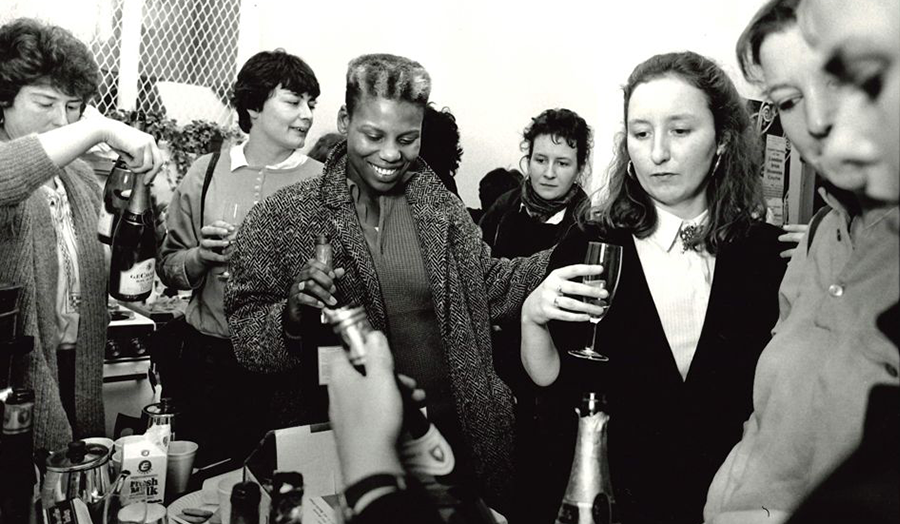
Establishing a community space in a bustling metropolis requires clear vision and persistent effort. When the London Irish Women’s Centre opened its doors in Stoke Newington on 1st February 1986, it filled a critical void for Irish women living in the UK. Officially opened by renowned Irish journalist and activist Nell McCafferty, the centre was initially funded by the Greater London Council. Its primary mission was to address the political, cultural, and social needs of a demographic that often faced overlapping challenges related to gender, ethnicity, and immigration status.
During its operational years from 1986 to 2012, the centre functioned as much more than a meeting room. It provided essential advocacy and advice services, helping women navigate complex housing issues, secure fair employment rights, and confront political injustices. Beyond direct support, the organization served as a cultural hub. It offered a nursery for mothers, hosted music events, and organized skills-based workshops in video and sound production. These resources empowered members to document their own stories and advocate for their rights both in Britain and back in Ireland.
The closure of the physical centre in 2012 left a gap in the historical record of the Irish diaspora in the UK. However, the organization’s extensive archives survived. Preserving these materials is crucial for understanding how immigrant communities organize, advocate for themselves, and maintain cultural identity in a new country. Explore our related articles for further reading on the history of community organizing in London.
Bridging History and Technology: The Concept of Digital Heritage
Archives traditionally consist of static documents, photographs, and recorded interviews stored in climate-controlled vaults. While these materials are invaluable to researchers, they often remain inaccessible to the general public. Digital heritage projects offer a solution by using modern technology to recreate historical environments and present archival data in interactive formats.
London Metropolitan University has positioned itself at the forefront of this movement. By utilizing 3D technologies and creative digital practice, the university aims to engage new audiences with the history of Irish women in Britain. Digital heritage does not merely digitize documents; it contextualizes them. When a researcher or student views a historical photograph within a recreated 3D room, they gain a better understanding of the physical environment in which the subjects lived and worked.
This approach encourages new ways of exploring archival material. Instead of reading a flat list of an organization’s activities, users can navigate the actual spaces where those activities took place. This spatial context adds a layer of emotional and historical depth that traditional archives struggle to convey.
Executing the London Irish Women’s Centre 3D Project
Marking the 40th anniversary of the centre’s founding, London Metropolitan University launched a specific initiative titled “Celebrating 40 Years: The London Irish Women’s Centre 3D Project.” This endeavor focuses on recreating selected rooms from the original Stoke Newington building. The project draws directly from archival material housed within the University’s Special Collections, specifically the Archive of the Irish in Britain.
The technical execution of this 3D project requires a high level of skill in computer graphics and interactive design. The responsibility for building this virtual environment falls to a student enrolled in the BSc (Hons) Games Animation, Modelling and Effects course. This pairing of historical preservation with a technically demanding undergraduate program highlights the practical, hands-on nature of the university’s curriculum.
Students in the Games Animation, Modelling and Effects degree learn to build complex 3D assets, apply realistic textures and lighting, and optimize environments for smooth user interaction. Applying these skills to a digital heritage project requires a shift in mindset from creating purely fictional entertainment to ensuring historical accuracy. The student must carefully study floor plans, photographs, and textual descriptions to ensure the virtual rooms accurately reflect the physical space as it existed decades ago.
Online visitors to the finished project will be able to navigate this immersive digital environment freely. As they move through the virtual space, they will discover 40 distinct archive records integrated directly into the 3D environment. This seamless integration of data and spatial design represents the future of archival research. Schedule a free consultation to learn more about the technical skills taught in the Games Animation program.
Integrating Archival Records into a Virtual Space
Placing 40 archive records into a 3D environment involves careful user experience (UX) design. The records must be positioned logically within the virtual rooms. For example, a document detailing the centre’s nursery operations might appear near a recreated play area, while minutes from a political strategy meeting might be found in a reconstructed conference room. This spatial organization helps users draw connections between the physical space and the organizational activities that occurred there.
Collaborative Efforts and Authentic Representation
Building an accurate historical recreation requires more than just archival research; it requires the input of the people who actually inhabited the space. To ensure the 3D project reflects the lived experiences of those connected to the London Irish Women’s Centre, the university reconnected with former workers including Angie Birtill, Rae Dowds, and Brid Boland.
These consultations are vital for authentic representation. Archival photographs can show what a room looked like, but former staff members can explain how the space felt, how it was used on a daily basis, and which areas held the most significance for the community. Their insights help the student developer avoid sterile, museum-like recreations in favor of environments that capture the vibrant, activist energy of the original centre. This collaborative model demonstrates how academic institutions can work directly with community members to produce meaningful historical resources.
The Role of the Emigrant Support Programme
Funding is a constant challenge for digital heritage initiatives. This project is made possible through the Emigrant Support Programme, an initiative that provides financial backing to Irish communities and groups abroad. The programme’s support underscores the continued importance of the Irish diaspora to the Irish government and recognizes the value of preserving diasporic history.
By funding this 3D project, the Emigrant Support Programme helps ensure that the history of Irish women in the UK is not forgotten. It also facilitates a connection between the past and present, allowing younger generations of Irish emigrants to understand the struggles and achievements of those who came before them. The funding specifically supports the technical development of the project, enabling the student to dedicate the necessary time and resources to build a high-quality, interactive experience.
Advancing Student Employability Through Applied Research
Speaking at a celebration event held at the Irish Embassy, Head of Special Collections David Baldwin highlighted the dual purpose of the initiative. The London Irish Women’s Centre was originally founded with a commitment to recording and preserving Irish women’s histories and challenging their marginalization within British and Irish media. This student-led project represents a continuation of that legacy for a new generation.
Furthermore, the project serves as a practical learning tool. It marks one of several projects the Special Collections team at London Metropolitan University has developed to encourage students to engage with themes of community, identity, and social history. By working directly with archival materials and digital storytelling methods, students gain highly transferable skills. They learn to manage complex projects, communicate with non-technical stakeholders (like former centre workers), and apply technical 3D modeling skills to real-world problems. These competencies significantly boost their academic success and future employability in the UK’s competitive creative technology sector. Submit your application today to join programs that blend technical skills with real-world application.
Accessing the Archive and the Future of 3D Historical Preservation
Once completed, the virtual space will be hosted directly through the London Metropolitan University Special Collections online catalogue. This strategic hosting ensures that researchers, students, and members of the public can easily discover and access the project alongside the university’s other archival holdings. Users will not need specialized software to view the 3D environment; standard web browsers will suffice, maximizing public accessibility.
The success of this initiative points to a broader trend in historical preservation. As physical spaces disappear, 3D modeling offers a viable method for maintaining a connection to our architectural and social history. For the Archive of the Irish in Britain, this project serves as a pilot that could inspire future 3D recreations of other lost community spaces.
Researchers can already access further information about the London Irish Women’s Centre archive through the university’s existing online catalogue. The addition of the 3D environment will complement these traditional text-based records, providing a multi-faceted resource for historians, sociologists, and anyone interested in the rich history of the Irish in London.
The intersection of higher education, student talent, and community memory creates a powerful mechanism for preserving the past. London Metropolitan University continues to demonstrate how specialized degree programs can be leveraged to serve the public good, turning academic exercises into permanent historical resources. Have questions? Write to us! to learn more about how digital technologies are reshaping historical research. Share your experiences in the comments below if you have connections to the London Irish Women’s Centre or similar community organizations.