
Trace Mixed-Race British History in Lucas Fothergill’s Everyone Everywhere from Newcastle University
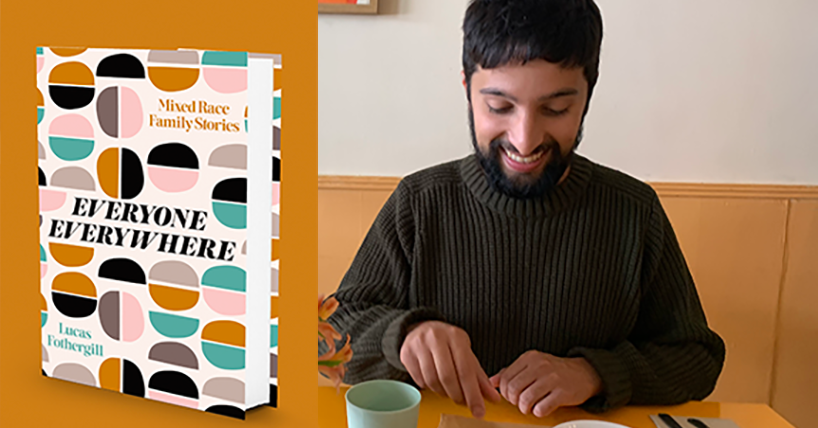
Transitioning from UK Television Production to Long-Form Publishing
Building a career in the creative industries requires versatility, persistence, and a keen understanding of narrative structure. Few careers illustrate this trajectory better than that of Lucas Fothergill, a 2016 graduate of Newcastle University. After spending a decade working behind the scenes in UK television production—developing and producing documentaries for major broadcasters like Netflix, Sky, and the BBC—Fothergill has successfully transitioned into the world of long-form publishing. His debut book, Everyone Everywhere: 21 Stories of Mixed Race Britain, stands as a significant contribution to the documentation of mixed-race British history.
Working alongside notable figures such as Louis Theroux, Fothergill honed his ability to distill complex human experiences into compelling, digestible narratives. Television production demands strict attention to pacing, emotional resonance, and audience retention. These skills translate directly to writing a book of historical non-fiction. Instead of simply presenting a dry chronological record, Fothergill approaches mixed-race British history with a documentarian’s eye, focusing on the individuals who lived through these historical shifts. For aspiring writers and media professionals, his career path demonstrates the value of cross-medium storytelling and the importance of carrying narrative skills from one creative discipline to another.
Explore our related articles for further reading.
The Foundation of a Writer’s Education at Newcastle University
The genesis of a writer’s voice often traces back to their formal education and the environment in which they studied. For Lucas Fothergill, graduating in 2016 with a BA in English Literature with Creative Writing from Newcastle University provided the necessary scaffolding for his future endeavors. He frequently cites his time in Newcastle upon Tyne as among the happiest years of his life, praising the city as a vibrant hub of arts and culture characterized by its distinctive sand-colored stone architecture and welcoming community.
However, the most pivotal part of his education at Newcastle University was the mentorship he received from his creative writing lecturer, Lars Iyer. Iyer imparted a piece of advice that became the guiding philosophy for Fothergill’s subsequent work in both television and publishing: the primary goal of creative work should be to entertain people and connect with their hearts rather than their heads. This principle is highly evident in Everyone Everywhere. While the book is rigorously researched and highly informative, it never sacrifices emotional engagement for academic density. Students currently pursuing degrees in the UK should take note of how foundational academic feedback can shape a professional career spanning decades.
Schedule a free consultation to learn more.
Structuring a Narrative: The Anatomy of Everyone Everywhere
Writing a history book that spans over a century presents significant structural challenges. How does an author organize vast amounts of historical data without overwhelming the reader? Fothergill solved this problem by employing a character-led, reverse-chronological structure. Everyone Everywhere is divided into 21 distinct stories, each focusing on a single individual. The narrative begins in the present day, anchoring the reader with interviews of contemporary notable figures, including footballers, chefs, and broadcasters.
The Art of the Interview
The modern-day interviews serve a dual purpose. First, they make the subject matter immediately accessible to a contemporary audience. Second, they establish a baseline of familiarity before the author guides the reader backward in time. Conducting almost 50 interviews for this project required immense skill in active listening and question framing. Fothergill’s background in television documentary production equipped him to draw out authentic, vulnerable, and compelling responses from his subjects, ensuring that the historical narrative remains grounded in real human emotion.
Navigating Historical Archives
Once the reader is anchored in the present, Fothergill unfolds the history chapter by chapter, moving progressively further into the past. This approach required spending countless hours rummaging through archival materials. Historical archives are often fragmented and challenging to navigate, requiring a researcher to piece together lives from census records, personal letters, newspaper clippings, and institutional documents. By meticulously weaving these archival findings with the oral histories he gathered, Fothergill constructed an alternative history of the UK—one viewed through the specific lens of mixed-race individuals.
Why Mixed-Race British History Matters Today
The publication of Everyone Everywhere arrives at a time when discussions about national identity, race, and belonging are at the forefront of British cultural discourse. Mainstream historical narratives frequently overlook the experiences of mixed-race individuals, despite their presence and influence stretching back centuries. Fothergill’s work actively challenges this oversight by highlighting a diverse array of figures: spies, suffragettes, fighters, footballers, lovers, and louts.
By chronicling these specific lives, the book redefines what it means to be British. It demonstrates that British identity has never been monolithic but has continually evolved through intersection, migration, and cultural exchange. The stories within the book cover a broad emotional spectrum. Readers will find deeply challenging accounts of individuals fighting for their basic rights, alongside gorgeous love stories and poignant accounts of long-lost family reunions. This emotional variety prevents the history from becoming a singular narrative of struggle; instead, it becomes a rich, multifaceted celebration of human resilience and joy.
For historians and sociologists, Everyone Everywhere serves as a vital primary resource that captures the nuances of mixed-race British history. For general readers, it provides an engaging, deeply moving entry point into a subject that has long been marginalized in mainstream publishing.
Applying Creative Writing Principles to Non-Fiction
One of the most instructive aspects of Lucas Fothergill’s debut is how it applies traditional creative writing techniques to non-fiction. Aspiring authors often struggle to make factual, historical writing engaging. Fothergill’s approach offers several actionable lessons:
- Focus on character over concept: Instead of starting with a broad thesis about race in the UK, Fothergill starts with individual people. By making the reader care about a specific person, the broader historical concepts become much easier to grasp.
- Utilize emotional pacing: Borrowing from his television background, Fothergill ensures that the emotional beats of the book hit at the right moments. He balances heavier, more challenging historical realities with moments of joy and triumph, keeping the reader engaged without causing fatigue.
- Connect with the heart: Taking his lecturer’s advice to heart, Fothergill prioritizes the emotional truth of his subjects over purely intellectual arguments. The book aims to move the reader, not just inform them.
Writers looking to produce their own historical non-fiction should study how Everyone Everywhere balances the rigorous demands of archival research with the empathetic demands of creative storytelling. It is a masterclass in narrative non-fiction, proving that factual accuracy and emotional depth are not mutually exclusive.
Share your experiences in the comments below.
The Value of Persistence in Creative Projects
It is also worth noting the timeline of this project. Everyone Everywhere took over five years of researching, interviewing, and writing to complete. In an era that often prioritizes rapid content production, Fothergill’s dedication to a half-decade-long project is a reminder of the value of slow, meticulous craftsmanship. The depth of the interviews and the breadth of the archival research simply could not have been achieved in a shorter timeframe. For current students and recent graduates navigating the creative industries, this timeline serves as a realistic benchmark for the effort required to produce a substantial, high-quality body of work.
Writing a book while maintaining a full-time career in television production requires exceptional time management and unwavering belief in the value of the project. Fothergill’s success with this publication illustrates that side projects, when nurtured consistently over time, can evolve into defining professional achievements. The transition from a spare-time endeavor to a commercially published book available through major retailers like Waterstones is a testament to the compound value of persistent effort.
Conclusion: The Lasting Impact of Alumni Achievements
The success of Lucas Fothergill and the publication of Everyone Everywhere reflect positively on the ongoing quality of education and creative development fostered at Newcastle University. When an institution provides an environment that encourages students to connect with their audience on an emotional level, those students go on to produce work that resonates on a national scale. Fothergill’s journey from a creative writing student in the UK to a published author and television producer exemplifies the diverse paths available to humanities graduates.
For readers interested in the complexities of British identity, Everyone Everywhere: 21 Stories of Mixed Race Britain offers a necessary, deeply researched, and emotionally compelling perspective. It stands as a significant addition to the canon of mixed-race British history, proving that the most impactful histories are often those told through the eyes of the people who lived them.