
Examine the US-UK Relationship at the Loughborough University Student Conference
Understanding the Historical Context of the US-UK Relationship
Marking a quarter-millennium since the American Revolution requires more than a brief reflection; it demands a rigorous examination of how a colonial rupture evolved into one of the most consequential geopolitical alliances in modern history. The history of the US-UK relationship is characterized by initial conflict, subsequent reconciliation, and an eventual deep integration across military, economic, and cultural spheres. For students and professionals in the UK and beyond, analyzing this 250-year trajectory provides essential context for contemporary international relations.
Studying this subject allows scholars to trace the origins of what is commonly referred to as the “special relationship.” This term encapsulates the unique diplomatic, defense, and intelligence cooperation that has defined Anglo-American relations since the mid-20th century. However, understanding this modern alliance requires digging into the preceding centuries of history—examining how two nations navigated the transition from adversaries to indispensable allies. Academic forums dedicated to this history play a critical role in ensuring that future diplomats, historians, and political scientists grasp the nuances of transatlantic ties.
Schedule a free consultation to learn more about studying history and international relations.
Inside the Loughborough University Student Conference Experience
Bringing academic theory into practical environments is a cornerstone of higher education. Recently, Loughborough University facilitated a major student conference designed to explore the complexities of the US-UK relationship. Organized by Dr. Sam Edwards, a Reader in History within the Department of International Relations, Politics and History, the event demonstrated the value of experiential learning. Rather than simply reading about diplomatic history in a lecture hall, students were immersed in a collaborative, high-level academic environment.
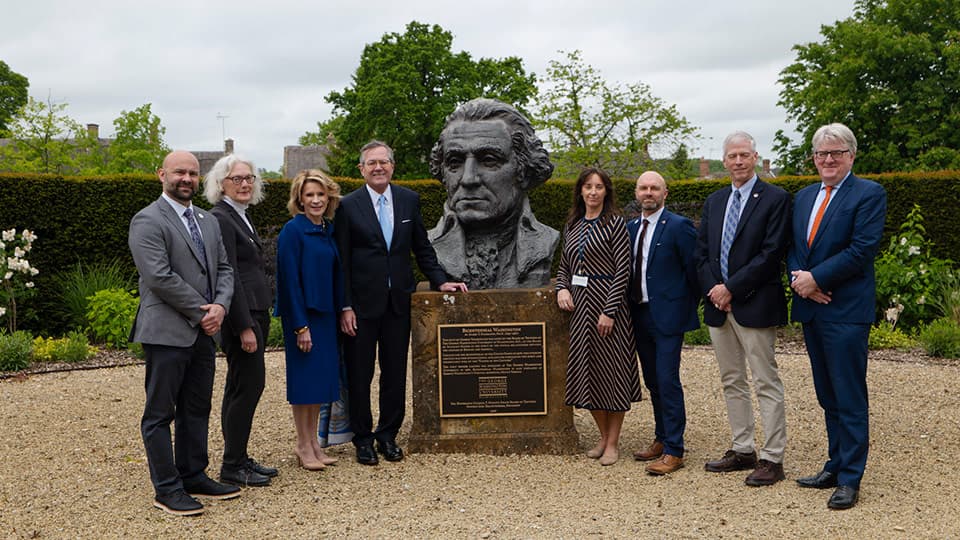
This student conference was a collaborative effort between Loughborough University’s School of Social Sciences and Humanities and the Theodore Roosevelt Center in the United States, working in partnership with Professor Michael Cullinane of Dickinson State University. The choice of venue further enhanced the educational impact. Hosting the event at Sulgrave Manor in Northamptonshire—the ancestral home of George Washington—provided a tangible connection to the historical figures and eras being discussed. Standing in the shadows of Washington’s ancestral roots offered a profound backdrop for fifty student delegates to discuss the revolutionary origins of the transatlantic dynamic.
The delegates represented a cross-section of academic levels, including students from Denstone College, Chenderit School, and the Universities of Warwick and Loughborough. This mix of secondary and higher education students fostered a unique intergenerational dialogue about history and politics. Loughborough lecturers Dr. Rakesh Ankit and Dr. Matthew McCullock also attended, guiding discussions and providing academic rigor to the proceedings.
Submit your application today to join future academic events and conferences.
The Value of Cross-Institutional Academic Collaboration
Events of this scale highlight the importance of cross-institutional collaboration in the UK higher education sector. By partnering with US-based institutions like the Theodore Roosevelt Center, Loughborough University provides its students with access to international perspectives that standard curricula may not fully capture. Students benefit from engaging with diverse peer groups and seeing how historical narratives are interpreted differently across the Atlantic. This exposure is vital for developing the critical thinking skills required to analyze global politics effectively.
Expert Insights on Transatlantic Diplomacy and History
The strength of any academic conference lies in the quality of its speakers. The Loughborough University event featured a roster of distinguished historians, authors, and diplomats who provided deep insights into the evolution of the US-UK relationship. The conference opened with a notable address from the United States Ambassador to the Court of St James’s, Warren Stephens. The Ambassador’s reflections on the current strength and historical resilience of the relationship set a diplomatic tone for the day, bridging the gap between historical analysis and contemporary statecraft.
Following the opening address, students engaged with a series of expert panels. Dr. Hugh Wilford, Professor of United States History at California State University and award-winning author of America’s Great Game, provided context on the broader Middle Eastern and imperial dimensions of US foreign policy that inevitably intersected with British interests. Katherine Carter, historian and curator of Chartwell (the former home of Winston Churchill) and author of Churchill’s Citadel, offered a focused look at the 20th-century leadership that cemented the modern Anglo-American alliance.
Explore our related articles for further reading on transatlantic diplomacy.
Bridging Historical Eras and Modern Politics
The conference also tackled the complexities of the modern era. Dr. Elizabeth Ingleson, author of Made in China and Assistant Professor at the LSE, brought a global economic perspective, highlighting how the US-UK dynamic fits into wider shifts in global supply chains and international history. Professor Philip Murphy, Director of History and Policy and Professor of British and Commonwealth History at the University of London, explored the imperial and Commonwealth threads that complicate the simple binary of a US-UK relationship.
Bringing the discussion back to recent geopolitical shifts, Dr. Tim Oliver, author of Understanding Brexit and Senior Lecturer at Loughborough London, analyzed how the UK’s departure from the European Union has forced a reevaluation of transatlantic ties. His dual perspective as a Loughborough academic and a Fellow at the European University Institute in Florence provided students with a nuanced view of the UK’s evolving geopolitical posture. Finally, the keynote address was delivered by Dr. Kevin Weddle, a Distinguished Fellow and former Elihu Root Chair of Military Studies at the US Army War College, who provided a comprehensive military history perspective on how the two nations moved from Revolutionary War adversaries to integrated defense partners.
The Role of Academic Institutions in Preserving International History
Universities serve as the primary custodians of complex historical narratives. The detailed examination of the US-UK relationship at this Loughborough University event underscores the critical function of academic institutions in preserving and interrogating international history. In an era where historical discourse is often simplified for public consumption, academic conferences provide a necessary space for complexity, debate, and primary source analysis.
The involvement of the Loughborough University Department of International Relations, Politics and History illustrates how interdisciplinary approaches yield the best results. By combining political science, international relations theory, and historical methodology, the department equips students to understand that the US-UK relationship is not a static relic of the past, but a living, evolving diplomatic framework. Students studying in the UK who wish to understand global hegemony, alliance structures, and diplomatic protocol must engage with these institutional resources.
Have questions about the application process or academic programs? Write to us!
Actionable Steps for Students Interested in International Relations
For students aspiring to work in diplomacy, international relations, or historical research, attending a student conference is one of the most effective ways to build a professional and academic network. Here are actionable steps to maximize these opportunities:
- Seek Out Interdisciplinary Events: Look for conferences that bridge history, politics, and economics, much like the Loughborough University event. Understanding how military history intersects with modern economic policy is essential for a well-rounded international relations education.
- Engage Directly with Experts: Do not simply attend panels passively. Prepare thoughtful questions based on the speakers’ published work. Referencing a speaker’s book—such as asking Dr. Tim Oliver about specific implications of Brexit on US trade negotiations—demonstrates preparation and helps you stand out.
- Leverage University Partnerships: Pay attention to the international partnerships your university maintains. The collaboration between Loughborough University and the Theodore Roosevelt Center is a prime example of how institutional ties can open doors for student research and travel opportunities.
- Build a Diverse Network: Actively engage with students from other institutions. The presence of delegates from Warwick University and various secondary schools at this conference shows the value of stepping outside your immediate academic cohort to gain fresh perspectives.
Final Thoughts on the Future of Transatlantic Relations
As the UK and the US navigate the complexities of the 21st century—from shifting global power dynamics to technological competition and climate change—the historical foundation of their relationship remains highly relevant. Academic gatherings that bring together ambassadors, military historians, and university students ensure that the next generation of leaders is adequately prepared to manage this vital alliance. The commitment shown by Loughborough University to facilitating these discussions highlights the ongoing importance of rigorous academic inquiry in shaping the future of international relations.
Share your experiences with academic conferences in the comments below.