
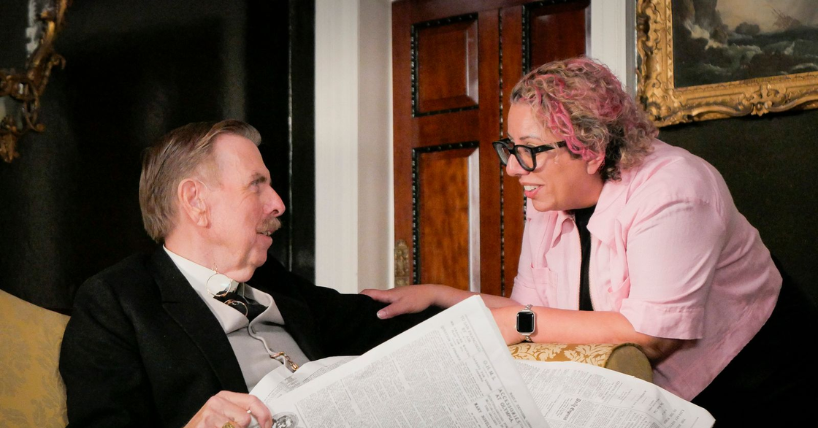
Bringing a classic novel to the big screen requires a precise blend of creative vision, logistical expertise, and industry resilience. When the upcoming UK cinema release of Virginia Woolf Night and Day arrives this month, it will represent the culmination of years of work by Newcastle University alumna and academic Tina Gharavi. The film features a prominent cast, including Jennifer Saunders, Lily Allen, Timothy Spall, and Haley Bennett, and stands as a testament to the strength of regional filmmaking in the UK. For aspiring filmmakers and students, Gharavi’s trajectory from a Newcastle University classroom to directing major motion pictures offers practical insights into building a sustainable career in the film industry. Explore our related articles for further reading on alumni success stories.
The Journey from Newcastle University Classrooms to UK Cinema Screens
Tina Gharavi’s connection to Newcastle University, UK, runs deep. Born in Iran and educated in the United States, she first arrived in the North East in 1998 to teach media production in the ex-mining town of Ashington. She formally joined the Newcastle University faculty in 2004 as an Associate Professor in Film: Digital Media and later completed a PhD in Creative Practice in 2014. Today, she continues to teach students on campus while maintaining her demanding schedule as a Sundance and BAFTA-nominated screenwriter, director, and showrunner.
Balancing academic responsibilities with high-level film production is no small feat. Gharavi openly acknowledges the precarious nature of the film industry, noting that no two days are ever the same. However, she views her dual roles as complementary rather than conflicting. Teaching allows her to stay grounded, while her industry experience provides students with a direct pipeline to contemporary filmmaking practices. Her approach to education centers on helping students find their authentic voice and build the confidence necessary to pitch and produce their own work. Submit your application today to begin your academic journey in film and digital media.
Centering the North East in Virginia Woolf Night and Day
Period dramas are frequently shot in London or reconstructed in studio lots, but Gharavi made a deliberate choice to anchor Virginia Woolf Night and Day in the North East of England. Initially, producers planned to shoot the film in Dublin. Gharavi successfully lobbied to move the production to Newcastle, arguing that the region is a hidden gem of versatile filming locations.
Utilizing Regional Landmarks for Period Drama
Translating early 20th-century London to the modern North East requires a keen eye for architecture and atmosphere. Gharavi utilized several notable regional sights to bring the 1919 setting to life. Neville’s Hall—home to the Mining Institute near Central Station—provided imposing, period-appropriate interiors. The production also took advantage of the Beamish Open Air Museum, the historic Lit & Phil library, and the Ryhope Engines Museum. These locations offer a visual authenticity that generic studio backdrops often lack, proving that the UK offers diverse cinematic landscapes outside of the traditional London bubble.
Integrating Students and Faculty into the Production
Keeping the production local also created tangible benefits for the Newcastle University community. Gharavi prioritized hiring from within her academic circles. Her Director’s Assistant, Poppy Wreford Brown, is a graduate of the university’s School of English. Furthermore, the production featured faculty members in on-screen roles; Dr. Fionnghuala Sweeney from the School of English appears as a supporting suffragette. Several students also gained invaluable on-set work experience. This integration demonstrates how university programs can serve as direct incubators for professional film productions, providing students with resume-building credits before they graduate. Have questions? Write to us! to learn more about student production opportunities.
Assembling a Star-Studded Cast for an Unromantic Comedy
Virginia Woolf Night and Day is described as an “unromantic comedy” set against the backdrop of the suffragette movement. The story follows astronomer Katharine Hilbery (played by American actress Haley Bennett) as she navigates societal expectations and pursues a career in a male-dominated field. The script, written by Justine Waddell, attracted a remarkably high-profile ensemble cast.
Reimagining the 1919 Novel for Modern Audiences
Gharavi did not approach the adaptation as a strict, faithful retelling of Woolf’s text. Instead, she viewed the project as an opportunity to apply a modernist lens to a period piece. Woolf herself was a Modernist, constantly experimenting with how stories are told and how society evolves. Gharavi’s direction reflects this by incorporating “Easter eggs” that highlight the marginalized figures often omitted from traditional historical narratives—plucky women, queer individuals, and Black people who existed in the real London of that era.
Directing a cast that includes comedy legends like Jennifer Saunders, Sally Phillips, and Jack Whitehall, alongside dramatic actors like Timothy Spall and musician-turned-actress Lily Allen, requires a specific leadership style. Gharavi notes that directing is essentially a process of asking highly talented individuals to have faith in your vision. She personally reached out to the cast via letters, outlining her radical approach to the material. Her efforts paid off; she specifically praises the generosity and talent of Jennifer Saunders, noting that the entire crew understood the stakes of taking a conceptually experimental approach to a classic novel. Schedule a free consultation to learn more about adapting classic literature for the screen.
Actionable Advice for Aspiring Filmmakers from Tina Gharavi
Beyond the specifics of this single film, Gharavi’s career offers several practical lessons for those looking to break into the UK film industry or study at Newcastle University.
Recognize the poverty of stories and fill the gap. Gharavi notes that growing up, she experienced a lack of stories that represented her own background. This realization drove her to become a filmmaker rather than just a consumer of media. Aspiring writers and directors should look for the gaps in current representation and use those absences as the foundation for their unique creative voice.
Prepare to do the work and define excellence. Breaking into the industry requires more than just passion. Gharavi emphasizes the need to figure out what true excellence looks like in your specific role—whether that is directing, editing, or production design—and then relentlessly push yourself toward that standard. The most successful professionals in the film industry are never satisfied with their past achievements and are constantly pushing their own boundaries.
Acknowledge the barriers but try anyway. Gharavi is candid about the difficulties of the film industry, including high costs and nepotism. However, she advises students to focus on the brevity of life. Her guiding mantra, borrowed from poet Mary Oliver, asks: “What will you do with your one short and precious life?” Rather than being paralyzed by the structural barriers of the industry, she encourages aspiring filmmakers to take the risk and follow their creative ambitions.
Value the machinery of filmmaking. Gharavi’s first industry experience was working as a Production Designer’s Assistant on a Hollywood movie shot near her home in New Jersey. Despite the film itself being poor, the experience of seeing the logistical machinery of a set in motion was formative. Understanding the practical, logistical side of filmmaking is just as important as the creative side.
Future Projects and Continuing Academic Contributions
With Virginia Woolf Night and Day completed and its UK cinema release scheduled for June 19, 2026, Gharavi is already looking forward. She recently returned from the Cannes Film Festival, where she was securing support for her next major project: a biopic about the Iranian poet Forough Farrokhzad, titled Forough: Let Us Believe in the Beginning of the Cold Season. The project has garnered significant international attention, with acclaimed filmmaker Wes Anderson attached as an executive producer.
Gharavi’s continued ability to pivot between teaching Film: Digital Media at Newcastle University and securing high-profile international partnerships highlights the viability of a hybrid academic-industry career. For prospective students, her presence on the faculty ensures that the curriculum is informed by current, real-world industry standards. The success of Virginia Woolf Night and Day proves that regional universities can produce graduates who not only compete in the global film market but actively shape it. Share your experiences in the comments below if you are an aspiring filmmaker looking to study in the UK.