
Loughborough University Researchers Secure NERC Fellowships to Advance UK Climate Resilience
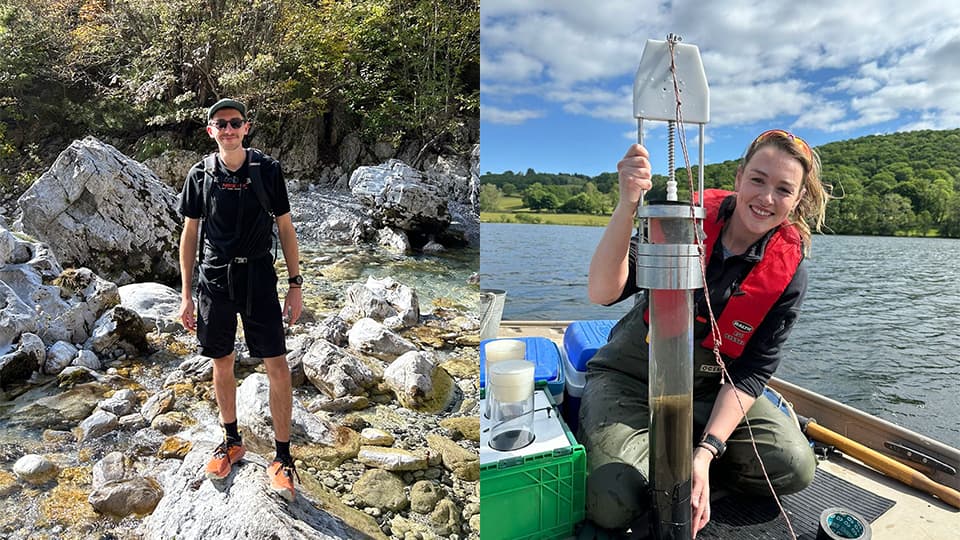
The field of environmental science is critical to addressing the complex ecological challenges posed by a changing climate. In the UK, understanding local water systems—ranging from fast-flowing rivers to deep, sediment-rich lakes—is essential for effective water management and flood prevention. Recognizing the importance of this work, Loughborough University has recently achieved a significant milestone. Two early-career researchers in the Department of Geography and Environment have been awarded prestigious five-year NERC Independent Research Fellowships, securing £1 million each to advance their groundbreaking work in climate resilience and water quality.
These fellowships represent a substantial investment in the future of UK environmental science. For students and professionals watching the field, these awards highlight the exact types of innovative research required to solve modern ecological problems. Explore our related articles for further reading on how academic research translates into real-world environmental policy.
Understanding the Impact of NERC Independent Research Fellowships
The Natural Environment Research Council (NERC) Independent Research Fellowship (IRF) scheme is designed to support outstanding early-career researchers. Unlike standard postdoctoral positions, these fellowships provide five years of guaranteed funding, allowing recipients to establish themselves as independent research leaders without the immediate pressure of securing additional grants or answering to senior colleagues on their specific project directions.
For an institution like Loughborough University, securing two of these highly competitive fellowships in a single funding round is rare. It underscores the depth of talent within the university’s geography and environment programs and signals to the broader scientific community that the institution is actively fostering top-tier research. For aspiring researchers, the NERC IRF pathway represents one of the most direct routes to building a specialized, self-directed research lab focused on pressing environmental issues. Have questions? Write to us! to learn more about the fellowship application process and what review panels look for in candidates.
Improving Flood Modelling Through River Ecological Roughness
Dr. Robert Houseago’s fellowship focuses on a critical, often overlooked aspect of river mechanics: ecological roughness. When engineers and scientists model river flow and predict flood risks, they must account for the physical friction that slows water down. Traditionally, models rely on static estimates of roughness. However, rivers are living ecosystems. The presence of aquatic vegetation, exposed tree roots, and woody debris constantly alters how water moves.
The Mechanics of Water Flow and Vegetation
Dr. Houseago’s project, titled Nature’s Resistance: Quantifying Ecological Roughness for Enhanced Flow Prediction in Rivers, investigates how these biological elements interact and change over time. When vegetation grows densely in the summer, it increases friction, effectively slowing the river down and raising water levels locally. In the winter, when plants die back, the river flows faster. If flood models fail to account for these dynamic, multi-scale processes, the resulting predictions can be highly inaccurate.
By developing new flow-resistance models that incorporate these living variables, this research directly contributes to building climate-resilient infrastructure. More accurate flow predictions mean better flood defenses, safer communities, and more informed decisions regarding river management and restoration.
Integrating Citizen Science into Environmental Monitoring
To gather the vast amount of data required to map ecological roughness across different river systems, Dr. Houseago plans to integrate citizen science alongside traditional field monitoring and experimental modelling. Engaging the public in data collection not only accelerates the research process but also democratizes environmental science. By partnering with private and public sectors across the UK and internationally, the project sets a precedent for collaborative, large-scale environmental monitoring.
Addressing Harmful Algal Blooms in UK Lakes
While river flow dictates how water moves, lake chemistry determines its quality. Dr. Savannah Worne’s fellowship tackles a persistent frustration in water management: the persistence of harmful algal blooms even after external pollution sources have been reduced.
The Challenge of Internal Nutrient Cycling
For decades, UK lakes have suffered from eutrophication caused by runoff containing sewage and agricultural fertilizers. When regulators successfully curb these external inputs, they often expect water quality to improve rapidly. Unfortunately, many lakes do not recover as expected. The reason lies in the lake-bed sediments.
Over years of pollution, phosphorus and other nutrients accumulate in the mud at the bottom of a lake. Even when new pollution stops, these historical nutrients can be released back into the water column—a process known as internal loading. Algae continue to feed on these recycled nutrients, sustaining harmful blooms that degrade water quality, kill fish, and produce toxins.
Utilizing Stable Isotope Techniques for Water Quality
Dr. Worne’s project, Evaluating Internal Lake Nutrient Cycling Under Environmental Pressure: A Stable Isotope Perspective, applies novel chemical tracing methods to track these hidden nutrient pathways. By utilizing phosphate oxygen isotopes, Dr. Worne can trace exactly how nutrients locked away in sediments for decades are re-released and recycled by algae.
This research involves extracting and analyzing sediment cores to reconstruct historical nutrient cycling, pairing this historical data with modern water quality monitoring. The resulting evidence will be invaluable for water companies, environmental agencies, and policymakers. Understanding internal loading means that management strategies can shift from simply stopping new pollution to actively treating or managing the historical pollution already present in our lakes. Schedule a free consultation to learn more about how stable isotope techniques are changing the landscape of environmental testing.
Building Long-Term Climate Resilience in the UK
Although Dr. Houseago and Dr. Worne are investigating different aquatic environments, their work shares a common thread: improving the UK’s climate resilience. Climate change acts as a threat multiplier for water systems. More intense rainfall events demand highly accurate river flood models, while warmer temperatures exacerbate the growth of harmful algal blooms in lakes.
By providing the foundational science needed to manage these risks, these NERC Fellowships demonstrate how targeted academic research informs national resilience strategies. Effective climate adaptation requires moving beyond generic global models to develop highly specific, localised understandings of how individual rivers and lakes function. The work being hosted at Loughborough University directly supplies the data and models required to make those localised decisions.
Actionable Advice for Aspiring Environmental Scientists
The success of these two researchers offers valuable lessons for undergraduates, master’s students, and early-career professionals aiming to make their mark in environmental science.
Develop Cross-Disciplinary Skills
Notice the methodologies employed in these fellowships. Dr. Houseago combines physical geography, hydraulic modelling, and citizen science engagement. Dr. Worne bridges geochemistry, ecology, and historical reconstruction. Modern environmental science rarely fits neatly into a single academic box. Students should actively seek out interdisciplinary coursework and research opportunities. Learning to code for modelling, understanding basic chemistry for isotope work, or developing skills in public engagement will make you a much more competitive candidate for fellowships and jobs alike.
Engage with Real-World Stakeholders Early
Both researchers emphasized their intention to work with partners in the public and private sectors, as well as non-academic organizations. Academic research is most impactful—and most fundable—when it solves actual problems faced by water utilities, environmental regulators, and local governments. As you develop your research questions, ask yourself who needs this information and how you will deliver it to them in a usable format. Building a network outside the university before you apply for major fellowships can significantly strengthen your proposal. Submit your application today to programs that emphasize stakeholder engagement and applied research.
Conclusion
The awarding of two five-year NERC Independent Research Fellowships to Loughborough University researchers marks a significant advancement in the study of UK water systems. By tackling the dynamic complexities of river flow and the hidden chemical cycles of lake sediments, Dr. Robert Houseago and Dr. Savannah Worne are generating the precise data required to manage water resources effectively in a volatile climate. For the broader environmental science community, their work sets a high standard for integrating innovative methodologies with practical, climate-resilient outcomes. Share your experiences in the comments below! regarding the challenges and opportunities in modern water management research.