
Evaluate the Success of University of Exeter Students at the UK Student Social Mobility Awards
Understanding the Role of Social Mobility in UK Higher Education
Social mobility remains a critical metric for evaluating the fairness and effectiveness of the higher education system in the UK. It refers to the ability of individuals to move beyond their socio-economic background, achieving professional and financial success based on their merit and effort rather than their starting point in life. For many prospective and current students, navigating university life while facing significant socio-economic barriers requires an extraordinary amount of resilience and determination.
Universities across the UK are increasingly measured not just by their research output or entry requirements, but by how effectively they support students from disadvantaged or underrepresented backgrounds. When an institution successfully nurtures talent from all walks of life, it benefits the broader economy and society by producing capable, diverse graduates who can address complex modern challenges. The recent achievements of students at the University of Exeter provide a clear, practical example of how institutional support combined with individual drive can produce exceptional results.
Schedule a free consultation to learn more about university support systems and application strategies.
Recognizing Excellence at the Student Social Mobility Awards
The Student Social Mobility Awards, organized by the prominent social mobility charity upReach, represent one of the most significant national platforms for highlighting student achievement in the UK. These awards specifically target individuals who have excelled in their academic and professional endeavors despite facing substantial adversity. Unlike traditional academic prizes that may focus solely on grades, these awards evaluate the holistic journey of a student, taking into account the mitigating circumstances and class barriers they have had to overcome.
Earning recognition at this event signals to future employers and academic institutions that a student possesses not only intellectual capability but also the grit, adaptability, and work ethic required to thrive in demanding environments. For the University of Exeter, having students recognized at this level validates the comprehensive support structures the institution has built to ensure that talent is nurtured regardless of a student’s background.
Profiles of the Academic Success Award Recipients
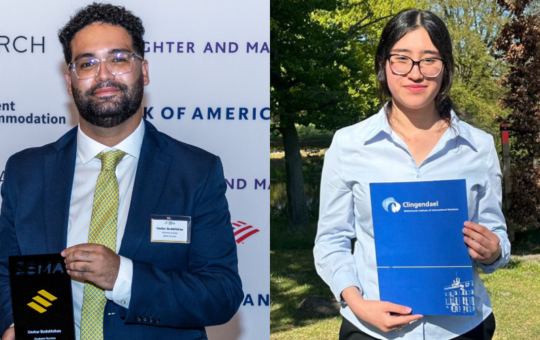
At the 2026 ceremony, two University of Exeter students—Uashar Badakhshan and Zohra Amin—jointly received the Academic Success Award. Their stories, while unique in their specifics, share a common thread of overcoming significant obstacles to reach the highest levels of undergraduate achievement.
Advancing Medical Research and Healthcare Equity
Uashar Badakhshan, a final-year Medical student, has demonstrated what can be achieved when natural aptitude is matched with rigorous opportunity. Navigating the notoriously demanding Medical School curriculum is a challenge for any student, but Uashar managed to achieve some of the highest grades in his entire cohort. Academic achievement in medicine requires a precise balance of scientific understanding, clinical empathy, and relentless study habits.
Beyond his standard coursework, Uashar secured a highly competitive Wellcome Trust Scholarship. This funding allowed him to pursue independent research focusing on ethnic health inequalities, a pressing issue within the UK healthcare system. He successfully presented his findings at an international level, proving his ability to communicate complex scientific concepts to diverse audiences. His work directly addresses disparities in healthcare outcomes, a field where diverse perspectives are urgently needed to design effective public health interventions.
Uashar’s trajectory illustrates the importance of seeking out research funding and external scholarships early in an academic career. These opportunities provide not just financial relief, but also critical networking platforms and practical research experience that set students apart in competitive residency or postgraduate applications.
Explore our related articles for further reading on medical research opportunities and scholarships in the UK.
Combining Legal Studies with Human Rights Advocacy
Zohra Amin’s academic journey follows a different but equally impressive path. Having just completed her second year studying Law with Business at the University of Exeter, Zohra has already built a portfolio that many graduates would be proud to claim. Her academic focus is complemented by a deep commitment to advocacy, particularly concerning women’s rights and refugee issues.
Zohra’s background as a refugee who moved to the UK from Afghanistan heavily informs her academic and extracurricular choices. She actively volunteers as an academic mentor for first-year students, recognizing that peer support is a vital component of student retention and success. Furthermore, she secured a placement in the prestigious Globalink Research Internship at the University of Ottawa in Canada, where she spent the summer studying reproductive rights law—a highly relevant and complex area of legal study.
In addition to her legal studies, Zohra channels her experiences into creative advocacy. Inspired by literature, she is writing a novel detailing the experiences of women in Afghanistan. Her motivation is deeply personal: to give a voice to female relatives who were denied education past the primary level. Securing interest from a literary agent while still an undergraduate demonstrates that academic success and creative pursuits are not mutually exclusive, but can instead complement one another to build a powerful personal brand.
Building Resilience and Determination Against Adversity
The core criterion for the Student Social Mobility Awards is the demonstration of resilience and determination. For prospective students evaluating their own readiness for university, it is important to understand that these are not innate, magical traits, but rather skills that can be developed and honed over time.
Resilience in an academic context means the ability to absorb setbacks—such as a poor grade on an interim exam or a rejected internship application—and use them as diagnostic tools for improvement rather than evidence of inadequacy. For students from underrepresented backgrounds, resilience also involves navigating environments that may feel culturally unfamiliar or financially taxing. It requires the proactive management of imposter syndrome, which is a common psychological hurdle for high-achieving students from non-traditional university backgrounds.
Determination is the operational side of this equation. It involves the discipline to maintain consistent study schedules, the courage to apply for highly competitive internships like the Globalink program, and the initiative to seek out mentorship. As noted by the upReach CEO during the awards, talent is distributed evenly across the population, but opportunity is not. Determination is the mechanism by which students bridge that gap, actively hunting for the resources and opportunities they need to succeed.
Have questions about developing resilience or finding support networks? Write to us!
Leverage Mentorship Programs to Accelerate Academic Success
A recurring theme in the success of both Uashar and Zohra is the presence of mentorship. Uashar explicitly credited the encouragement and guidance from individuals who believed in him as a turning point in his life. Zohra actively provides this same service to first-year students, understanding firsthand how isolating university can be without a guide.
Mentorship takes many forms in a university setting. It can be formal, through programs run by the university, student unions, or external charities like upReach. Alternatively, it can be informal, built through relationships with lecturers, dissertation supervisors, or older students in the same academic department. For students looking to replicate the success of these award winners, identifying and cultivating a mentorship relationship should be a primary objective from day one.
A good mentor provides more than just academic advice. They can offer guidance on time management, direct students toward funding opportunities like the Wellcome Trust Scholarship, and provide a sounding board for career decisions. They also serve as vital connectors, introducing students to professional networks that are often inaccessible to those from non-traditional backgrounds. Actively seeking mentorship demonstrates exactly the kind of initiative that employers and award committees look for.
Practical Steps to Maximize Your University Experience
The stories of the University of Exeter award winners are inspiring, but they also provide a concrete blueprint for other students. Academic success at the highest level requires a strategic approach to university life.
Seek Out Research and Internship Opportunities Early
Do not wait until your final year to look for internships or research placements. Programs like the Globalink Research Internship or the Wellcome Trust Scholarship have early application cycles and rigorous selection processes. Identify your academic interests early and speak to your professors about assisting with their research. Even if you are not paid initially, the experience and references you gain will pay dividends in future applications.
Engage in Peer Mentorship and Community Building
Success is rarely a solo endeavor. By serving as a peer mentor, you reinforce your own knowledge, build leadership skills, and create a supportive community. If your university does not have a formal peer mentoring program in your department, consider working with faculty to establish one. This demonstrates proactive leadership and a commitment to institutional improvement.
Integrate Your Personal Background into Your Academic Work
Zohra Amin’s decision to write a novel based on her heritage, and Uashar’s focus on ethnic health inequalities, show that your unique background is an asset, not a liability. Do not feel pressured to separate your identity from your academic work. Bringing diverse perspectives to your field of study often leads to highly original research questions and compelling creative work.
Submit your application today to start your academic journey at a leading UK institution.
Final Thoughts on Academic Achievement and Social Mobility
The recognition of Uashar Badakhshan and Zohra Amin at the UK Student Social Mobility Awards serves as a powerful case study in what is possible when higher education fulfills its potential as an engine for equity. Their achievements in Medicine and Law with Business highlight the breadth of talent present at the University of Exeter. By combining rigorous academic study with research, internships, and creative advocacy, they have set a high standard for future cohorts.
For prospective and current students, the primary lesson is that overcoming adversity requires a combination of internal drive and external support. Build your resilience, cultivate your determination, and actively seek out the mentorship and funding opportunities that will allow your talent to translate into tangible success.
Share your experiences with overcoming academic challenges in the comments below.