
Building a Stronger South London: Roehampton and Regional Universities Join Forces on Skills, Innovation and Economic Growth
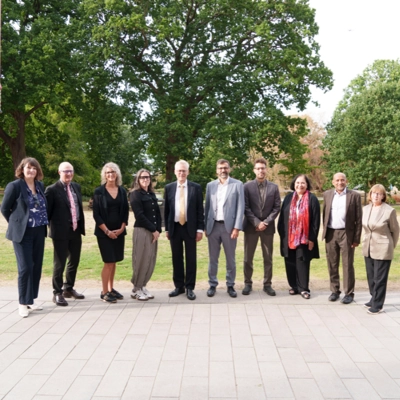
South London’s education sector has taken a significant step toward closer working relationships. On Tuesday 1 September, senior leaders from ten colleges, universities and research institutions gathered at the University of Roehampton to launch the South London Colleges and Universities Partnership (SLCUP), a formal alliance committed to strengthening skills, research and innovation across the region. The event included the signing of a partnership agreement that sets out a three-year programme of work running from 2026 to 2029.
For anyone following South London news, this development matters well beyond the ceremonial photographs. The partnership will influence how courses are designed, how graduates connect with employers, and how the region positions itself for investment. Below, we break down what SLCUP involves, who is taking part, and what it means for students, businesses and communities across South London.
Want the official detail? Read the full partnership announcement and work plan on the BIG South London website to see the priorities as described by the institutions themselves.
What the New South London Colleges and Universities Partnership Involves
SLCUP brings together an unusually broad cross-section of the region’s education and research base. The ten founding institutions are: City St George’s, University of London; Croydon College; The Institute of Cancer Research, London; Harrow, Richmond & Uxbridge Colleges; Kingston University; London South Bank University Group; St Mary’s University, Twickenham; South Thames Colleges Group; the University of Roehampton; and University of the Arts London.
The mix is deliberate. It combines large multi-faculty universities, specialist research institutes such as The Institute of Cancer Research, further education colleges rooted in their local communities, and creative institutions. The launch event opened with a roundtable discussion led by Professor Jean-Noël Ezingeard, Vice-Chancellor of the University of Roehampton, in which leaders examined both the opportunities and the practical barriers to closer collaboration — from skills and youth employment to research, innovation and engagement with businesses and local government.
Why Universities Collaboration Matters for Economic Growth in South London
Educational partnerships in the UK often operate in silos. A university may run its own employer forums; a college may maintain its own industry links. When institutions coordinate, however, several benefits follow. Learners can move more easily between further and higher education. Employers face a clearer route to skilled talent. Research and innovation activity can be directed at problems the region actually faces rather than pursued institution by institution.
South London presents a strong case for this approach. The region hosts world-class research institutions, a diverse college network and vibrant business communities, yet these assets have historically worked side by side rather than together. SLCUP’s founding argument is that pooled “brain power and economic power”, as Professor Ezingeard described it, can be directed at shared priorities with greater effect. The partnership’s structure — a formal agreement, a defined work plan and named strategic ambitions — is intended to turn goodwill into measurable outcomes.
Four Strategic Ambitions: Skills, Innovation and Investment for 2026–2029
The partnership has set out four priorities that will shape its first three-year programme of work:
1. Accelerating Innovation, Productivity and Growth
SLCUP intends to use the combined research capability of its members to support productivity across the region. This includes practice-based research and innovation — work carried out in partnership with businesses and public services rather than confined to laboratories and lecture theatres. The presence of a dedicated research institute among the founders gives the partnership direct access to applied science expertise.
2. Strengthening Collaboration Between Further and Higher Education
Colleges and universities serve overlapping communities but often operate separate systems. The partnership plans to build firmer bridges between them: aligned curricula, clearer progression routes for learners moving from college courses into degrees, and shared planning around which skills the region needs most.
3. Creating Learning Opportunities That Lead to High-Quality Jobs
Qualifications matter most when they connect to employment. SLCUP’s third ambition focuses on designing learning pathways — including apprenticeships, higher technical qualifications and short professional courses — that respond directly to local skills and employment needs, so that study leads to meaningful work.
4. Supporting South London as a Destination for Investment
By presenting a coordinated front, the ten institutions aim to make the region more attractive to investors. A unified skills and innovation offer is easier to communicate than ten separate institutional pitches, and closer working with local government strengthens that message further.
Priority Sectors: Green Economy, AI and Life Sciences
The first phase of the work plan concentrates on three sectors where demand for skilled people is growing quickly: the green economy, artificial intelligence and life sciences. Each choice reflects existing regional strength. South London’s universities already run programmes in environmental science, computing and health; The Institute of Cancer Research anchors the region’s life sciences cluster; and colleges are well placed to deliver the technical training these industries require.
For prospective students, this signals where the partnership believes sustainable career demand will sit over the coming years. For employers in these sectors, it opens a direct channel to shape curricula and access a pipeline of graduates and technicians trained with their needs in mind.
What the Educational Partnership Means for Students and Learners in South London
If you are considering study in South London, the partnership is likely to affect your experience in practical ways:
- Clearer progression routes. Closer college–university links should make it simpler to move from a vocational course into a degree programme without losing time or credits.
- Courses aligned to real demand. Because the work plan starts with skills, new and updated programmes will target sectors such as green technology, AI and life sciences where employers are actively recruiting.
- Wider access to facilities and networks. Collaborative teaching and research arrangements can give learners exposure to institutions and industry contacts beyond their home campus.
- Stronger local employment links. Businesses and local authorities are part of the conversation, which increases the chances that placements, projects and graduate roles follow.
Whether you are a school leaver, a career changer or a professional considering postgraduate study, it is worth exploring how South London institutions are responding to these priorities. Compare courses and attend an open day at the partner institutions to see which programmes align with the sectors SLCUP is targeting — and if you find a programme that fits, submit your application early, as skills-focused courses in growth sectors tend to fill quickly.
Opportunities for Businesses and Employers Across the Region
The roundtable discussion at the launch made clear that SLCUP intends to work closely with businesses and local government rather than operate as a closed academic club. For employers, this creates several entry points:
- Shaping skills provision. Partnerships of this kind typically invite employer input on curriculum design, ensuring graduates arrive with relevant, current capabilities.
- Accessing research and innovation support. Small and medium-sized enterprises that rarely engage with universities on their own may find collaborative innovation projects easier to join through a regional partnership.
- Building talent pipelines. Apprenticeship schemes, placement programmes and graduate recruitment can be coordinated across ten institutions rather than negotiated one by one.
If your organisation operates in one of the priority sectors, now is the time to make contact. Reach out to the business services teams at partner institutions or share your workforce challenges through the BIG South London network so that your needs help shape the partnership’s first projects.
A Proven Foundation: How BIG South London Shaped This Educational Partnership
SLCUP does not start from zero. As Professor Ezingeard noted at the launch, the region’s institutions have “been working together for a number of years, trying to develop entrepreneurship and innovation” through BIG South London. That earlier collaboration gives the new partnership an established network, a track record of joint projects and, importantly, relationships of trust between institutions that might otherwise take years to build.
The shift is one of scale and formality: from ad hoc cooperation on entrepreneurship to a structured programme with a signed agreement, a defined three-year cycle and named strategic ambitions covering skills innovation in the UK’s fastest-changing sectors.
Working Alongside Local Government
The partnership will coordinate closely with the South London Partnership, the sub-regional collaboration of five boroughs: Croydon, Kingston upon Thames, Merton, Richmond upon Thames and Sutton. This link matters because skills and economic development policy is delivered locally — through planning, business support, employment programmes and infrastructure decisions.
When ten education institutions and five boroughs pull in the same direction, funding bids become stronger, programmes avoid duplication, and residents receive more consistent opportunities regardless of where in South London they live. That is the practical promise of this universities collaboration, and it will be judged on delivery.
The Road Ahead: What to Watch Next
The initial three-year framework gives the partners room to identify where closer collaboration delivers the greatest benefit to learners, employers and communities. Early signals to watch for include new joint programmes in the priority sectors, shared research projects with local businesses, and progression agreements between colleges and universities.
For residents, students and employers across the region, SLCUP represents a commitment that South London’s educational strengths will be developed collectively rather than competitively. If the partnership delivers on its ambitions, the region’s learners will gain clearer routes into high-quality jobs, its businesses will find talent and innovation support closer to home, and its economy will carry a stronger, more coordinated voice.
Stay engaged with this story. Follow updates on the partnership’s progress through the BIG South London website, and share your perspective in the comments below — whether you are a student, employer or educator, your view on the region’s skills priorities is part of this conversation.