
Assess Loughborough University’s Impact on UK Swimming at the European Championships
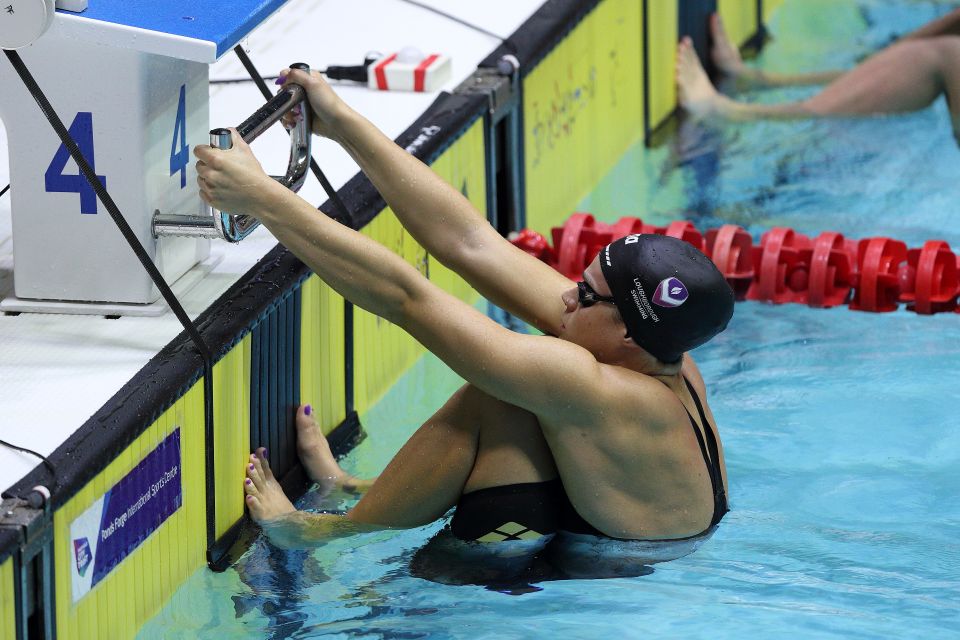
The recent European Championships served as a definitive proving ground for elite athletes, and the results firmly underscored the dominance of Loughborough University in the realm of UK swimming. Athletes affiliated with the university secured an impressive eight swimming medals—comprising five golds and three bronzes. This achievement highlights not only individual athletic excellence but also the robust high-performance infrastructure that makes Loughborough University a consistent producer of international talent. For aspiring athletes and sports professionals, analyzing these results provides valuable insights into what it takes to reach the top of the podium in elite sports performance.
Schedule a free consultation to learn more about our athletic programs.
Breaking Down the Medal Haul from the European Championships
Winning a single swimming medal at a major international competition requires years of dedicated preparation. Securing eight requires a systemic, institutional approach to athlete development. At the European Championships, Loughborough-linked athletes demonstrated remarkable versatility, collecting hardware across a variety of strokes and distances. The five gold medals signify absolute dominance in their respective events, while the three bronze medals highlight the depth of talent capable of podium finishes in highly competitive fields.
This collective success reinforces the university’s status as a central hub for UK swimming. Rather than relying on a single star athlete, the medal tally was distributed across multiple students and alumni, pointing to a sustainable model of sports performance that consistently develops world-class racers year after year.
Individual Excellence and Versatility in the Pool
While relay events often capture the headlines, individual performances at the European Championships laid the foundation for the team’s overall success. Loughborough athletes showcased their ability to handle the pressure of individual racing before translating that momentum into team events.
Max Litchfield’s Endurance and Technical Precision
p>Competing in the men’s 400m individual medley is one of the most demanding challenges in swimming, requiring speed, endurance, and seamless technique across four distinct strokes. Current student Max Litchfield claimed bronze in this exact event. Litchfield’s performance at the European Championships continues his strong record at major international meets. His ability to maintain pace and execute precise turns under fatigue exemplifies the rigorous conditioning and technical refinement emphasized in high-performance training environments. For younger swimmers watching, Litchfield’s consistency is a testament to the value of mastering fundamentals and building exceptional aerobic capacity.
Lauren Cox’s Sprint and Relay Prowess
Loughborough alum Lauren Cox demonstrated the speed and adaptability required to succeed at the elite level. Cox secured a bronze medal in the highly tactical women’s 50m backstroke, an event where hundredths of a second dictate the outcome. Her ability to generate explosive power off the starting blocks and maintain velocity through the water translated seamlessly into her relay duties. By anchoring her individual success with a gold medal in the women’s 4x100m medley relay, Cox illustrated the importance of being a well-rounded athlete capable of contributing in multiple high-stakes scenarios.
The Strategic Importance of Relay Dominance
p>Relay events are the ultimate measure of a nation’s depth in UK swimming. They require not just four fast swimmers, but a cohesive unit that can execute baton exchanges flawlessly and feed off each other’s energy. Loughborough University athletes were central to Great Britain’s relay success at the European Championships.
Freya Colbert’s Multi-Event Impact
p>Current student Freya Colbert emerged as one of the standout performers of the entire competition, returning home with three swimming medals. Colbert began her campaign by helping Great Britain secure gold in the women’s 4x200m freestyle relay. She followed this team success with an individual bronze in the 200m freestyle, proving her capability in a stacked individual field. Colbert capped off her championships by contributing to another gold medal in the women’s 4x100m medley relay. Her ability to transition between freestyle and medley relays, while also securing an individual podium finish, speaks to an incredibly high level of fitness and mental resilience.
Tyler Melbourne-Smith’s Crucial Contributions
p>In elite swimming, the athletes who swim in the preliminary heats rarely receive the same accolades as those who swim in the finals, yet their contributions are absolutely vital. Current student Tyler Melbourne-Smith played a critical role in securing Great Britain’s gold in the men’s 4x200m freestyle relay. By swimming in the heats, Melbourne-Smith ensured the team qualified for the final in a favorable lane, allowing the final quartet to race from a position of strength and ultimately break the championship record. This highlights a crucial aspect of sports performance: selfless teamwork and understanding one’s role within a larger squad dynamic.
Explore our related articles for further reading on relay strategies and team dynamics.
Abbie Wood’s Veteran Leadership
p>Loughborough alum Abbie Wood added another European title to her impressive international resume by swimming in the victorious women’s 4x200m freestyle relay. Wood’s presence provides a layer of experience and composure that is invaluable in high-pressure relay finals. Her continued success post-graduation demonstrates how the foundation built at the university supports athletes throughout their professional careers, not just during their collegiate tenure.
How Loughborough University Drives Elite Sports Performance
p>The accumulation of eight swimming medals at a single European Championships is not a coincidence. It is the direct result of a deliberately engineered environment designed to maximize sports performance. Loughborough University integrates elite athletics with academic life, providing a dual-career pathway that allows athletes to pursue higher education without compromising their sporting ambitions.
Several factors contribute to this sustained success:
- World-Class Facilities: Access to 50m training pools, advanced resistance training centers, and recovery suites allows athletes to train in an environment that mirrors or exceeds international competition standards.
- Integrated Support Teams: Athletes do not just have swim coaches; they have access to sports scientists, physiologists, nutritionists, and sports psychologists. This multidisciplinary approach ensures that every aspect of the athlete’s preparation—from stroke biomechanics to sleep optimization—is monitored and enhanced.
- High-Performance Culture: Training alongside other elite athletes creates a daily environment of healthy competition and shared ambition. When swimmers like Litchfield, Colbert, and Melbourne-Smith train together, they push each other to heights that would be difficult to achieve in isolation.
Share your experiences in the comments below regarding what you believe makes a great training environment.
Actionable Takeaways for Aspiring Swimmers
p>Observing the success of Loughborough-affiliated athletes at the European Championships provides actionable lessons for younger swimmers aiming to reach the elite level.
Develop Versatility: Freya Colbert’s success across both freestyle and medley relays, as well as individual events, shows that versatility is highly valued. Do not limit yourself to a single stroke or distance early in your development.
Embrace Team Roles: Tyler Melbourne-Smith’s contribution in the heats was essential to the team’s gold medal. Understand that contributing to a relay—whether in the heats or the final—is a critical responsibility that requires just as much focus as an individual race.
Focus on Process Over Outcome: Max Litchfield’s continued podium appearances in the grueling 400m individual medley are the result of years of focusing on daily training processes rather than just the desire for a medal. Trust the preparation.
Seek Comprehensive Support: Elite sports performance requires more than just swimming laps. Aspiring athletes should seek out programs that offer strength and conditioning, nutritional guidance, and mental skills training to ensure well-rounded development.
Conclusion
p>The performances delivered by Loughborough-linked athletes at the European Championships set a high benchmark for UK swimming. With five golds and three bronzes, current students and alumni alike demonstrated the power of combining individual talent with a world-class high-performance system. As these athletes continue to develop, the foundation built at Loughborough University will undoubtedly serve as a launching pad for future international success, including upcoming World Championships and Olympic Games.
Submit your application today to start your journey in elite sports.