
University of Sussex PhD Researcher Wins Big Ideas Contest Funding for Social Impact Venture
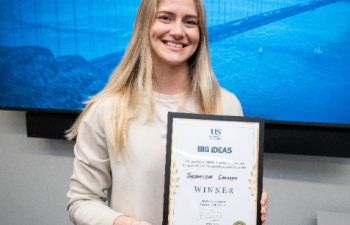
Winning a competitive funding contest while completing a doctorate is no small achievement. For Jacqueline Carhoun, a PhD researcher in Psychology at the University of Sussex, that achievement became reality when she secured £2,500 in funding from the Sussex Entrepreneurship team and earned a place at the international finals of the Big Ideas Contest in California. Her social impact venture, SEEN, is a digital support resource for loved ones of people living with opioid addiction – and her journey offers valuable lessons for any student or researcher considering entrepreneurship in the UK.
This article explores what the Big Ideas Contest involves, why initiatives like SEEN matter, and what aspiring entrepreneurs at UK universities can learn from this success story. If you are a current or prospective postgraduate researcher with an idea for positive change, read on to see how structured university support can turn academic insight into real-world impact.
From Psychology Research to Award-Winning Social Venture
Jacqueline Carhoun’s winning initiative, SEEN – which stands for Shared Experience to EvideNce – is the first co-produced and trauma-informed digital resource designed specifically for Affected Loved Ones of people who use opioids. The project demonstrates a pattern common among successful student ventures: it emerges directly from deep domain knowledge acquired through academic research, then addresses a gap that existing services have overlooked.
For doctoral researchers wondering whether their work has commercial or social application, Jacqueline’s experience is instructive. Years of immersion in a research field often reveal unmet needs that only someone with that specialist perspective would recognise. Translation of research into practice does not always require abandoning academia – many UK universities, including the University of Sussex, actively encourage researchers to explore venture creation alongside their studies.
Reflecting on her experience, Jacqueline described hearing people personally connect with the need for a resource like SEEN as both validating and emotional. She returned from California proud to have represented the University of Sussex and energised for what comes next. That combination of personal conviction and external validation is precisely what early-stage funders and competition judges look for in social impact ventures.
Have an idea that addresses a gap you have identified through your own studies or experience? The sooner you begin testing the concept and seeking feedback, the sooner you can determine whether it deserves development. Consider exploring the entrepreneurship resources available at your institution as a first step.
Inside the Big Ideas Contest: How the Competition Works
The Big Ideas Contest is a partnership between the University of Sussex and UC Berkeley, one of the most prestigious public research universities in the United States. The 2026 edition attracted more than 350 applications from students across both institutions – a pool that was narrowed down to just 13 finalist pitches. Notably, more than 40% of submissions were led by undergraduates, and 50% were led by women, signalling a broad and diverse base of student entrepreneurial talent.
The competition structure rewards more than a single winning pitch. Sussex students who applied received support sessions and coaching from the University’s Entrepreneurship team throughout the autumn and spring semesters, preparing them to articulate their ideas, validate their assumptions, and present convincingly. Jacqueline’s journey included £2,500 in initial funding from Sussex’s Entrepreneurship team, followed by a trip to California to pitch for the overall $10,000 Big Ideas Contest Prize.
Phillip Denny, director of Big Ideas, described the final pitch deliberations as among the toughest and most thoughtful he had observed. The judging panel for the anniversary year consisted of accomplished alumni and former Big Ideas prize winners: Christelle Rohaut, CEO of Codi; Manny Smith, CEO of Edvisorly; and Ashmita Kumar, CEO of Code Blue AI. For finalists, exposure to judges of this calibre represents an opportunity that extends far beyond prize money – it is access to mentorship, networks, and professional feedback that shapes ventures long after the competition ends.
The Value of International Pitching Experience for PhD Researchers
Standing in front of a panel of experienced judges at UC Berkeley is a formative experience for any early-stage founder, but it carries particular significance for PhD researchers. Doctoral training develops analytical rigour and subject expertise; entrepreneurship competitions develop an entirely different skill set – concise communication, storytelling, resilience under questioning, and the ability to translate technical concepts for non-specialist audiences.
Jacqueline described the atmosphere at UC Berkeley as unforgettable, surrounded by talented and driven entrepreneurs who believed their ideas could make a difference. She noted that competing as a Grand Finalist on an international stage felt like a real milestone, made even more special by sharing the space with three other driven finalists.
For UK-based researchers weighing up whether to enter such competitions, the benefits compound quickly:
- Professional feedback: Judges with venture-building experience provide candid assessments that improve both the idea and the pitch.
- Network expansion: Connections made at international competitions often lead to collaborators, advisors, and future funders.
- Credibility: Placement in a recognised contest strengthens funding applications, grant proposals, and future investor conversations.
- Confidence: Presenting under pressure builds a capability that serves researchers throughout their careers, whether in academia or industry.
If you are a PhD researcher or postgraduate student in the UK, ask yourself what opportunities your institution offers for pitching your ideas. Even entering and not winning can accelerate your development more than months of working in isolation.
Meet the Sussex Finalists: A Snapshot of Student Innovation
Jacqueline was not the only University of Sussex student to reach the finalist stage. This year’s Sussex finalists represented an impressive range of disciplines and social causes, reflecting the campus community’s passion for tackling educational inequality, global health challenges, social justice, and environmental issues. The finalists included:
- Funda – Terrance Mawanga (Artificial Intelligence and Adaptive Systems MSc)
- ARISE – Nehemie Samuel Merilien (Management MSc)
- Careerak – Aya Abou Ghalyoum (Development Studies MA)
- WasteConnect – Tony Simukonde (Environmental Development and Policy MA)
- EaseScape – Immanuela Chijoke-Ogwurike (Medical Neuroscience BSc)
- Digital Tech Vault – Emily Jones (International Business and Development MSc)
- Hubble Hub – Rhi Wilson (Psychology with Clinical Approaches BSc)
The diversity of these ventures carries an important message: entrepreneurship is not confined to business schools. Students studying neuroscience, development policy, environmental governance, and clinical psychology all identified problems worth solving and built proposals to address them. Whatever your academic background, the tools of venture creation – problem validation, customer discovery, prototyping, and pitching – are learnable skills.
Entrepreneurship Support at UK Universities: What to Expect
The University of Sussex’s Entrepreneurship team illustrates the kind of infrastructure that leading UK universities now provide to students and researchers interested in venture creation. Support typically spans the full journey: from the earliest stages of developing an idea for a business or social enterprise, through to launching and scaling the venture.
At Sussex, this support includes:
- One-to-one guidance from experienced entrepreneurship staff who help refine ideas and identify next steps.
- Startup workshops covering essential topics such as business modelling, market research, and pitching.
- Funding opportunities – each year the university offers a range of grants and competitions designed to help launch student ideas, with new opportunities announced annually.
- Competition preparation – structured coaching ahead of contests like the Big Ideas Contest, ensuring students present their strongest possible case.
This model reflects a broader trend across UK higher education. Universities increasingly recognise that supporting student entrepreneurship delivers value on multiple fronts: it enhances graduate employability, strengthens research impact, contributes to regional economic development, and attracts ambitious applicants who want more than a qualification from their studies.
If you are comparing universities for postgraduate study, investigating the entrepreneurship provision should be part of your decision. Look for evidence of dedicated teams, active funding programmes, and participation in international competitions. These signals indicate a culture where innovative ideas receive practical support rather than remaining theoretical.
Curious whether your own idea could benefit from this kind of support? Reach out to the entrepreneurship or careers team at your current or prospective institution and ask what is available – the conversation costs nothing and could change your trajectory.
Practical Lessons for Aspiring Student Entrepreneurs
Jacqueline Carhoun’s success offers several actionable takeaways for students and researchers considering their own ventures:
1. Start from genuine insight, not novelty
SEEN works because it addresses a specific, well-understood need identified through research. The strongest student ventures typically solve problems the founder knows intimately. Ask yourself: what does my field of study reveal that others have missed?
2. Engage with support early
The Sussex finalists benefited from coaching sessions held well before applications were due. Early engagement gives you time to test assumptions, refine your pitch, and build relationships with advisors who can champion your application.
3. Treat every pitch as a learning opportunity
Even reaching the finals without winning delivers lasting value. The feedback, exposure, and experience of presenting at UC Berkeley will inform Jacqueline’s work for years to come. Approach competitions as investments in your development rather than all-or-nothing bets.
4. Let social purpose drive persistence
Jacqueline described the experience of hearing people connect personally with SEEN’s mission as validating and emotional. Ventures rooted in authentic purpose sustain founders through inevitable setbacks better than those chasing trends.
5. Build co-production into your solution
SEEN is co-produced and trauma-informed – designed with its end users rather than merely for them. Involving the people your venture serves improves both the product and the credibility of your pitch.
Taking the First Step: Opportunities Await at the University of Sussex
The story of Jacqueline Carhoun and the wider cohort of Sussex Big Ideas Contest finalists demonstrates what becomes possible when academic talent meets structured entrepreneurial support. A PhD researcher transformed a psychological insight into an award-nominated social venture, gained international pitching experience, and secured funding – all while advancing her doctorate.
For students and researchers at the University of Sussex, the Entrepreneurship team’s funding opportunities for 2026–27 will launch shortly, alongside ongoing one-to-one support and startup workshops throughout the year. Whether you have a fully formed idea or simply a curiosity about venture creation, now is the time to get involved.
Explore the entrepreneurship programmes, funding competitions, and support services available at the University of Sussex today – and take the first step towards turning your idea into impact. Share this article with a fellow student or researcher who has a big idea worth developing.