
University of Surrey Heat-Cool Programme Tackles Overheating Schools with Climate Detectives
Understanding the Challenge of Overheating Schools in the UK
Recent years have seen a marked shift in the British climate, with heatwaves UK residents experience becoming more frequent, intense, and prolonged. During the summer months, temperatures in built-up areas like London can easily soar past 35°C, creating uncomfortable and often unsafe indoor environments. While adults may have the autonomy to seek shade or adjust their schedules, children spend a significant portion of their day in educational buildings that are notoriously ill-equipped to handle extreme heat.
The issue of overheating schools is a multifaceted problem. Many UK school buildings were constructed decades ago, featuring heavy brickwork, large single-glazed windows, and poor ventilation systems designed to retain heat during colder months. When external temperatures rise, these architectural choices turn classrooms into greenhouses. Prolonged exposure to high temperatures impairs cognitive function, reduces concentration, and exacerbates respiratory issues, directly undermining the educational outcomes and physical well-being of students.
Addressing this infrastructural challenge requires more than simply installing air conditioning units, which are energy-intensive and contribute further to greenhouse gas emissions. Instead, educational institutions are increasingly turning toward sustainable solutions that mitigate heat at the source while providing hands-on learning opportunities for students.
How the Heat-Cool Programme Empowers Students as Climate Detectives
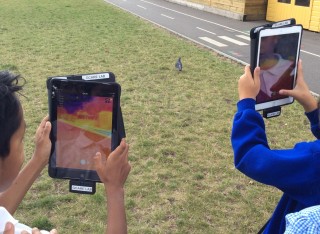
Recognizing the urgent need for adaptive strategies, the University of Surrey’s Global Centre for Clean Air Research (GCARE) developed the Heat-Cool programme. Spearheaded by Professor Prashant Kumar, this initiative shifts the paradigm of environmental education from passive textbook learning to active, inquiry-based problem solving. By equipping primary school students with handheld thermal cameras, the programme turns young learners into climate detectives tasked with investigating their own campuses.
During two-hour interactive workshops, students aged nine and older are trained to use thermal imaging technology to scan their school grounds. They learn to identify heat hotspots—such as asphalt playgrounds, dark-roofed buildings, and unshaded south-facing walls—and compare them against cooler areas featuring vegetation or water features. This hands-on approach demystifies the abstract concept of urban heat islands, making the reality of climate change visible and immediately relevant to their daily lives.
The Role of Thermal Imaging in Environmental Education
Thermal imaging serves as a powerful pedagogical tool. Unlike standard cameras that capture visible light, thermal cameras detect infrared radiation, translating surface temperatures into a color-coded visual spectrum. When students look through these devices, a seemingly ordinary brick wall glowing bright red or yellow instantly communicates the concept of heat absorption. Conversely, a patch of grass appearing in cool blues and purples provides immediate, undeniable evidence of the cooling power of nature.
This visual evidence bridges the gap between theoretical science and tangible reality. Students are not merely told that trees cool the air; they see the temperature differential with their own eyes. This method of environmental education fosters critical thinking, as students must analyze the data they collect, formulate hypotheses about why certain areas are hotter, and design targeted interventions to address the specific thermal profiles of their school environments.
Analyzing the Data: What Students Discovered About Their School Grounds
The efficacy of the Heat-Cool programme is grounded in rigorous data collection. Rolled out across seven schools in the South East of England, the programme engaged over 500 children who captured and analyzed more than 1,700 thermal images. These images documented the surface temperatures of over 4,300 distinct objects and areas across the participating school grounds.
The aggregated data provided a clear, quantitative validation of nature-based cooling strategies. The student-led research consistently demonstrated that natural, water-based, and engineered green infrastructure was typically between one and three degrees Celsius cooler than surrounding conventional areas. While a one-to-three-degree difference might seem marginal, in the context of a crowded classroom during a heatwave, this reduction can be the deciding factor between a tolerable learning environment and one that triggers heat stress.
Developing Sustainable Solutions for Heat Resilience
Data collection is only the first phase of the Heat-Cool programme. The ultimate objective is to empower students to act as agents of change by designing sustainable solutions tailored to their specific findings. After identifying heat hotspots, students work collaboratively to propose and evaluate various green infrastructure interventions.
These proposals often include a mix of natural and engineered systems. Students frequently suggest the installation of green roofs, which involve covering conventional rooftops with vegetation and a growing medium. Green roofs absorb solar radiation and release moisture through evapotranspiration, significantly reducing the amount of heat transferred into the building below. Other common proposals include the creation of rain gardens to manage runoff while cooling the air, the installation of reflective shading structures over playgrounds, and the strategic planting of native trees and shrubs to create shaded corridors.
Why Students Favour Green Roofs and Integrated Infrastructure
An interesting finding from the University of Surrey study was the specific preference among students for infrastructure-integrated solutions, particularly green roofs. This preference likely stems from the dual benefits of such systems. Green roofs do not require sacrificing limited playground space—a premium commodity in urban schools—yet they deliver substantial cooling benefits. Furthermore, green roofs can serve as outdoor classrooms or biodiversity havens, adding an ecological dimension to the school’s infrastructure that resonates strongly with environmentally conscious students.
By favouring these integrated sustainable solutions, students demonstrate a sophisticated understanding of spatial constraints and multi-functional design. They learn that addressing overheating schools does not require a single, silver-bullet approach, but rather a mosaic of interventions that work together to moderate microclimates.
Measuring the Impact on Climate Literacy and Engagement
Beyond the physical cooling of school grounds, the Heat-Cool programme yields significant educational outcomes. Evaluating the impact of the workshops, researchers found that more than 80 percent of participating pupils either maintained or improved their understanding of climate change. More importantly, students overwhelmingly rated the experience as enjoyable and engaging.
This high level of engagement is a critical victory for environmental education. Climate change is a complex, often overwhelming topic that can lead to eco-anxiety among young people. By providing students with actionable tools and a framework for solving local problems, the programme replaces feelings of helplessness with a sense of agency. Students see that their observations matter and that their ideas for sustainable solutions can influence how their schools adapt to heatwaves UK weather patterns bring.
Applying Citizen Science to Build Climate-Resilient Communities
The Heat-Cool programme is a prime example of citizen science—research where members of the public actively participate in scientific investigation. By integrating citizen science into the primary school curriculum, the University of Surrey has created a scalable model for community resilience. When children act as climate detectives, they bring their knowledge home, sharing their findings with parents, siblings, and neighbours. This ripple effect raises broader community awareness about urban heat and the effectiveness of green infrastructure.
Local authorities and urban planners can also benefit from the data generated by these programmes. While professional thermal imaging surveys are expensive and infrequent, a network of student-led surveys can provide continuous, granular data about microclimates across a town or city. This data can inform municipal planning decisions, such as where to prioritize tree planting or how to redesign public spaces to maximize cooling effects during extreme heat events.
Explore our related articles for further reading on citizen science and urban sustainability.
Take Action: Integrating Sustainability into School Curriculums
For educators and school administrators looking to replicate the success of the Heat-Cool programme, several actionable steps can be taken to integrate sustainability and climate resilience into existing curriculums:
- Invest in Accessible Technology: Handheld thermal cameras have become increasingly affordable. Procuring a small set of devices allows schools to conduct regular environmental audits without requiring significant capital.
- Interdisciplinary Approach: Frame heat investigations not just as science projects, but as exercises in geography (mapping hotspots), mathematics (calculating temperature averages and variances), and design technology (drafting green roof models).
- Partner with Local Experts: Collaborate with local universities, environmental charities, or urban planning departments. Experts can provide training for teachers, validate student findings, and help translate student proposals into viable infrastructure projects.
- Implement Student Proposals: The most critical step is acting on the data. When schools allocate budget to implement even a small-scale solution designed by students—such as planting a shade tree or building a small rain garden—it validates the students’ work and tangibly demonstrates the impact of sustainable solutions.
Conclusion: The Future of Environmental Education in the UK
As the reality of climate change sets in, the UK’s educational infrastructure must adapt to protect its most vulnerable occupants. The University of Surrey’s Heat-Cool programme illustrates that addressing overheating schools does not have to be a purely top-down, engineering-led process. By training students to be climate detectives, schools can simultaneously gather valuable environmental data, design effective sustainable solutions, and cultivate a generation of environmentally literate, proactive citizens.
The integration of thermal imaging and citizen science into environmental education provides a blueprint for how schools can respond to the increasing threat of heatwaves UK cities face. Moving forward, expanding these programmes will be essential for building the climate resilience of our communities, starting from the ground up—literally—with the students who will inherit these spaces.
Share your experiences with school heatwaves and sustainability initiatives in the comments below.