
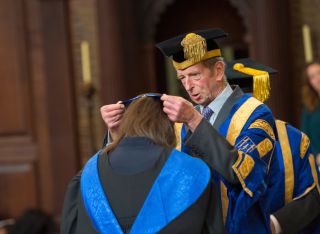
Recent University of Surrey news highlights a remarkable milestone in British higher education: His Royal Highness The Duke of Kent has completed 50 years as the University’s Chancellor. This half-century of dedication represents one of the longest chancellorships in the history of UK universities, providing the institution with an extraordinary period of stability and high-profile ambassadorship. For students, alumni, and observers of the UK higher education sector, examining this 50 years of service news offers a unique window into how ceremonial leadership intersects with academic growth.
Explore our related articles for further reading.
Understanding the Role of a Chancellor in UK Higher Education
To fully appreciate the significance of this UK Chancellorship news, it is helpful to understand the distinct role a Chancellor plays within the British university system. Unlike a Vice-Chancellor, who operates as the chief executive officer managing the daily academic, financial, and operational affairs of the institution, the Chancellor serves as the titular head. This role is largely ceremonial, but its impact on a university’s public profile, philanthropic efforts, and internal morale is substantial.
The Chancellor acts as the university’s most prominent ambassador. Duties typically include presiding over degree congregations—graduation ceremonies—advising the Vice-Chancellor and the University Council, and acting as a unifying figure for the student body and alumni network. When a Chancellor remains in office for five decades, they provide a continuous thread of institutional memory, witnessing and supporting the university through multiple generations of students, significant shifts in educational policy, and massive physical campus expansions.
Schedule a free consultation to learn more about university governance.
A Historic Appointment in 1976
The origins of this long-standing tenure trace back to the mid-1970s. The Duke of Kent succeeded Lord Robens, who served as the University of Surrey’s inaugural Chancellor. The transition of power occurred following formal recommendations made during a special Senate meeting held on 1 July 1976. The University Court officially ratified the appointment shortly after, on 17 July.
At the time, the then Vice-Chancellor, Professor Anthony Kelly FRS, announced the appointment to the university community during an afternoon degree conferment ceremony. This moment marked the beginning of a partnership between the royal family and the University of Surrey that would endure profound changes in both the local Guildford community and the broader global academic landscape. The University of Surrey itself had only recently received its royal charter (in 1966), transitioning from its roots as Battersea Polytechnic Institute. Having a figure of the Duke’s stature helped solidify the young university’s standing.
Key Milestones in the Duke of Kent’s Chancellorship
Over the past five decades, the Duke of Kent has been a consistent presence on the University of Surrey’s Stag Hill and Manor Park campuses. While his most frequent appearances have been at summer undergraduate and postgraduate graduation ceremonies, his role has also involved participating in pivotal institutional milestones.
Expanding Research Infrastructure
During the 1980s, the UK higher education sector began placing a heavier emphasis on commercializing academic research. The Duke of Kent played a visible role in this transition for Surrey by officially opening the Surrey Research Park. Today, the Research Park stands as one of the most successful science and technology parks in Europe, housing over 150 companies and fostering critical connections between academic research and commercial enterprise.
In the year 2000, his ongoing commitment to the university’s physical and academic infrastructure was recognized with the opening of the Duke of Kent Building. Facilities like this are vital to the modern student experience, providing specialized teaching spaces, lecture theatres, and study areas that support evolving pedagogical needs.
Modernizing Education: The Institute for People-Centred AI
p>As the university adapted to the digital age, so too did the Chancellor’s engagement with its modern initiatives. In November 2021, The Duke of Kent supported the university’s forward-looking research strategy by attending the launch of the Institute for People-Centred AI at St James’s Palace. This event demonstrated how the university leverages its royal connections to gain visibility for cutting-edge research that prioritizes ethical, human-focused applications of artificial intelligence.
Royal Visits and Shared University History
p>Reviewing Duke of Kent news over the years reveals that his visits often coincided with other significant royal engagements, further elevating the university’s national profile. Notably, The Duke of Kent joined Queen Elizabeth II on campus on three separate occasions, each marking a distinct era of the university’s development.
Celebrating the Silver Jubilee and Technological Pioneers
p>The first joint visit occurred in March 1992. Queen Elizabeth II visited Guildford Cathedral for a service of thanksgiving marking the University of Surrey’s silver jubilee. The service also commemorated the centenary of the founding of Battersea Polytechnic Institute in 1891, the institution that eventually evolved into the modern university. Beforehand, The Duke of Kent accompanied Her Majesty on a comprehensive campus tour, which included a visit to the Centre for Satellite Engineering—now known globally as the Surrey Space Centre—and an exhibition highlighting the university’s latest technological research.
p>The royal connection to the university’s space endeavors continued in December 1998. Queen Elizabeth II, accompanied by Prince Philip and The Duke of Kent, returned to Surrey to present Professor Sir Martin Sweeting with the Queen’s Award for Technological Achievement. This prestigious award recognized Sir Martin’s pioneering work in developing small satellites, a field in which the University of Surrey had become a undisputed global leader.
The Opening of the School of Veterinary Medicine
p>Queen Elizabeth II’s final visit to the University of Surrey took place in 2015, accompanied by Prince Philip and The Duke of Kent. The purpose of this visit was the official opening of the School of Veterinary Medicine. The establishment of a vet school was a massive strategic undertaking for the university, requiring new state-of-the-art facilities, specialized staffing, and rigorous accreditation processes. The presence of the Queen and the Chancellor underscored the national importance of this expansion to the UK’s agricultural and animal welfare sectors.
Recent UK Chancellorship News and Continued Engagement
p>Even as he reached his golden anniversary, The Duke of Kent’s active engagement with the university did not wane. Earlier in 2026, University of Surrey news covered a significant royal visit where The Duke was joined by Her Royal Highness The Duchess of Edinburgh for a detailed tour of the Surrey Space Centre. This visit highlighted the ongoing relevance and global competitiveness of the university’s satellite engineering programs.
p>Just a fortnight later, The Duke returned to Guildford to fulfill one of his most important constitutional duties as Chancellor: the formal installation of a new Vice-Chancellor. He presided over the ceremony at Guildford Cathedral for Professor Stephen Jarvis, who became the sixth President and Vice-Chancellor of the University of Surrey. This ceremonial handover is vital for institutional continuity, symbolizing the peaceful transition of executive leadership while the Chancellor remains the steady, overarching figurehead.
The Impact of Half a Century of Service
p>Assessing the true impact of 50 years of service requires looking beyond the ceremonial photographs and examining the stability such tenure provides. In an era where university leadership often experiences high turnover due to the intense pressures of the higher education market, having a Chancellor who has served since 1976 provides an invaluable anchor.
p>Professor Stephen Jarvis captured this sentiment perfectly in his recent statements regarding the 50 years of service news. He noted that the university could not ask for a more steadfast champion, emphasizing how The Duke’s commitment has shaped the institution for the better. From opening vital research facilities to presiding over graduation ceremonies for tens of thousands of students, the Chancellor’s contribution has been a constant, deeply valued presence. This long-term dedication helps foster a strong sense of institutional identity and pride among the university’s global alumni network.
p>For prospective students considering where to study, the stability and historical legacy of an institution matter. A university that has maintained such high-profile, consistent leadership is often one that possesses a strong foundational culture, robust governance, and a clear sense of its trajectory within the broader UK higher education landscape.
Share your experiences in the comments below.
Looking Ahead at the University of Surrey
p>As the University of Surrey moves forward under new executive leadership, the foundation built over the last half-century remains solid. The UK Chancellorship news surrounding The Duke of Kent’s anniversary is not just a look backward, but a testament to the enduring nature of British academic institutions. The university continues to build upon the research parks, veterinary schools, and space centres that The Duke has officially opened over the decades.
p>Whether you are a prospective student researching your options, a current applicant preparing for the next academic year, or an alumnus reflecting on your time at Stag Hill, this milestone is a shared point of pride. It highlights a university that values tradition while continuously pushing the boundaries of modern research and education.