
Review Loughborough University’s UK-Japan Hydrogen Summit and Its Impact on Net Zero and AI Growth Zones
Why the Intersection of Hydrogen and Artificial Intelligence Demands Immediate Attention
The rapid expansion of digital infrastructure presents unprecedented challenges for national energy grids. As the UK government designates specific areas for high-performance computing and data center development—commonly referred to as AI Growth Zones—finding sustainable, reliable, and scalable power sources has become a critical infrastructure challenge. Traditional grid capacities are increasingly strained by the immense electricity requirements of modern computing.
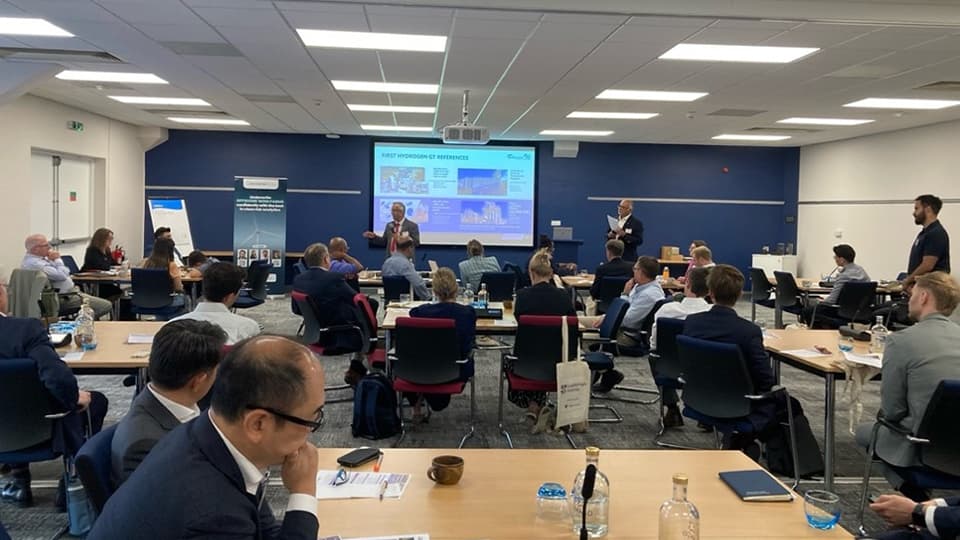
To address this, Loughborough University recently hosted the UK-Japan Hydrogen Summit, an event that brought global industry leaders, policymakers, and researchers together to discuss actionable solutions. The summit focused on how hydrogen technologies can provide the necessary power to sustain these AI Growth Zones while keeping the UK on track to meet its net zero targets. By examining the synergy between clean energy and digital infrastructure, the event highlighted the urgent need to scale hydrogen deployment before power shortages bottleneck technological and economic progress.
Explore our related articles for further reading on clean energy infrastructure.
Key Takeaways from the UK-Japan Hydrogen Summit on Net Zero
Sponsored by Deloitte LLP, RenewRisk, and Intelligent Energy, the UK-Japan Hydrogen Summit convened 60 leading representatives from the hydrogen technology, energy, and manufacturing sectors. Held on 14 July 2026, the event served as a platform to assess the current state of hydrogen deployment and identify the barriers preventing its widespread adoption. The discussions moved beyond theoretical applications, focusing instead on immediate, practical steps required to integrate hydrogen into the national energy mix.
Decentralized Power Generation and Low-Emission Gas Turbines
A major focal point of the summit was the role of decentralized power generation. Rather than relying solely on a centralized grid, experts argued that locating hydrogen power systems directly adjacent to heavy energy consumers—such as hyperscale data centers—significantly reduces transmission losses and enhances energy security.
Dr Nuretten Tekin from Kawasaki Heavy Industries presented compelling evidence supporting this model. The discussion centered on hydrogen-enabled gas turbines, which are capable of providing consistent, high-density power with substantially lower emissions than traditional natural gas turbines. By utilizing hydrogen and its derivatives, these systems can be deployed rapidly to support localized energy grids, providing a bridge technology as the UK transitions fully to renewable sources.
Fuel Cell Technologies and Clean Energy Integration
In addition to turbines, the integration of advanced fuel cell technologies was heavily debated. Delegates examined how solid oxide fuel cells and proton exchange membrane fuel cells can be scaled to support industrial and digital energy demands. During the event, participants viewed practical applications of this technology firsthand, including a battery electrolyser container system currently being built on the Loughborough University campus. This system is designed specifically for electricity storage and hydrogen generation, demonstrating how academic research directly supports commercial energy infrastructure.
Powering the UK’s AI Growth Zones with Hydrogen
The concept of AI Growth Zones represents a strategic shift in how the UK approaches digital infrastructure. These designated areas are intended to cluster computing resources, attracting investment and fostering innovation in artificial intelligence. However, the primary constraint for these zones is not real estate or hardware, but power. Hyperscale data centers require gigawatts of reliable electricity, and relying on fossil fuels to meet this demand would derail the UK’s net zero commitments.
The Scale of AI Power Demand
Dr Rana Ghosh-Roy, NVIDIA EMEA/NSE and UK Lead Alliance Partner and Director of AI and Data at Deloitte MCS Limited, provided a detailed analysis of the projected power demands driven by artificial intelligence. The presentation made it clear that the exponential growth in AI model training and inference requires a fundamental rethinking of energy strategy. Digital infrastructure and energy strategy are no longer separate domains; they are deeply intertwined.
As AI workloads double, the electricity required to run servers, cooling systems, and storage arrays scales in tandem. The summit concluded that without a massive injection of clean, dispatchable power—such as that provided by hydrogen—the planned AI Growth Zones will face severe operational limitations.
Schedule a free consultation to learn more about integrating hydrogen into your energy strategy.
Practical Technological Solutions from Industry Leaders
Rosie Slater, Managing Partner of Gekkō Advisory, outlined the sheer economic opportunity available to the UK if it can successfully decouple AI growth from carbon emissions. By positioning hydrogen as the primary power source for AI Growth Zones, the UK can create a new market for clean technology manufacturing and deployment.
Dr Ziyad Sherif, a Research Fellow in Digital Manufacturing and Sustainability and co-author of the IET’s Green Paper on Sustainability and Net Zero Policy, reinforced this point. Dr Sherif argued that the United Kingdom possesses the research foundations, regulatory frameworks, and industrial base required to turn hydrogen deployment into a distinct competitive advantage. The technology is proven; the challenge lies in accelerating the scale-up to meet the immediate timeline of AI infrastructure rollout.
International Collaboration: Leveraging UK and Japan Expertise
A defining feature of the Loughborough University event was its international scope. The UK-Japan Hydrogen Summit underscored the importance of cross-border collaboration in advancing clean energy technologies. Japan has long been a global pioneer in hydrogen strategy, investing heavily in hydrogen supply chains, fuel cell development, and international import mechanisms.
By bringing Japanese industrial giants—including Kawasaki Heavy Industries, Hitachi Europe, Mitsubishi Corporation, Panasonic UK, Toyota Motor Manufacturing UK, and Shimadzu UK—together with UK counterparts, the summit facilitated crucial knowledge transfers. Representatives from UK organizations such as the Hydrogen Energy Association, Energy Systems Catapult, Cadent Gas, FutureBiogas, and RWE engaged in rigorous dialogue about supply chain logistics, safety standards, and regulatory harmonization.
This collaboration is vital. Building a hydrogen economy requires aligning international standards for storage, transportation, and utilization. The partnerships formed at this summit will likely influence how hydrogen supply chains are structured across Europe and Asia in the coming decade.
The Role of Academic Institutions in the Clean Energy Transition
While industry provides the capital and deployment capabilities, academic institutions provide the foundational research and independent analysis necessary to drive innovation. Loughborough University’s role in hosting the summit highlights the critical function universities play in the net zero transition.
Professor Dan Parsons, Pro Vice-Chancellor for Research and Innovation, opened the event by detailing the institution’s broad strengths in hydrogen research. The university is not merely a neutral venue for discussions; it is an active participant in developing the technologies being discussed. The Wolfson School of Mechanical, Electrical and Manufacturing Engineering, led by Dean Professor Rajkumar Roy, is directly involved in advancing digital manufacturing, sustainability, and energy engineering.
The summit was organized and moderated by Dr Indranil Nath, a Senior Lecturer specializing in AI Capability Evaluations, and Professor Sonya Calnan, a Professor of Energy Engineering. Their leadership ensured that the discussions remained technically rigorous and focused on viable pathways to scale. The event concluded with insights from Dr Kathryn North, Associate Pro Vice-Chancellor for Climate Change and Net Zero, grounding the technological solutions in broader environmental and policy contexts.
Next Steps for Professionals and Policymakers in the Hydrogen Economy
The overarching message from the UK-Japan Hydrogen Summit was clear: the window to align the UK’s digital expansion with its climate goals is narrowing. To successfully power AI Growth Zones and achieve net zero, stakeholders across sectors must take decisive action.
- For energy professionals: Prioritize the integration of hydrogen-enabled gas turbines and fuel cell systems into regional energy planning. Assess the feasibility of decentralized power generation for new industrial and digital infrastructure projects.
- For technology leaders: Incorporate energy consumption metrics into the earliest stages of AI infrastructure design. Partner with clean energy providers to ensure that new data centers are built with hydrogen-ready power systems.
- For policymakers: Accelerate the development of regulatory frameworks that support hydrogen blending, storage, and transportation. Implement incentives that encourage private investment in hydrogen production facilities located near designated AI Growth Zones.
The transition to a hydrogen-supported economy requires coordinated effort. As the discussions at Loughborough University demonstrated, the technological solutions exist. The focus must now shift to deployment, scale, and the political will to build the infrastructure of the future.
Have questions about hydrogen technology and net zero strategies? Write to us!