
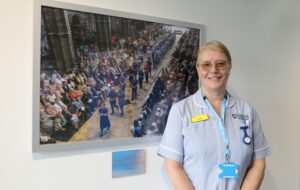
Consider the prospect of abandoning a nearly three-decade-long corporate career to start from scratch in a highly demanding medical field. For many, this remains an abstract thought, but for Angela Tester-Bedford, this became a concrete reality when she decided to make a healthcare career pivot at the age of 60. After spending 28 years as a senior health and safety manager working globally, she transitioned into a UK nursing program at the University of Chichester. Her recent acceptance into the highly competitive Florence Nightingale programme serves as a compelling case study for anyone contemplating a late-stage career change. This article examines the practical steps, institutional support systems, and mindset required to successfully navigate such a significant professional transition.
Overcome Common Barriers for Mature Nursing Students
One of the most persistent myths in higher education is that university courses are exclusively designed for 18 to 21-year-olds. Many mature nursing students initially hesitate to apply, harboring doubts about their academic readiness or whether institutions will accept older candidates. Angela experienced this exact hesitation, noting that no one in her family had ever attended university and she assumed programs would not want an older applicant.
Dispelling this myth requires looking at the actual demographics of modern healthcare education. The National Health Service (NHS) and private healthcare sectors actively rely on the life experience, emotional intelligence, and interpersonal skills that older adults bring to clinical environments. A professional who has spent decades managing complex corporate operations often possesses highly transferable skills, including crisis management, strict adherence to protocols, and effective team communication. When evaluating a healthcare career pivot, recognize that your previous professional background is not a liability; it is a distinct advantage that can differentiate you in both academic and clinical settings. Submit your application today to leverage your unique background in a new healthcare role.
Evaluate the Support Systems in a UK Nursing Program
Choosing the right academic institution is a critical determinant of success for mature students. Larger universities may offer extensive research facilities, but they can sometimes lack the tailored support structures necessary for adults returning to education. When researching a UK nursing program, prospective students should prioritize institutions that explicitly cater to diverse learning needs.
The University of Chichester exemplifies this targeted approach. Angela specifically chose Chichester after attending an open day and comparing it to other institutions with larger cohorts. She found that smaller class sizes allowed for more personalized attention and a learning environment explicitly geared toward supporting mature students. When evaluating potential programs, investigate the student-to-faculty ratio, the availability of academic mentors, and the structural flexibility of clinical placements. Look for universities that offer robust pastoral care and recognize the external responsibilities—such as family commitments—that older students often balance alongside their studies. Schedule a free consultation to learn more about how to evaluate nursing programs based on your specific needs.
Understand the Impact of the Florence Nightingale Programme
Excelling in a nursing degree opens doors to specialized leadership and development opportunities that can accelerate a new career. The Florence Nightingale Foundation’s (FNF) Early Career Nurses Leadership Programme is one such opportunity. Designed as an interactive online leadership initiative, it helps early-career nurses and midwives develop authentic leadership styles, enhance clinical skills, and boost long-term career prospects.
Securing a place on the Florence Nightingale programme is highly competitive. Angela was selected as one of only 20 candidates out of hundreds of national applicants. Her success underscores a vital strategy for mature students: integrating your past professional identity into your new healthcare identity. During her application process, Angela did not hide her corporate history; instead, she articulated how her global experience in health and safety provided a unique foundation for nursing leadership. For anyone making a career pivot, framing your non-healthcare experience as a complementary asset rather than an unrelated past is crucial for standing out in competitive selections. Have questions about building your application narrative? Write to us!
Execute Practical Steps for a Successful Healthcare Career Pivot
Moving from an established career into nursing requires a structured, methodical approach. Relying solely on motivation is insufficient; you must navigate specific administrative and educational prerequisites. Based on successful transitions like Angela’s, consider the following actionable steps:
Complete an Access Course
If you have been out of formal education for many years, jumping directly into a nursing degree can be academically jarring. Access to Higher Education diplomas are specifically designed for adults returning to study. These courses rebuild foundational academic skills in subjects like biology, chemistry, and health studies, ensuring you possess the requisite knowledge to handle a rigorous nursing curriculum.
Attend Open Days and Ask Direct Questions
Do not rely solely on prospectuses or websites. Physically visiting a campus allows you to gauge the culture firsthand. When attending open days, speak directly with current mature students and program coordinators. Ask specific questions about how the curriculum accommodates older learners, how clinical placements are scheduled, and what academic support mechanisms exist for students who have not written an essay in decades.
Leverage Transferable Skills in Clinical Placements
Clinical placements are the core of any nursing degree. Approach these placements strategically by identifying where your previous experience applies. A former corporate manager might excel in multidisciplinary team meetings, handover protocols, or managing complex patient pathways. Articulating these competencies to your clinical mentors early on helps them assign you responsibilities that align with your existing strengths. Explore our related articles for further reading on maximizing clinical placement experiences.
Plan Financial and Logistical Transitions
A career pivot in your fifties or sixties requires careful financial planning. Investigate NHS bursaries, student loans tailored to mature students, and any available university-specific grants. Logistically, ensure you have reliable transportation for early morning or late-night shifts, as hospital placements do not always adhere to standard academic hours.
Discover the Reality of Community Nursing as a Specialism
As students near the end of their training, they must choose a specialism. For those making a healthcare career pivot later in life, community nursing often presents an highly appealing option. Unlike acute hospital settings, which are fast-paced and heavily focused on immediate triage, community nursing involves visiting patients in their own homes to deliver holistic, long-term care.
Angela secured a community nursing post with the Sussex Community NHS Foundation Trust, citing the privilege of caring for patients in their personal environments. Community nurses manage a wide array of clinical responsibilities, including palliative care, wound management, catheter care, and medication administration. Crucially, this specialism focuses heavily on preventative care—keeping patients out of the hospital. The autonomous nature of community nursing, combined with the opportunity to build long-term patient relationships, aligns well with the communication skills and steady demeanour often cultivated during long corporate careers.
Plan Your Next Career Move with Confidence
Making a drastic professional change later in life is inherently daunting, but the trajectory of mature nursing students proves that age is not a barrier to entering demanding, highly respected fields. The journey requires acknowledging your initial fears, selecting an institution like the University of Chichester that provides structural support, and strategically utilizing your past professional experience to carve out a unique niche in healthcare. Leadership opportunities, such as the Florence Nightingale programme, are accessible to those who demonstrate determination and a clear vision for their new career. Whether you are inspired by a personal experience or simply seeking a more purpose-driven profession, the frameworks for success are firmly in place. Share your experiences in the comments below if you are considering a similar transition into the healthcare sector.