Understanding the Realities of the UCAS Clearing Process in the UK
Experiencing a shift in your academic plans on results day can feel overwhelming, but the UCAS Clearing process in the UK frequently serves as a practical route to higher education rather than a setback. For many students, Clearing provides an unexpected opportunity to reassess their options, discover new locations, and ultimately find a course that aligns with their long-term career goals. The process requires quick decision-making, thorough research, and a willingness to adapt, but it routinely leads to substantial university success.
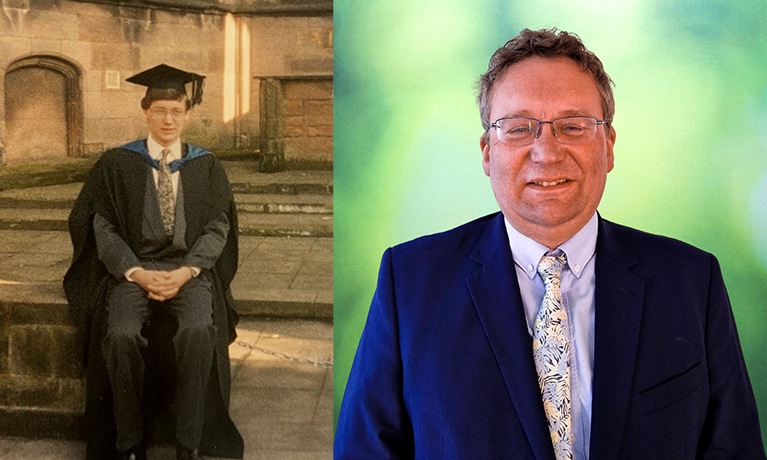
Consider the experience of Mark Howarth, a prominent figure in the UK legal sector. On his 18th birthday, his Economics A-level result did not go as planned. Rather than abandoning his higher education ambitions, he utilized the Clearing system. He spent days calling universities from his parents’ hallway, ultimately securing a place to study Geography and Economics. His criteria for choosing a university were straightforward at the time—he selected Coventry, UK, largely because it was home to a top-flight football team. While the initial reasoning was unorthodox, the decision established the foundation for a highly lucrative and fulfilling career.
Schedule a free consultation to learn more about your Clearing options.
Leveraging Transferable Skills for a Law Conversion
Entering university through Clearing does not lock you into a single, rigid career path. Mark’s academic journey demonstrates how undergraduate studies in entirely different disciplines can provide a competitive edge in the legal profession. While completing his degree in Geography and Economics, he recognized the need to plan his next steps and secured work experience at a local law firm. This practical exposure revealed that a career in law was a viable and logical progression.
Following his undergraduate degree, Mark transitioned into the legal field by completing a law conversion course. This path highlights a crucial insight for prospective students: you do not always need an undergraduate law degree to succeed as a solicitor. Degrees in economics, geography, history, or the sciences develop highly sought-after transferable skills. Mark notes that his economics background proved invaluable when he eventually moved into leadership and business roles within his firm. Understanding broader economic principles, learning how to research efficiently, and constructing structured, evidence-based arguments are skills cultivated across numerous disciplines, all of which are essential for legal practice.
Submit your application today to secure your place through Clearing.
Specializing in Personal Injury Law and Client Advocacy
After completing his law conversion and the Legal Practice Course, Mark qualified as a solicitor in 1998. He chose to focus his career on personal injury law, a demanding specialization that requires both legal acumen and deep empathy. Personal injury law centers on representing individuals who have suffered harm due to accidents, negligence, or unsafe environments. The objective is to secure compensation that facilitates physical rehabilitation, financial stability, and a return to independence.
The Business of Law and Client Relationships
Success in personal injury law extends far beyond understanding statutes and case law; it is fundamentally a people-centric business. Solicitors in this field must build trust with clients who are often navigating the most difficult periods of their lives. Whether securing adapted homes for vulnerable individuals, winning major settlements for victims of severe road traffic collisions, or handling complex cases involving injuries at recreational facilities, the role requires a blend of analytical rigor and emotional intelligence.
Mark’s rapid career progression—from associate to partner, and eventually to full equity partner—underscores the importance of combining legal expertise with business development skills. His non-linear educational background equipped him to understand not just the legal needs of his clients, but the financial and operational realities of running a successful legal practice.
Explore our related articles for further reading on law conversion courses.
Measuring University Success Beyond Initial Exam Results
When evaluating university success, it is essential to look beyond the immediate outcome of A-level exams. Mark’s trajectory from a Clearing applicant to a partner at a national law firm illustrates that long-term professional achievement is rarely dictated by a single academic event. Over a career spanning more than three decades, he has helped transform regional legal offices into multi-million-pound operations, secured substantial compensation for his clients, and maintained a lifelong connection with the city where he studied.
The university experience itself contributes significantly to this long-term success. Living independently in a new city, managing academic workloads, participating in campus life, and building professional networks are all critical components of personal and career development. The connections forged during university years often become the professional networks that support career advancement decades later. For Mark, the decision to attend university in the West Midlands resulted in a lifelong affiliation with the area, demonstrating how geographic mobility during higher education can positively shape your personal and professional trajectory.
Have questions? Write to us in the comments below!
Strategic Steps for Students Using Clearing This Year
For students preparing for results day, approaching the process with a strategic mindset can drastically alter the outcome. A perceived academic setback can easily become the catalyst for a better-suited academic environment or an entirely new career direction.
Evaluating University Locations and Support Systems
When researching options through Clearing, look beyond the course title. Evaluate the city, the campus facilities, the student support services, and the employability rates of graduates. Consider how the location might influence your lifestyle and future career prospects. Just as geographical and economic factors play a role in legal cases, they should play a role in your university selection process.
Keeping an Open Mind About Future Careers
Remain open to degree subjects that you may not have initially considered. A degree that seems unrelated to your ultimate career goal can provide the critical thinking, research, and communication skills necessary to pivot later through postgraduate study or conversion courses. The legal profession, along with many other sectors, actively recruits graduates from diverse academic backgrounds because varied perspectives strengthen problem-solving and client relations.
Approach results day with the understanding that every exam result is simply a step to the next stage. If one route does not work as planned, alternative pathways exist to reach your professional goals. Taking decisive action, utilizing available resources like university Clearing hotlines, and remaining adaptable are the true indicators of future success in both higher education and your subsequent career.
Share your experiences with the Clearing process in the comments below.