
Loughborough University Students Secure Medals at the Commonwealth Games Through Sports Scholarships
Understanding the Impact of the Commonwealth Games on UK Athletics
The Commonwealth Games represents a pinnacle of competition for athletes across the UK and the globe. For UK athletics, this multi-sport event provides a crucial competitive platform that often bridges the gap between Olympic cycles. The 2026 Commonwealth Games in Glasgow demonstrated the depth of talent currently running through British sport. Among the various institutions contributing to this success, Loughborough University stands out as a primary training ground and academic home for a significant portion of Team England’s medalists. Analyzing the performance of Loughborough students and alumni in Glasgow provides valuable insights into how specialized academic environments can directly influence international sporting outcomes.
Freya Colbert and Abbie Wood: Team England’s Relay Success
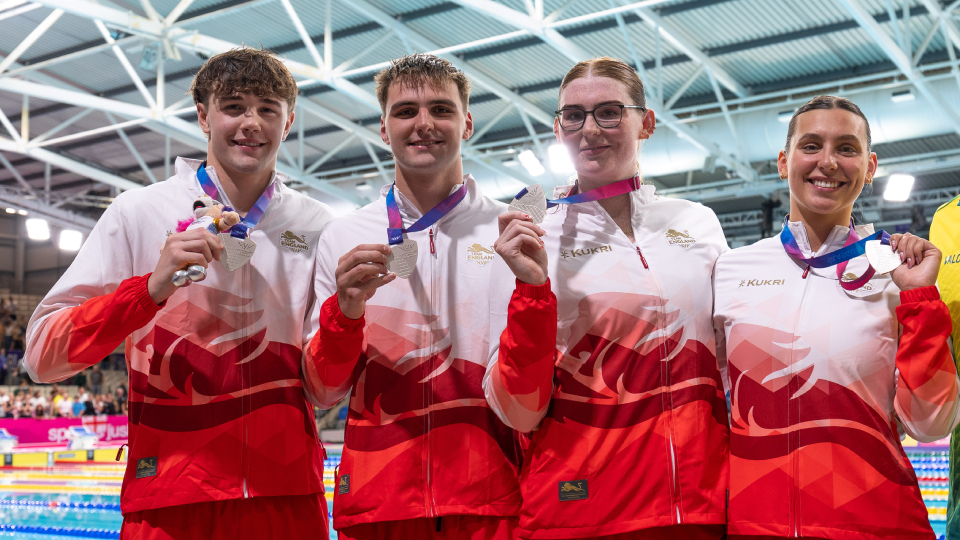
Swimming relays are a unique discipline within UK athletics, requiring not only individual speed but seamless synchronization and immense psychological pressure management. At the 2026 Commonwealth Games, current Loughborough student Freya Colbert and alum Abbie Wood demonstrated exactly how to execute under that pressure in the Mixed 4x100m Freestyle Relay.
Colbert, a 22-year-old sport scholar, was tasked with the critical anchor leg. Swimming the final 100 meters requires a specific mental fortitude, as the anchor must either hold onto a lead or chase down competitors. Colbert held off a strong challenge from Wales, touching the wall in a combined time of 3:23.91 to secure the silver medal for Team England. Her ability to maintain technique and speed in front of a raucous crowd at the Tollcross International Swimming Centre highlights the high-performance training environment she accesses daily. Wood, an experienced Loughborough alum, played an equally vital role by swimming in the heats, ensuring the team qualified for the final and setting the stage for the medal-winning performance.
Schedule a free consultation to learn more about how dual-career pathways function for elite athletes.
Adam Ramsay-Peaty and Greg Butler: Breaststroke Achievements in Glasgow
The Men’s 100m Breaststroke is one of the most physically demanding events in the pool, requiring explosive power off the blocks and walls combined with rigorous stroke efficiency. Adam Ramsay-Peaty, who was awarded an honorary degree by Loughborough University in 2024, added a bronze medal to his extensive collection by finishing in 59.65 seconds. Loughborough alum Greg Butler also represented the institution well, finishing sixth with a time of 1:00.24.
Ramsay-Peaty’s post-race comments provide a masterclass in athletic mindset. Rather than focusing purely on the podium placement, he noted a need to review the data and debrief with his coaching team, stating, “I’m not too fussed about the performance there because I really enjoyed it… a medal doesn’t define me or take anything away from me.” This perspective is frequently cultivated in high-level university sports programs, where athlete welfare and long-term development are prioritized alongside immediate results. By treating elite competition as a data-gathering exercise rather than a make-or-break moment, athletes can sustain longer, healthier careers.
The Role of Sports Scholarships in Developing Elite Athletes
Behind the medal-winning performances at the Commonwealth Games lies a structured support system. Sports scholarships play a vital role in bridging the financial and logistical gaps that often force talented individuals to choose between higher education and athletic careers. At Loughborough University, philanthropic support directly funds these scholarships, allowing student-athletes to access world-class coaching, sports science, and medical facilities without compromising their academic pursuits.
Balancing Academic Rigor and Athletic Demands
Being a successful student-athlete requires meticulous time management. A typical day for a Loughborough student competing in UK athletics might involve early morning strength and conditioning sessions, a full day of academic lectures and independent study, followed by evening pool or track sessions, and finally, recovery protocols such as physiotherapy or ice baths. Sports scholarships alleviate the need for student-athletes to take on part-time jobs to fund their living costs, freeing up the necessary hours to commit to this demanding dual-career lifestyle.
How Philanthropic Support Drives Results
The direct link between philanthropic funding and podium finishes cannot be overstated. When donors contribute to sports scholarship funds, they are investing in the infrastructure of UK athletics. This funding pays for specialized equipment, travel to international competitions, and access to performance analysts who break down race data—exactly the type of data Ramsay-Peaty referenced after his bronze medal swim. Without this financial backbone, the pipeline from promising junior athlete to Commonwealth Games medalist would be significantly narrowed.
Have questions? Write to us! to discuss the financial pathways available for student-athletes.
Why Aspiring Athletes Choose Loughborough University
Loughborough University’s reputation is not merely marketing; it is backed by consistent, objective metrics. The institution has been named the best university in the world for sports-related subjects in the 2026 QS World University Rankings—marking the tenth consecutive year it has held this position. Furthermore, it has maintained a top-ten spot in the Complete University Guide for over a decade, alongside institutions like Oxford and Cambridge.
For aspiring athletes, this ranking translates into a tangible ecosystem. It means training alongside other elite athletes, creating a culture of high performance that pushes individuals to improve daily. It means learning from academics who are actively involved in UK athletics research, studying biomechanics, physiology, or sports psychology from leading experts. The environment is designed to replicate the professional sporting environment, easing the transition from student competition to senior international representation.
Actionable Advice for Aspiring Student-Athletes
Securing a spot at a top-tier sports university requires proactive planning. Aspiring Loughborough students should begin preparing years in advance. Focus on maintaining strong academic grades, as entry requirements remain rigorous regardless of athletic ability. Build a comprehensive athletic portfolio that includes competition footage, personal best times, and references from current coaches. Research the specific scholarship criteria for your chosen institution, and ensure your application clearly articulates how you will contribute to both the sporting and academic communities.
Understand that the transition to university-level sport is a significant step up in intensity. Prepare yourself mentally for the increased training volume and the responsibility of managing your own schedule without the immediate oversight of parents or high school coaches. Utilize open days to speak directly with current sport scholars and coaching staff to gauge if the environment is the right fit for your personality and goals.
Submit your application today to begin your journey in high-performance sport and academics.
Conclusion and Next Steps
The performances of Freya Colbert, Abbie Wood, Adam Ramsay-Peaty, and Greg Butler at the Glasgow 2026 Commonwealth Games serve as a clear indicator of how effectively Loughborough University integrates elite sport with higher education. These athletes did not reach the podium by accident; their success is the result of deliberate, structured support systems funded by sports scholarships and driven by a world-class high-performance culture. For young athletes currently navigating the UK athletics landscape, understanding this pipeline is crucial for making informed decisions about their future. By targeting institutions that provide robust academic and athletic support, the next generation of Commonwealth Games competitors can set themselves up for sustained success both in the pool and in their professional lives post-graduation.
Share your experiences in the comments below if you are currently navigating the student-athlete recruitment process.
Explore our related articles for further reading on balancing academics and elite sports.