
Loughborough University Graduate Wins James Dyson Award for Sensory Safety System That Protects Deaf Travellers
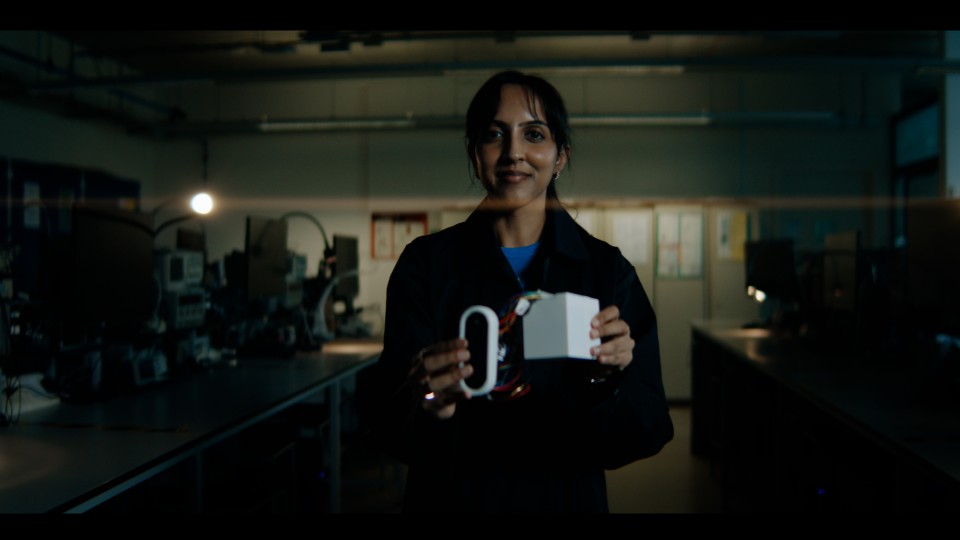
When hearing aids or cochlear implants come out at night, the world goes quiet in more ways than one. Fire alarms fade, door knocks go unnoticed, and a hotel room that felt safe in daylight can feel isolating after dark. A recent graduate from Loughborough University has designed a practical answer to that problem — and the UK design community has taken notice. Gargi Agrawalla, who completed her Product Design degree at Loughborough, has been named the UK national winner of the James Dyson Award 2026 for SIVO.GO, a portable, AI-powered sensory safety system built for deaf and hard-of-hearing travellers.
The recognition matters well beyond the prize money. It shows how UK innovation frequently begins in university studios, where students are asked to identify genuine problems and solve them with considered engineering. For aspiring product designers, assistive technology developers and anyone interested in inclusive design, the story of how SIVO.GO moved from a final-year project to a national award offers a useful roadmap.
Interested in where a career in product design can lead? Explore university design programmes and international competitions like the James Dyson Award to see how student projects grow into real products — and subscribe to our newsletter for more coverage of inclusive innovation.
From Lived Experience to Award-Winning Design
Gargi developed SIVO.GO as her final-year project while studying Product Design at Loughborough University, and the invention is rooted in personal experience. As a profoundly deaf cochlear implant user, she understood first-hand what happens when hearing devices are removed for sleeping or showering: environmental awareness drops sharply, and simple safety cues — a fire alarm, a knock at the door — become easy to miss.
Existing alerting products, she found, tend to be fragmented, bulky and expensive. Travellers often need to carry several single-purpose devices or depend on hotels and accommodation providers to install accessible equipment. Neither option puts the user in control.
Before settling on a design, Gargi conducted research with deaf and hard-of-hearing users aged 18 to 70. That research shaped every major decision: participants wanted reliable alerts, genuine portability, strong vibration feedback, discreet hardware and independence from the places they stayed. With more than 18 million people in the UK affected by deafness, hearing loss or tinnitus, the need for a compact, affordable alternative was clear.
How the SIVO.GO Sensory Safety System Works
SIVO.GO replaces a collection of single-purpose alerting devices with one user-owned, travel-ready system. It combines two sensing methods with a flexible alert interface designed for real-world conditions.
On-Device AI Sound Recognition
A trained machine learning model listens for consistent emergency sounds, including fire alarms and doorbells. Importantly, the sound classification runs entirely on the device itself. There is no reliance on Wi-Fi, cloud processing or hotel infrastructure — a deliberate design choice that keeps the system working in unfamiliar environments, remote accommodation or anywhere connectivity is unreliable.
Direct Door Activity Detection
A separate vibration sensor detects knocks and door movement, covering situations where sound alone would not be enough. This matters in shared accommodation, hostels and hotels, where door activity is one of the most common safety and privacy concerns for travellers.
Alerts You Can See and Feel
When a sound or door event is detected, SIVO.GO communicates through colour-coded light, on-screen symbols and adjustable haptic vibration. The handheld unit can be placed on a bedside table, hung on a bathroom door, or worn with a lanyard or clip. Users can configure vibration intensity to suit their sensitivity, and the visual signals use consistent colour logic so alerts are understood at a glance — even when waking from sleep.
Why Independence Matters for Deaf Travellers
The strongest feature of SIVO.GO is not any single sensor — it is the independence the system gives its user. Accessible accommodation is not guaranteed, and travellers who are deaf or hard of hearing frequently plan trips around the availability of specialist rooms or alerting equipment. A portable sensory safety system flips that dynamic: the safety layer travels with the person, not the building.
This approach also reflects a broader principle in inclusive design. Solutions that bolt accessibility onto existing services often feel like afterthoughts. Solutions designed from the user’s lived experience — as SIVO.GO was — tend to solve the actual problem rather than an assumed version of it.
Working in accessibility, travel or hospitality? Share your experiences with assistive technology in the comments below — your insights help designers understand the real-world challenges worth solving.
Inside the Prototype: Practical Engineering Choices
The working prototype is built from accessible, well-documented components: an Arduino Nano 33 BLE Sense Rev2, a MEMS microphone, an OLED screen, RGB LEDs, a vibration motor and a real-time clock. Gargi trained a TinyML sound-classification model using more than 500 labelled audio samples and deployed it locally on the microcontroller, allowing the system to recognise fire alarms and doorbells without any network connection.
There is a lesson here for students and early-career engineers. Impactful innovation does not require exotic hardware or a large budget. It requires accurate problem definition, sustained user research and the discipline to keep the solution simple. A microcontroller, a microphone and a well-trained model were enough to produce a system now recognised on a national stage.
What the James Dyson Award Win Means for UK Innovation
The James Dyson Award, now in its 21st year, is an international design competition run by the James Dyson Foundation, Sir James Dyson’s engineering-education charity. It has supported more than 400 problem-solving inventions with over £1.5 million in prize money and operates across 28 countries and regions. Unlike many competitions, participants keep full autonomy over their intellectual property — a significant benefit for student inventors hoping to commercialise their work.
As the UK national winner, Gargi receives £5,000 to support the next stages of development. SIVO.GO will now progress to the international stage: a panel of Dyson engineers will select a global Top 20 shortlist, announced on 14 October, and Sir James Dyson will choose the global winners, announced on 4 November. Global winners each receive £30,000.
For UK innovation more broadly, the win reinforces the role of university design education in the national pipeline of engineering talent. Loughborough University’s Vice-Chancellor and President, Professor Nick Jennings, described the recognition as a fantastic achievement that highlights the potential for student ideas to have real-world impact, noting that SIVO.GO shows what happens when excellent design is combined with lived experience and a determination to solve a genuine problem.
Lessons for Aspiring Design Engineers
For students considering Product Design or a career in assistive technology, Gargi’s path offers several practical takeaways:
- Start with a problem you understand. Lived experience gave Gargi insight that no amount of desk research could replicate, and it sustained the project through months of development.
- Research with real users, early and often. Feedback from deaf and hard-of-hearing users redirected the project away from home hubs and multi-room systems toward a compact, portable design.
- Challenge assumptions. Gargi questioned the idea that every alert requires a separate product — the very assumption that had made existing solutions bulky and expensive.
- Prototype with accessible tools. Off-the-shelf components and open machine learning tools are powerful enough for award-winning work.
- Enter competitions that protect your ideas. The James Dyson Award’s intellectual property policy means inventors keep ownership of what they create.
Considering a future in product design or inclusive engineering? Explore design programmes at leading UK universities and review the entry criteria for the James Dyson Award — many categories accept entries directly from recent graduates.
What Comes Next for SIVO.GO
The £5,000 national prize will fund the next phase of development. Gargi plans to refine the prototype, improve reliability and manufacturability, expand trials with deaf and hard-of-hearing users and accommodation providers, and work toward certification and pilot manufacture. Those final steps — particularly certification and manufacturability — are where many promising prototypes stall, so addressing them early is a positive sign for the product’s future.
Gargi described the win as immensely rewarding, noting that designing from her own experience as a deaf cochlear implant user made the recognition especially meaningful. Her stated goal is straightforward: to keep developing SIVO.GO so it can genuinely support deaf and hard-of-hearing people in everyday life, not just in competition submissions.
The Broader Case for Inclusive Design
SIVO.GO is a reminder that accessibility products serve a large and underserved market. With more than 18 million people in the UK alone affected by deafness, hearing loss or tinnitus, demand exists for solutions that are affordable, portable and designed with — not just for — the people who will use them. Designers who combine technical competence with lived insight are well positioned to meet that demand.
The next milestone arrives on 14 October, when the international Top 20 shortlist is announced, followed by the global winners on 4 November. Whatever the international result, the project has already demonstrated the value of user-led design and the strength of UK innovation emerging from university programmes.
Want to follow SIVO.GO’s progress in the James Dyson Award international stage? Bookmark the award announcements for 14 October and 4 November. Have questions about inclusive design or assistive technology for travel? Write to us — we cover the tools and innovations shaping accessible travel.