
Investigate How De Montfort University UK Uses Bradgate Park to Study Community Wellbeing and Nature Accessibility
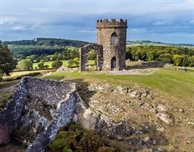
Living close to a sprawling, historically rich landscape does not automatically equate to experiencing the health benefits associated with the outdoors. A new research project taking place at Bradgate Park in Leicestershire is actively testing this assumption. Spearheaded by De Montfort University UK in collaboration with several regional academic and environmental organizations, this study examines the nuanced relationship between physical proximity to green spaces, nature accessibility, and overall community wellbeing.
By treating Bradgate Park as a “living lab,” researchers are moving beyond basic statistics to capture the lived experiences of local residents. This article explores the methodology, goals, and potential impacts of this extensive study, offering valuable insights for urban planners, environmental researchers, and public health advocates interested in how communities interact with local nature reserves.
Why Proximity Does Not Guarantee Nature Accessibility in Urban Communities
Conventional urban planning often operates on a straightforward premise: if a community is built near a green space, the residents will naturally use it and reap the subsequent health benefits. However, the reality of nature accessibility is significantly more complex. The current study focuses on Beaumont Leys, an urban community situated remarkably close to Bradgate Park. Despite this geographic advantage, Beaumont Leys exhibits poorer than average health outcomes.
This juxtaposition presents a critical research question: why does physical proximity fail to translate into improved community wellbeing? Researchers hypothesize that a variety of structural, psychological, and social barriers prevent residents from engaging with the park. These barriers can include inadequate public transportation links, a lack of awareness regarding the park’s specific offerings, physical mobility issues, or even a perceived lack of belonging in natural spaces. Understanding these obstacles is the first step toward designing interventions that make nature accessibility a reality rather than just a geographic coincidence.
Evaluate the Collaboratory Approach to Environmental Research
To tackle this multifaceted issue, the research relies on the Collaboratory model—a program specifically designed to place communities at the very heart of the research process. This initiative brings together leading minds from the University of Leicester, De Montfort University UK, Loughborough University, and the Charnwood Forest Geopark. By pooling resources and expertise from these institutions, the study benefits from a robust, interdisciplinary framework.
The Collaboratory approach explicitly rejects traditional top-down research models where subjects are merely observed. Instead, residents of Beaumont Leys are actively involved in shaping the project. From the initial development of research questions to the final interpretation of the data, community members ensure that the study remains grounded in local realities. This participatory model increases the likelihood that the resulting recommendations will be practical, culturally relevant, and effectively tailored to improve community wellbeing.
Schedule a free consultation to learn more about community-led research methodologies.
Analyze the Methodology Behind the Bradgate Park Study
Gathering meaningful data on how people experience nature requires innovative methods that go beyond standard surveys and questionnaires. The research team, working under the supervision of De Montfort University UK academics like Dr. Mark Charlton, employs a highly sophisticated, mixed-methods approach to capture both objective and subjective data.
Integrate GPS Tracking and Wearable Sensors
Participants in the study take part in walking interviews throughout Bradgate Park, but these are not standard walks. Researchers equip participants with GPS trackers and wearable physiological sensors. As individuals navigate the park, the sensors continuously monitor physiological responses such as heart rate variability. This provides concrete, scientific data on how the body physically reacts to different environments within the park—whether passing through dense woodland, walking along open ridges, or observing wildlife like the park’s famous deer.
Combine Scientific Data with Personal Reflections
While the sensors capture what the body is doing, the walking interviews capture what the mind is experiencing. As participants walk their chosen routes, they narrate their thoughts, feelings, and memories associated with specific locations. By overlaying the physiological data with these qualitative reflections, researchers can pinpoint exactly which features of the landscape trigger stress reduction, promote relaxation, or foster a sense of connection. Furthermore, conducting these walks across different seasons allows the team to track how nature accessibility and physiological responses fluctuate throughout the year.
Explore our related articles for further reading on environmental research methodologies.
Understand the Researcher Driving the Community Wellbeing Focus
The success of a community-focused project often hinges on the credibility and local knowledge of the lead researchers. Raheema Caratella, the PhD candidate undertaking this monumental task, brings a vital perspective to the study. Before transitioning into academic research, Caratella spent two decades working directly in community development, including extensive work with young people in Beaumont Leys.
Her background ensures that the research is not an abstract academic exercise, but a continuation of her ongoing commitment to social justice and community wellbeing. Caratella’s deep understanding of the local demographic helps build trust with participants, encouraging honest dialogue about the real and perceived barriers to visiting Bradgate Park. Her personal investment in the project highlights the importance of having researchers who possess both scientific rigor and genuine community roots.
Recognize the Ecological Significance of Bradgate Park
To fully appreciate the scope of this study, one must understand the ecological weight of the chosen location. Bradgate Park is not merely a local recreational field; it is a cornerstone of the Charnwood Forest UNESCO Global Geopark. The park boasts internationally significant geology, including some of the oldest ancient rocks in the UK, alongside a rich fossil heritage that draws researchers and tourists from around the globe.
Additionally, the park is home to free-roaming red and fallow deer, diverse birdlife, and a variety of rare plant species. By studying a location of such high ecological value, De Montfort University UK and its partners are investigating how communities connect with profound, complex natural environments. The research asks whether residents are aware of this geological significance, and if so, whether that knowledge impacts their sense of belonging and their overall community wellbeing.
Submit your application today to join innovative research programs.
Determine How Findings Will Shape Future Green Space Management
The ultimate goal of analyzing nature accessibility at Bradgate Park is to generate actionable insights that can be applied locally and nationally. The data collected by Caratella and her supervisory team is expected to influence several key areas of urban and environmental planning.
Improve Transport and Infrastructure
If the walking interviews and GPS data reveal that transit schedules or unsafe pedestrian routes are primary barriers, the findings will provide evidence to advocate for better infrastructure. This could mean pushing for more frequent bus services, safer cycling lanes connecting Beaumont Leys to the park, or improved signage guiding pedestrians to accessible entrances.
Develop Community-Led Activities
Sometimes the barrier to nature accessibility is psychological rather than physical. If residents feel intimidated by the vastness of the park or unaware of what to do once they arrive, the research can guide the creation of targeted community-led activities. This might involve organized walking groups, educational programs focusing on the park’s geology, or youth engagement initiatives designed to foster a sense of ownership over the space.
Inform Green Space Design
By identifying which specific natural features elicit the most positive physiological and psychological responses, landscape architects and park managers can make informed decisions about where to place seating, how to maintain trails, and which areas to prioritize for conservation or restoration. The evidence base created by this De Montfort University UK study will help ensure that future investments in green spaces directly support community wellbeing.
Apply the Lessons of Bradgate Park to Broader UK Contexts
While the study is hyper-focused on Leicestershire, its implications extend far beyond the boundaries of Bradgate Park. Across the UK, numerous urban communities sit on the doorstep of incredible natural assets yet suffer from health disparities and low engagement with those spaces. The methodological framework developed here—combining wearable tech, qualitative interviews, and deep community participation—serves as a replicable model for other towns and cities.
As the UK continues to grapple with public health challenges, mental health crises, and the impacts of urbanization, proving the tangible links between nature accessibility and community wellbeing is more critical than ever. Research like this provides the hard evidence required to secure funding, change policy, and shift the paradigm from simply preserving green spaces to actively integrating them into the daily lives of the people who need them most.
Share your experiences with local green spaces in the comments below.