
How Coventry University Sports Science Students Prepare Elite Ice Hockey Players for the New Season
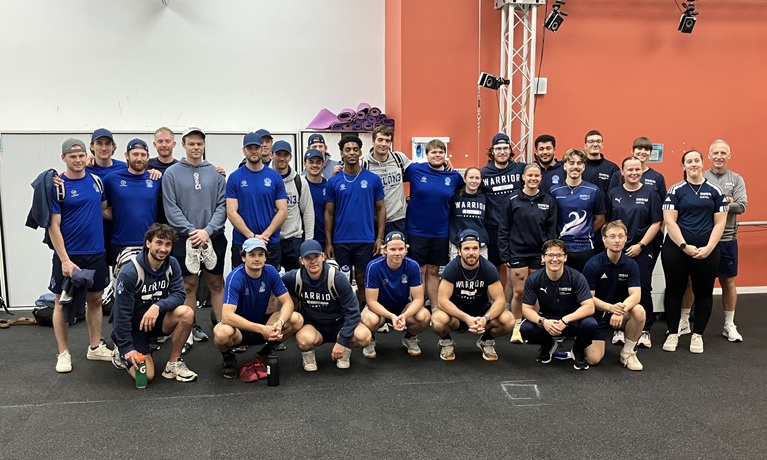
When the puck drops on a new Elite Ice Hockey League campaign, the work behind the scenes has already been months in the making. For the Coventry Blaze, that preparation took place in an unusual setting: the laboratories and testing facilities of Coventry University. Players from the squad, which competes in the UK’s top flight of ice hockey, recently completed a comprehensive series of strength and fitness assessments carried out by university staff and students — a collaboration that benefits the athletes on the ice and the sports science students building their careers off it.
This partnership is a strong example of how sports science is applied in professional sport, and it offers a useful window into what studying the discipline at university actually looks like. Whether you are a prospective student weighing up your options, a coach curious about testing protocols, or simply a follower of UK ice hockey wanting to understand how elite athletes prepare, there is plenty to learn from this project. If you want to follow more stories like this one, explore our latest Coventry news coverage or keep reading for the full breakdown.
Pre-Season Testing: Where Sports Science Meets Elite Performance
Pre-season is the most important window in any professional athlete’s year. Matches have not yet started in earnest, training loads can be manipulated freely, and there is time to address weaknesses before points are on the line. That is precisely why the Coventry Blaze squad visited Coventry University in the week leading up to their season opener.
The testing programme was designed and delivered by university staff alongside students on sport science and sport and exercise therapy degrees. Rather than generic fitness drills, the sessions focused on measurable, sport-specific indicators of performance.
What the Testing Involved
The assessments covered several core areas that sports scientists consider essential for ice hockey, a sport that demands repeated sprints, hard stops, rapid direction changes and physical contact:
- Body composition analysis – establishing each player’s muscle mass and body fat percentages as a baseline for monitoring throughout the season.
- Strength and power testing – measuring how much force players can produce, which underpins shooting velocity, checking ability and acceleration.
- Change of direction speed – assessing how quickly athletes can decelerate, redirect and re-accelerate, a skill used constantly during gameplay.
- Broader fitness markers – capturing additional data on conditioning that helps the coaching staff understand each player’s readiness to compete.
Each test produces data that does not simply sit in a spreadsheet. The Blaze coaching team will analyse the results now and continue tracking them across the campaign, using the numbers to inform individual training plans, manage fatigue and reduce injury risk.
Why Data-Driven Preparation Matters in Professional Sport
Modern professional teams rarely rely on intuition alone. Objective testing removes guesswork: instead of assuming a player is match-fit, staff can compare current results against previous benchmarks and against positional norms. A defenceman whose power scores have dipped might need adjusted training; a forward showing excellent change-of-direction times can be pushed harder in specific drills.
For ice hockey in particular, this approach is invaluable. The sport places unique loads on the body — skating mechanics differ from running, and the season is long and physically punishing. Baseline data collected before the first fixture gives medical and performance staff a reference point. If a player picks up an injury mid-season, rehabilitation targets can be set against their own pre-season numbers rather than arbitrary standards, making return-to-play decisions more defensible.
This is exactly the kind of environment in which sports science theory becomes tangible. Students who have learned about lactate thresholds, force plates and skinfold calipers in lectures see those tools applied to professional athletes whose results genuinely matter.
Real-World Learning: What Students Gain from Working with Elite Athletes
For the sport science and sport and exercise therapy students involved, the testing days with the Blaze represented something a classroom cannot replicate: direct responsibility within a professional sporting environment.
Working with Professional Athletes
Testing elite athletes requires more than technical knowledge. Students must communicate clearly and confidently with players who are balancing media duties, training schedules and the pressure of an approaching season. They learn to deliver instructions precisely, position equipment correctly on the first attempt, and record data accurately under time constraints.
There is also a professional etiquette to master. Elite athletes are highly attuned to how they are treated; students quickly learn how to be efficient, respectful and calm — qualities that distinguish a competent practitioner from a knowledgeable one. These soft skills are consistently highlighted by employers across the sports industry as the difference between graduates who thrive and those who struggle in their first roles.
Building a Portfolio That Employers Notice
Experiences like this also strengthen a graduate’s employability. A student who can say they assisted with physiological testing of an Elite Ice Hockey League squad has concrete evidence of applied competence. Placement-style opportunities, volunteering and university-linked projects all feed into CVs, personal statements and job interviews.
If you are considering a degree in this field, look closely at how each university connects its curriculum to real athletes and organisations. Practical exposure should be a deciding factor, not an afterthought. Have questions about what a sports science course involves? Write to us and we will point you in the right direction.
University Partnerships and the Growth of UK Ice Hockey
Collaborations between universities and professional sports clubs are becoming increasingly common in the UK, and they make sense for both sides. Clubs gain access to laboratory-grade testing equipment and additional trained personnel; universities gain authentic learning environments and research opportunities that would otherwise be difficult to arrange.
For UK ice hockey, such partnerships carry particular significance. The sport operates with more modest budgets than football or rugby, so access to university expertise and facilities can materially raise the standard of athlete preparation. When a club like the Blaze can establish objective baselines on body composition, strength and agility before the season begins, it helps level the playing field against better-resourced competitors.
There is a wider benefit too. Students who work with ice hockey players become advocates for a sport that many British sports fans know relatively little about. Some may go on to work in the league itself, strengthening the pipeline of qualified practitioners available to British clubs.
Careers in Sports Science: Where Can This Experience Lead?
The testing work carried out with the Blaze sits at the heart of several established career paths. Understanding these routes is useful for anyone considering study in this area.
Performance Analysis and Strength and Conditioning
Many graduates move into strength and conditioning roles, designing and supervising the physical preparation of athletes at club, academy or national level. Others specialise in performance analysis, translating testing data and match footage into insights that coaches can act on. The skills practised during pre-season testing — accurate measurement, data interpretation and clear reporting — are the foundation of both professions.
Sports Therapy and Rehabilitation
Sport and exercise therapy students follow a related but distinct route, focusing on injury prevention, assessment and rehabilitation. Working alongside athletes during physical testing gives these students early insight into the physical demands that lead to injury in the first place, which sharpens their preventive thinking.
Further Study and Research
Some graduates pursue postgraduate study or research careers, investigating questions such as how skating load affects hamstring function or how nutrition strategies influence recovery across a congested fixture list. University-club partnerships often generate exactly the kind of applied research questions that make for compelling postgraduate projects.
Whichever route appeals to you, early practical experience is the common denominator among successful graduates. Explore our related articles on sports science careers for further reading.
Advice for Aspiring Sports Science Students
If stories like the Blaze testing project appeal to you, there are practical steps you can take now to prepare for a sports science degree and the career that follows.
- Build your science base. Physiology, biomechanics and psychology all rest on fundamentals from biology, physics and maths. Solid attainment in these subjects at school or college will ease your transition to degree-level study.
- Get involved in sport at any level. You do not need to be an elite athlete. Coaching a junior team, helping at local events or volunteering with a school club develops the communication and organisational skills practitioners rely on daily.
- Follow the evidence. Start reading beyond headlines — sports science is an evidence-based discipline, and the habit of asking how we know something is as valuable as knowing the answer.
- Visit before you commit. Facilities vary significantly between institutions. Seeing laboratories, testing equipment and teaching spaces first-hand will tell you more than any prospectus.
Choosing where to study is a significant decision, and seeing a university’s partnerships in action is one of the best ways to judge whether a course will give you genuine applied experience. Book an open day to see the facilities and meet the staff and students delivering projects like this one.
The Takeaway: Preparation Is a Science
The image of ice hockey players being put through their paces in a university laboratory captures something important about modern sport: preparation is no longer guesswork, and the people doing the measuring matter as much as the equipment. Coventry Blaze gained objective data to guide their Elite Ice Hockey League campaign. Coventry University students gained professional experience with elite athletes that will shape their employability for years. Both outcomes stem from a partnership built on the practical application of sports science.
For anyone inspired by this story — whether as a future student, a practitioner or a fan of the game — the message is consistent: seek out environments where theory meets practice, and treat every assessment, every data point and every interaction with an athlete as a chance to improve.
Share your own experiences of sports science placements or university-club partnerships in the comments below — and if you are ready to take the next step, submit your application today or schedule a free consultation to learn more about studying sports science at university level.