
Football Coaching at the University of Wolverhampton: International Knowledge Exchange and Community Engagement Explained
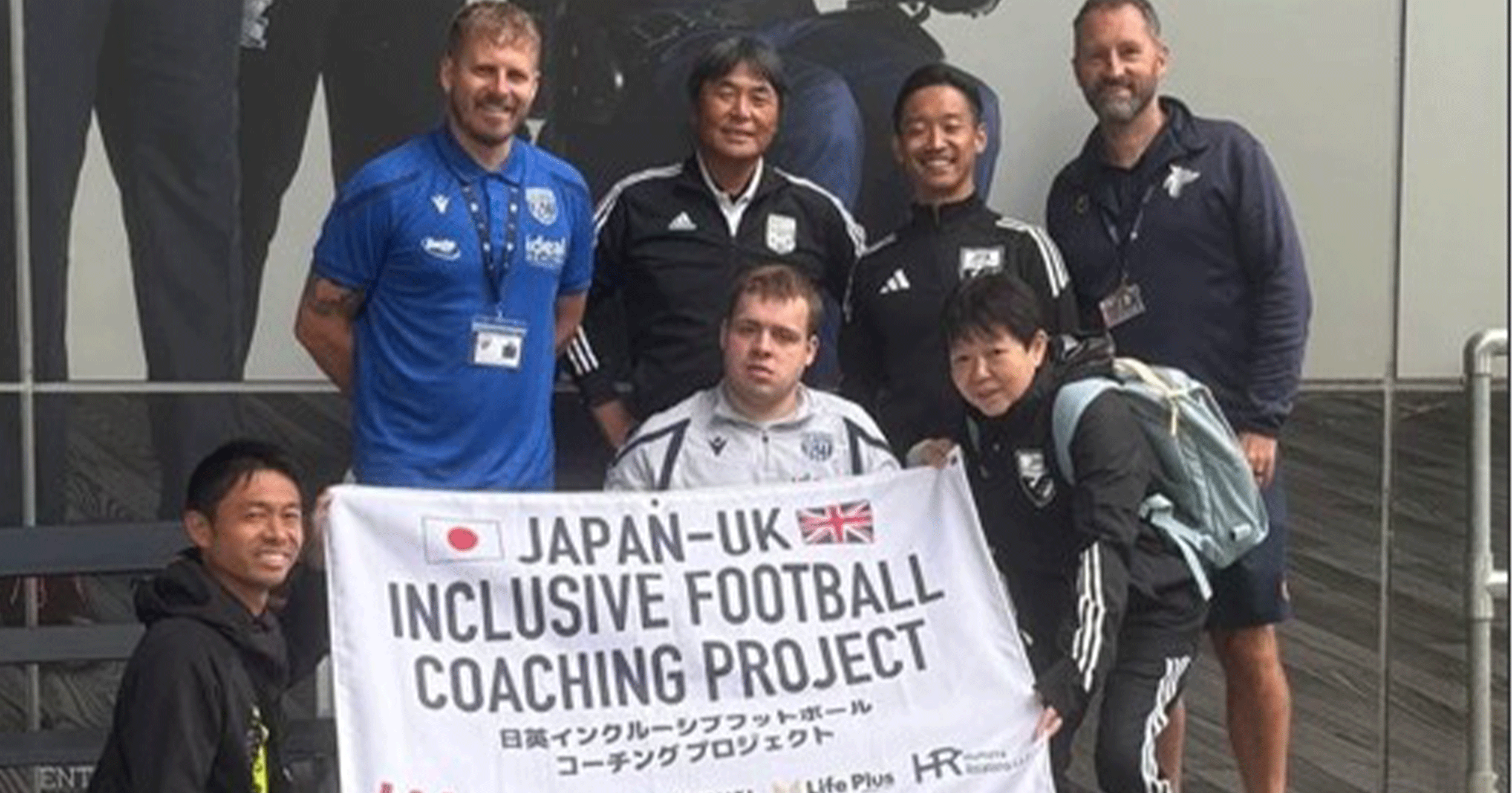
Football coaching has moved far beyond the image of a former player shouting instructions from the touchline. Today, it is a structured profession built on evidence, pedagogy, and measurable impact on participants of all ages and abilities. For students considering a career in sport, the environment in which they train matters as much as the qualification they earn. The University of Wolverhampton in the UK has developed a reputation for combining academic study of football coaching with two elements that many institutions treat as secondary: international knowledge exchange and deep community engagement. This article explains what prospective students should know about studying football coaching at the University of Wolverhampton, how its international partnerships broaden the learning experience, and why community-facing work gives graduates a genuine advantage in the jobs market.
Why Study Football Coaching in the UK?
The UK occupies a unique position in world football. The Premier League is the most watched sports competition on the planet, the English FA and Welsh, Scottish, and Northern Irish governing bodies have invested heavily in coach education, and the country hosts a dense network of professional academies, grassroots clubs, and community trusts. For an aspiring coach, this means unmatched exposure to real coaching environments at every level of the game.
UK football coaching degrees are also designed around employability. Rather than teaching theory in isolation, universities embed governing-body qualifications, work placements, and reflective practice directly into their programmes. Students graduate with both an academic credential and a coaching CV, which is precisely what employers in professional clubs, schools, and community organisations look for.
The West Midlands, where Wolverhampton is located, adds another layer of opportunity. The region has a rich football culture, several professional clubs within easy reach, and ethnically diverse communities whose sporting needs vary widely. Studying in this environment exposes students to coaching challenges they simply would not encounter on a more homogenous campus. If you are weighing up where to begin your coaching career, schedule a free consultation to discuss your study options in the UK and how they align with your ambitions.
Football Coaching Programmes at the University of Wolverhampton
The University of Wolverhampton offers football coaching education within a broader portfolio of sport science, physical education, and sports development courses. Several features distinguish its approach.
A Balance of Theory and Applied Practice
Coaching degrees at the university are grounded in the academic disciplines that underpin effective coaching: physiology, biomechanics, psychology, skill acquisition, and sociology of sport. But theory is treated as a tool, not an end in itself. Students apply what they learn in practical sessions, designing and delivering coaching programmes, analysing performance, and receiving structured feedback on their own coaching behaviours. This cycle of planning, delivery, observation, and reflection mirrors how professional coach development actually works.
Governing-Body Alignment
Strong programmes in the UK align their curriculum with FA coaching pathways so that students can progress through recognised qualifications while completing their degree. This dual-progression model saves time and money and signals to employers that a graduate has met national standards, not just university assessments. Prospective students should always ask how a programme maps to FA or UEFA-aligned awards, because this detail has a direct effect on early-career employability.
Facilities and Learning Environment
The university’s sport facilities, laboratories, and partnerships with local clubs give students regular access to the environments where coaching decisions are made. Performance analysis suites, strength and conditioning spaces, and teaching rooms equipped with video review technology allow students to practise the same workflows used in professional settings.
Before committing to any programme, it is worth visiting campuses, speaking to course leaders, and reviewing module descriptions in detail. Have questions about course content or entry requirements? Write to us and we can help you build a shortlist that matches your goals.
International Knowledge Exchange: What It Means for Students
One of the less visible but most valuable dimensions of football coaching at the University of Wolverhampton is its participation in international knowledge exchange. This term describes the structured sharing of coaching methods, research findings, and educational practice between institutions and organisations in different countries. It matters to students for three concrete reasons.
Exposure to Different Coaching Cultures
Football is a global game, but coaching education is not uniform. Spanish academies emphasise positional play and technical repetition; German programmes are known for athletic periodisation; Scandinavian models stress player autonomy and small-sided games. When a university maintains exchange relationships with partner institutions abroad, students encounter these contrasting philosophies directly rather than reading about them second-hand. Graduates who can explain how coaching methods differ across football cultures are far better prepared for work in international academies, overseas development projects, or multicultural domestic clubs.
Research Collaboration That Reaches the Classroom
Knowledge exchange is not only about students travelling. Academic staff who collaborate internationally on coaching research bring those findings back into their teaching. A lecturer who has worked on talent identification projects in Europe or coach development initiatives in emerging football nations can teach session design and player development with reference to real, current evidence. This keeps the curriculum live and prevents it from drifting into outdated convention.
Networking Beyond Borders
Careers in football are built on networks as much as qualifications. International exchange programmes, joint conferences, and collaborative community projects introduce students to coaches, academics, and administrators they would otherwise never meet. Many graduates find their first opportunities abroad or with international organisations precisely because of contacts formed during their studies. Explore our related articles on international sport careers to see how other graduates have converted study experiences into professional opportunities.
Community Engagement as a Core Part of Coach Education
If international exchange broadens a student’s horizons, community engagement deepens them. The University of Wolverhampton places significant emphasis on working with local schools, grassroots clubs, and community groups across the West Midlands, and this is not a token gesture. It is woven into how students learn to coach.
Coaching Real People, Not Just Classmates
Delivering drills to fellow students on a sunny pitch teaches technique, but it does not teach coaching. Community placements put students in front of primary school children on wet Wednesday afternoons, teenagers in after-school programmes, adults returning to exercise, and participants with disabilities or additional needs. These settings demand adaptability, behaviour management, and communication skills that no lecture can simulate. Employers consistently report that graduates with genuine community coaching experience handle their first jobs with more confidence and competence.
Understanding Sport’s Social Role
Community engagement also teaches students what football means beyond results. In deprived areas of the Black Country and the wider West Midlands, football programmes contribute to public health, social cohesion, youth diversion, and educational attainment. Coaches who understand this broader impact become more valuable to community trusts, local authorities, and charitable foundations, which are among the largest employers of coaching graduates in the UK.
Building a Portfolio of Evidence
Every community session a student leads becomes evidence for future applications. Hours logged, age groups worked with, populations served, and outcomes achieved all feed into a professional portfolio that strengthens applications for paid coaching roles, postgraduate study, or scholarships. Students should treat community work not as an obligation but as the raw material of their career record.
If this blend of academic study and hands-on community work matches how you want to learn, take the next step in your football coaching career and submit your application today.
Skills Employers Look For in Football Coaching Graduates
Whether the destination is a professional academy, a school, a community trust, or a private coaching business, employers hire against a consistent set of criteria. Prospective students should understand these early and choose a programme that develops them deliberately.
- Session planning and delivery: the ability to design sessions with clear learning outcomes and adapt them in real time.
- Player-centred communication: questioning skills, demonstration quality, and the capacity to give feedback that changes behaviour.
- Understanding of long-term player development: knowing how session content should differ for a seven-year-old, a fourteen-year-old, and an adult beginner.
- Reflective practice: the habit of reviewing one’s own coaching against evidence and adjusting accordingly.
- Safeguarding and duty of care: certification and practical judgement in protecting young and vulnerable participants.
- Data and video literacy: basic competence in performance analysis tools, which are now standard even at grassroots level.
A well-designed coaching degree develops all six. Students should interrogate any programme they are considering about how each of these areas is assessed.
Practical Steps for Prospective Students
Turning interest into enrolment involves a handful of concrete actions:
- Research entry requirements early. Football coaching degrees typically ask for specific A-level or equivalent qualifications, and international students will need to demonstrate English language proficiency.
- Start coaching before you apply. Volunteering with a local club or school strengthens applications enormously and confirms that you enjoy the day-to-day reality of the work.
- Prepare a strong personal statement. Focus on specific coaching experiences, what you learned from them, and why the University of Wolverhampton’s particular combination of practical training, international exchange, and community work fits your plans.
- Check scholarship and funding options. Both domestic and international students should investigate university scholarships, sport-specific awards, and external funding well before deadlines.
- Plan for life in Wolverhampton. Affordable accommodation, good transport links to Birmingham and the wider region, and a low cost of living relative to southern England make the city a practical base for three years of study.
If you would like personalised guidance through any of these steps, schedule a free consultation to learn more about applying to the University of Wolverhampton.
Conclusion: A Grounded Route into a Competitive Profession
Football coaching rewards those who combine knowledge with practice, and few institutions structure that combination as deliberately as the University of Wolverhampton. Its football coaching education benefits from the UK’s dense coaching ecosystem, its international knowledge exchange connects students to coaching cultures and research well beyond the West Midlands, and its community engagement work builds the practical resilience that employers actually value. None of this guarantees a job at a Premier League academy, and any honest account of the profession should say so. What it does provide is a credible, well-supported route into a competitive field, with the qualifications, experience, and network to progress. For aspiring coaches willing to engage fully with all three strands, the foundation is genuinely strong. Have you studied sport in the UK or worked in community football? Share your experiences in the comments below, and browse our further reading on sports careers and university pathways to keep planning your next move.