
Explore Intelligent Asset Management: Key Insights from the University of Huddersfield’s Global Conference on Sustainable Engineering
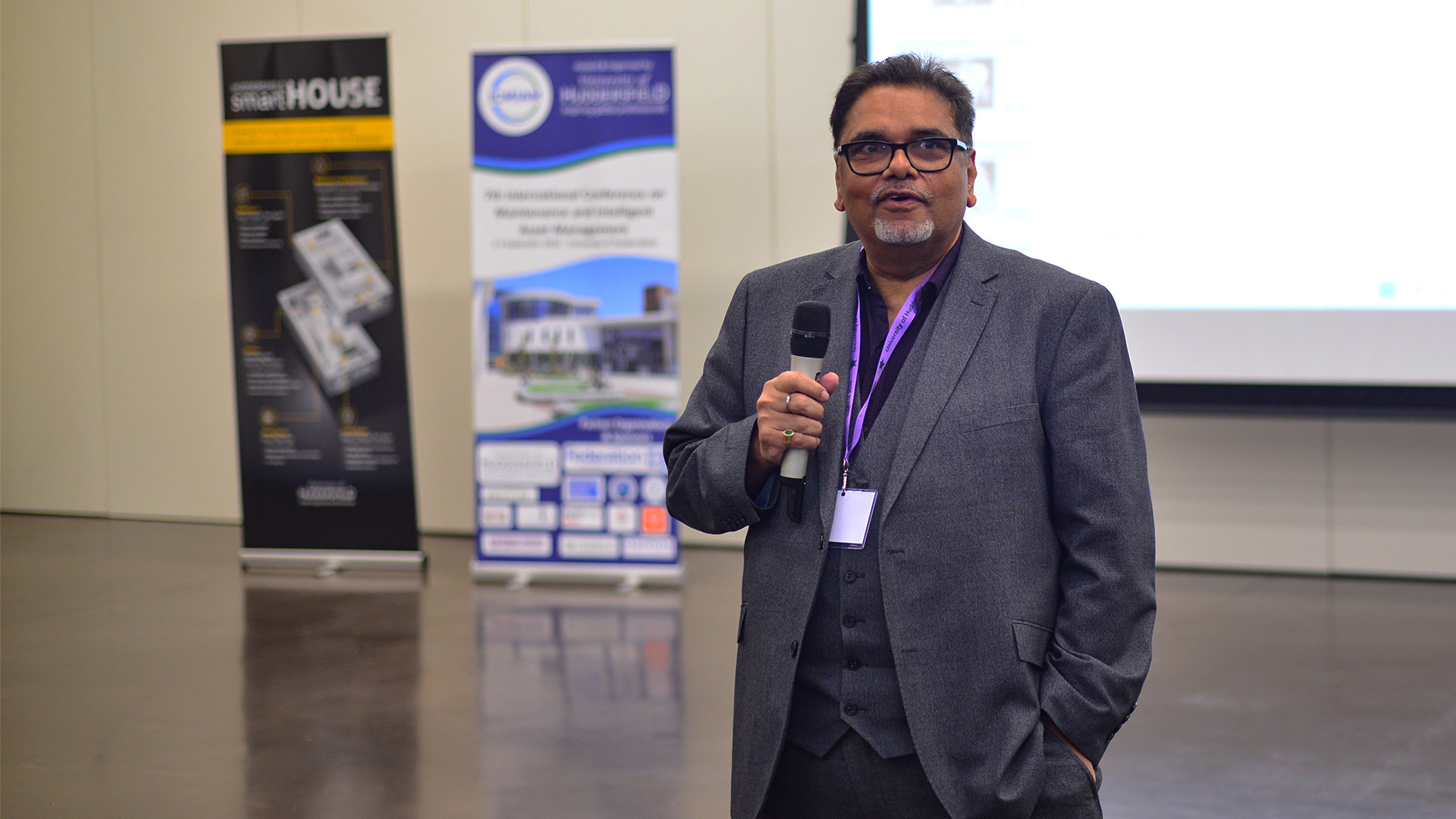
In September 2026, the University of Huddersfield in the UK became the centre of gravity for one of the most important conversations in modern engineering. The 7th International Conference on Maintenance and Intelligent Asset Management (ICMIAM 2026) drew researchers, engineers, and business leaders from across the globe to discuss how data-driven technologies are reshaping the way organisations design, maintain, and extend the life of critical engineering assets.
For professionals working in asset-intensive industries—rail, energy, manufacturing, construction, and healthcare—the themes explored at this global conference offer a practical roadmap for improving reliability, safety, and sustainability. For students and early-career engineers, the event is a clear signal of where the discipline is heading and which skills will matter most in the years ahead.
If you are considering a future in engineering or sustainable technology, take a moment to explore the programmes offered by the University of Huddersfield’s School of Computing and Engineering, the school that hosted this landmark event and whose researchers are shaping the field firsthand.
What Happened at ICMIAM 2026: A Global Convening in Yorkshire
Held from 1 to 3 September, ICMIAM 2026 was opened by the University’s Vice-Chancellor, Professor Bob Cryan, and featured more than 130 research papers alongside keynote speeches, industry talks, workshops, and live technology demonstrations. The conference was led by Professor Rakesh Mishra, Director of the University’s Centre for Energy, Environment and Sustainable Engineering, and Professor Leigh Fleming, Dean of the School of Computing and Engineering, who served as Executive Conference Chairs.
The scale and breadth of the programme reflected the growing importance of intelligent asset management as a discipline. Topics ranged from hydrogen infrastructure and renewable energy systems to structural health monitoring, cybersecurity, and smart sensing. Delegates travelled from institutions including Federation University Australia, Luleå University of Technology in Sweden, the Indian Institutes of Technology in Bombay, Indore, and Jammu, Nottingham Trent University, Oslo Metropolitan University, the University of Johannesburg, and the Asset Management Council of Australia—a line-up that underlined the event’s genuine global reach.
Industry voices were equally prominent. Speakers from National Gas, KOSO Kent Introl, and Trust Electric Heating in the UK, along with OSMOS Group in France and MIMER Services AS in Norway, shared hard-won perspectives on the operational challenges facing asset-intensive sectors. This blend of academic rigour and industrial pragmatism is precisely what distinguishes a strong engineering conference from a purely theoretical one.
Why Intelligent Asset Management Matters Now
Across the world, infrastructure is ageing, energy systems are transitioning, and margins for failure are shrinking. Bridges, turbines, pipelines, rolling stock, and hospital equipment all represent enormous capital investments—and the cost of unplanned downtime, safety incidents, or premature replacement can be measured in billions, not millions.
Intelligent asset management addresses this challenge by combining engineering knowledge with data. Rather than relying on fixed maintenance schedules or reactive repairs, organisations can use sensor networks, analytics, and predictive models to understand the actual condition of their assets and intervene at exactly the right moment. The benefits are threefold:
- Extended asset life: Assets are maintained based on their real condition, not arbitrary timetables, allowing organisations to safely maximise useful service life.
- Reduced costs: Predictive maintenance avoids both over-maintenance and catastrophic failure, cutting operational expenditure significantly.
- Improved sustainability: Every year of additional life extracted from an asset avoids the embodied carbon and resource cost of building a replacement.
These themes sat at the heart of ICMIAM 2026, and they explain why the discipline has moved from a niche academic interest to a boardroom priority across energy, transport, and manufacturing.
The Technologies Driving the Shift
Several enabling technologies featured prominently throughout the three-day programme:
Artificial intelligence and machine learning. AI models can detect subtle patterns in vibration, temperature, acoustic, and performance data that human engineers would miss, flagging degradation long before it becomes visible.
Digital twins. By creating virtual replicas of physical assets, engineers can simulate operating conditions, test maintenance scenarios, and forecast remaining useful life without touching the physical equipment.
Smart sensing. Low-cost, low-power sensors now make continuous condition monitoring viable even for legacy infrastructure that was never designed with instrumentation in mind.
Predictive maintenance. Combining all of the above, predictive maintenance replaces the traditional calendar-based approach with interventions timed to actual asset health—a change that improves both reliability and safety.
For engineers and students looking to build expertise in these areas, the message from the conference is unambiguous: interdisciplinary skills that combine traditional engineering fundamentals with data science are increasingly essential. If you want to develop capabilities in advanced monitoring technologies and sustainable engineering, consider scheduling a conversation with an admissions adviser to find the right study pathway for your goals.
Sustainable Engineering at the Core of the Agenda
One of the most striking aspects of ICMIAM 2026 was how tightly intelligent asset management is now connected to the sustainability agenda. Sessions on hydrogen infrastructure and renewable energy systems made clear that the transition to net zero depends not only on building new green assets but on managing them intelligently over their entire lifecycle.
This is a crucial insight. Wind turbines, hydrogen storage systems, and grid infrastructure all operate in demanding conditions, and their economic and environmental viability depends on maximising availability and lifespan. Structural health monitoring, cybersecurity for operational technology, and intelligent maintenance strategies are therefore not optional extras for the green economy—they are foundational requirements.
The University of Huddersfield’s Centre for Energy, Environment and Sustainable Engineering, which Professor Mishra directs, exemplifies this integrated approach. By treating sustainable engineering and asset management as connected disciplines rather than separate silos, the research produced there—and the graduates it educates—are better equipped to solve the complex, cross-cutting problems that characterise modern infrastructure.
The Power of Industry–Academic Collaboration
Professor Mishra noted in his closing reflections that the conference provided “an exceptional platform for sharing innovative research, emerging technologies and best practices,” and praised the “enthusiastic participation and collaborative spirit” that fostered valuable partnerships. This is more than conference rhetoric; it reflects a structural reality about how progress happens in this field.
Academic researchers bring deep theoretical knowledge, modelling capability, and access to emerging techniques. Industry practitioners bring real operational data, hard constraints, and an unsentimental understanding of what works at scale. When the two groups collaborate—as they did at ICMIAM 2026 through industry talks, workshops, and technology demonstrations—the result is research that is both scientifically sound and practically deployable.
For organisations in asset-intensive sectors, the lesson is to seek out these partnerships actively. Universities with strong engineering research groups can offer expertise, testing facilities, and graduate talent pipelines. For students, the lesson is to value institutions that maintain close industry links, because those connections translate into applied projects, placements, and employment opportunities.
Research Strengths on Display at the University of Huddersfield
The conference programme featured numerous University of Huddersfield academics, including Professors Parikshit Goswami, Wenxian Yang, John Allport, Konstantina Lambrinou, and Marco Corradi, alongside Professor (Emeritus) Andrew Ball and Dr Shirsendu Sikdar. Their presentations spanned sustainable engineering, intelligent asset management, renewable energy, and advanced monitoring technologies, demonstrating the breadth of the University’s research portfolio.
Professor Fleming closed the event with her Professorial Lecture, “Engineering Quality of Life,” a title that captures an important framing: asset management is ultimately not about machines for their own sake, but about the reliability of the systems that people depend on every day—the trains they catch, the energy that powers their homes, and the healthcare infrastructure that keeps them safe.
For prospective students evaluating where to study engineering in the UK, this depth of active research matters. Institutions whose academics are presenting at international conferences are institutions where teaching is informed by the latest developments rather than lagging behind them. Learn more about postgraduate and undergraduate study options in engineering and technology to see how research-led teaching could shape your career.
Practical Lessons for Engineers and Organisations
What can professionals take away from a conference like ICMIAM 2026, even if they did not attend? Several clear themes emerged:
- Move from reactive to predictive. Organisations still relying on fixed maintenance intervals should be piloting condition-monitoring approaches now. The technology is mature, and the case studies presented at the conference show measurable returns.
- Invest in data infrastructure. Intelligent asset management depends on good data. That means sensors, but it also means data governance, integration, and the cybersecurity measures needed to protect operational technology—an area explicitly addressed at the event.
- Think in lifecycle terms. Sustainability and cost-efficiency both improve when decisions account for the whole life of an asset, from design and procurement through maintenance and eventual decommissioning.
- Build cross-sector networks. Many of the most valuable insights come from applying solutions across sector boundaries—rail techniques informing healthcare equipment management, or energy sector monitoring approaches benefiting manufacturing.
- Develop interdisciplinary talent. The engineers best positioned for the future combine domain knowledge with data literacy, and organisations should be actively developing both.
Have experience implementing predictive maintenance or smart monitoring in your organisation? Share your experiences in the comments below—practical case studies are exactly what moves this field forward.
Looking Ahead: Collaboration as the Path to Resilient Infrastructure
The final outcome highlighted by the organisers was perhaps the most durable one: new connections between researchers, industry leaders, and policymakers from around the world, creating opportunities for future research partnerships and knowledge exchange. Complex engineering challenges—ageing infrastructure, energy transition, climate resilience—are too large for any single organisation or nation to solve alone.
Conferences like ICMIAM play a vital role in building the informal networks and formal partnerships through which solutions spread. The University of Huddersfield’s decision to host and lead this event reflects its strategic commitment to being a hub for sustainable engineering research with genuine global influence—rooted in Yorkshire, but reaching worldwide.
Conclusion: Joining a Field That Is Reshaping Engineering
The 7th International Conference on Maintenance and Intelligent Asset Management made one thing clear: intelligent asset management and sustainable engineering are no longer emerging fields—they are central to how modern infrastructure will be built and maintained. The convergence of AI, digital twins, smart sensing, and predictive maintenance is creating extraordinary opportunities for engineers, researchers, and organisations willing to invest in these capabilities.
Whether you are an industry professional seeking research partners, a student planning your next qualification, or an organisation exploring how to modernise your maintenance strategy, now is the right time to engage with this community. Attend an open day or request a prospectus to see how studying at a research-active UK university could position you at the forefront of intelligent asset management. And if you want to stay informed about future events, research outputs, and developments in sustainable engineering, subscribe to updates and follow the conversation as this field continues to grow.