
Examine How De Montfort University UK Connects Data Analytics Students with Bloomberg
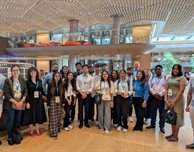
Postgraduate education in the modern workforce requires more than textbook theories and lecture halls. As industries increasingly rely on complex information systems, universities must bridge the gap between academic study and practical application. De Montfort University (DMU) has taken concrete steps to address this need by integrating direct industry exposure into its postgraduate curriculum. Recently, students from the DMU London campus visited the European headquarters of Bloomberg, demonstrating exactly how applied student learning can prepare graduates for the complexities of the financial and technology sectors.
The Value of Industry Exposure in Postgraduate Education
For students pursuing advanced degrees in business and technology, understanding the theoretical frameworks of data analytics is only the first step. The real challenge lies in applying those frameworks to unpredictable, real-world scenarios. When universities facilitate direct interactions with global enterprises, students gain a clearer understanding of the pace, scale, and pressure of professional environments.
Industry visits provide a context that cannot be replicated in a classroom. By stepping into a functioning corporate ecosystem, postgraduate students observe the nuances of workplace culture, cross-departmental collaboration, and the actual tools used to drive business intelligence. This exposure helps align academic expectations with corporate realities, ensuring that graduates are not just knowledgeable, but functionally prepared to contribute from their first day on the job.
Schedule a free consultation to learn more about how postgraduate programs structure these vital industry connections.
Connecting Theory to Practice at Bloomberg
Bloomberg stands as one of the most influential financial technology and data companies in the world. During the recent visit, postgraduate students from DMU London’s MSc Responsible Data Analytics and Global MBA with Responsible Leadership programs were granted access to the company’s European headquarters in the City of London. The session was led by Gonçalo Santos, Bloomberg for Education’s Head of University Relations for Europe, the Middle East, Africa, and Asia-Pacific.
Observing Live Data Workflows
A central component of the visit was the demonstration of live data workflows using the Bloomberg Terminal. Rather than discussing historical case studies, students examined a real-time tracking exercise monitoring vessels and oil prices moving through the Strait of Hormuz. This specific exercise highlighted how geopolitical events and logistical disruptions immediately translate into market fluctuations and business decisions.
For data analytics students, seeing this workflow in action underscored the critical importance of data accuracy, latency, and visualization. For MBA students, it provided a clear illustration of how executives use real-time business intelligence to mitigate risk and capitalize on market movements. By revisiting an exercise initially shown months prior, students could also see how dynamic global situations evolve over time and how analytical models must adapt accordingly.
How De Montfort University Integrates Real-World Data Analytics
The curriculum at De Montfort University in the UK is deliberately structured to support these types of practical engagements. The MSc Responsible Data Analytics program focuses not just on the technical mechanics of parsing large datasets, but on the ethical and strategic implications of using that data. Similarly, the Global MBA with Responsible Leadership emphasizes high-level strategy and decision-making within complex, often volatile, global markets.
Dr. Swati Virmani, Head of Academic at DMU London, noted that the university actively seeks out opportunities for students to experience learning beyond the classroom. The visit to Bloomberg was not a supplementary field trip, but a direct extension of the academic modules covering data analysis, business intelligence, finance, and strategy. This intentional alignment ensures that extracurricular activities reinforce core learning objectives rather than serving as disconnected distractions.
Understanding the Role of Responsible Analytics
The emphasis on “responsible” data analytics is a distinguishing feature of the DMU curriculum. In an era where data privacy, algorithmic bias, and corporate social responsibility are under intense public scrutiny, employers are actively seeking professionals who can navigate the ethical dimensions of data usage. During industry visits, students are encouraged to look beyond the technical capabilities of tools like the Bloomberg Terminal and consider the broader impact of data-driven decisions on stakeholders, markets, and society.
Building Professional Networks in the City of London
Location plays a decisive role in the quality of industry engagement a university can offer. Being based in London provides DMU students with a distinct geographical advantage. The city is a primary global hub for finance, technology, and international business, hosting the European headquarters of countless multinational corporations.
Proximity to the Square Mile allows DMU London to forge and maintain relationships with organizations operating at the forefront of their industries. Students benefit from this location not only through formal visits but also through a denser network of guest speakers, adjunct lecturers, and localized internship opportunities. The recent Bloomberg visit is a direct result of leveraging this geographical positioning to build an ongoing relationship with major industry players.
Submit your application today to secure your place in a dynamically connected postgraduate program.
What Employers Expect from Modern Data Analytics Graduates
Interactions with organizations like Bloomberg provide students with critical insights into employer expectations. Technical proficiency in programming languages or statistical software is no longer sufficient on its own. Employers expect graduates to possess a blend of hard and soft skills:
- Contextual Understanding: The ability to interpret data within the specific context of an industry, whether that is global shipping, energy markets, or retail finance.
- Communication Skills: The capacity to translate complex analytical findings into clear, actionable strategies for non-technical stakeholders.
- Adaptability: The willingness to pivot when real-time data contradicts previous assumptions or when global events disrupt established models.
- Ethical Judgment: The foresight to recognize the potential negative consequences of data applications and the ability to advocate for responsible practices.
By observing professionals at Bloomberg in their daily operations, DMU London students received an unfiltered look at these expectations in action. They witnessed the speed at which decisions must be made and the rigorous standards applied to data integrity.
Cross-Disciplinary Collaboration and Peer Learning
An often-overlooked benefit of industry visits is the opportunity for cross-disciplinary networking among the students themselves. The Bloomberg visit brought together cohorts from the MSc Responsible Data Analytics and the Global MBA programs. In a traditional classroom setting, these groups might operate in separate academic silos.
However, in a corporate environment, data scientists and business leaders must collaborate continuously. By sharing this experience, DMU students practiced the exact type of cross-functional communication required in modern enterprises. The data analytics students benefited from hearing the strategic questions raised by the MBA students, while the business students gained a deeper appreciation for the technical constraints and possibilities of the data pipelines. This peer-to-peer exchange strengthens the overall learning community and mimics the team structures found in leading global companies.
Evaluating the Impact of Experiential Learning
Experiential learning opportunities, such as the visit to Bloomberg, serve a critical function in the overall educational journey of a postgraduate student. They validate the theories learned in lectures, expose gaps in practical knowledge before graduation, and often help students refine their career aspirations. Seeing the inner workings of a global fintech giant can help a student decide whether they want to pursue a career in quantitative analysis, strategic consulting, or data engineering.
Furthermore, these experiences provide excellent material for job interviews. When asked about their understanding of real-world data applications, students who have observed a live Bloomberg Terminal workflow tracking global shipping lanes can speak with specific, credible authority. This level of detailed, practical insight sets candidates apart in a competitive UK job market.
Have questions? Write to us! Our academic advisors can provide further details on the experiential learning components of our postgraduate degrees.
Next Steps for Prospective Postgraduate Students
Choosing a postgraduate program requires looking closely at how a university translates its curriculum into tangible career preparation. Prospective students should evaluate not just the course syllabus, but the institution’s industry connections, its geographical location, and its philosophy on experiential learning.
De Montfort University’s approach demonstrates that effective postgraduate education extends far beyond the campus boundaries. By actively connecting students with organizations like Bloomberg, DMU London ensures its graduates understand the practical realities of data analytics and global business leadership. For students looking to transition into high-level analytical or strategic roles, prioritizing programs that offer this caliber of industry integration is a strategic necessity.
Explore our related articles for further reading on how to choose the right postgraduate program for your career goals in data analytics and business leadership.