
Evaluating the Escalating Wildfire Risk During the UK Heatwave: Analysis from University of Exeter Experts
Understanding the Immediate Wildfire Threat in the UK
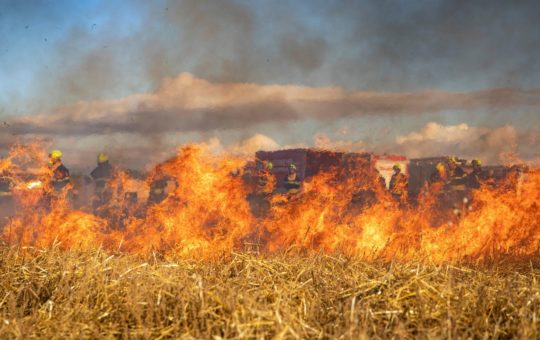
The United Kingdom is currently experiencing severe meteorological conditions that have pushed wildfire risk to unprecedented levels. According to leading Exeter experts, large portions of the country are under a red wildfire alert, a designation previously seen only during the destructive fires of July 2022. The current UK heatwave has created a perfect storm of environmental factors that make landscape fires highly probable and incredibly dangerous.
Professor Claire Belcher, Chair of Wildland Fire at the University of Exeter, highlights that the university’s FireInSite prediction system is showing the highest risk of fire ignition since its inception. Highly environmentally valuable areas, including Dartmoor and the heathlands of Devon and Dorset, are currently showing a 100% probability that a single spark can ignite grass. This alarming statistic underscores the sheer dryness and volatility of the landscape.
A critical concept in fire behavior is the 30:30:30 rule—a globally recognized threshold indicating high wildfire likelihood when temperatures hit 30°C, relative humidity drops to 30%, and wind speeds reach 30 km/hr. Professor Belcher notes that this may be the first time the UK has crossed this specific boundary. The practical implications are already visible; recent fires near Exeter forced the closure of major arteries like the M5 and A38, disrupting travel, damaging local infrastructure, and causing immediate economic losses. Communities must exercise extreme caution with any potential ignition sources, from barbecues to discarded cigarettes.
The Broad Economic and Operational Impact of Extreme Heat
While the immediate danger of wildfire risk dominates headlines, the UK heatwave carries cascading economic and operational consequences that affect multiple sectors simultaneously. Dr. Martina Egedusevic, a Nature Impact Fellow, points out that extreme heat and fire threats should not be viewed solely as environmental issues. They are profound economic and community resilience challenges.
When landscapes become exceptionally dry, natural assets that typically support farming, biodiversity, and carbon storage transform into liabilities. The costs associated with these events extend far beyond the immediate damage to land or the expenses of emergency response. Businesses and local governments face road closures, disrupted supply chains, lost working hours, and increased pressure on health and emergency services. Over the long term, the financial burden of restoring damaged ecosystems is immense.
Infrastructure Strain and Energy Generation Challenges
The physical infrastructure of the UK is fundamentally unprepared for prolonged periods of extreme heat. Professor Philipp Thies explains that engineering infrastructure and service provision suffer tangible degradation during these events. For instance, while photovoltaic (PV) solar panels require sunlight, their efficiency drops for every degree above 25°C. Furthermore, large thermal power plants, including nuclear facilities, require significant cooling to maintain their generation cycles. In France, several nuclear plants have had to idle to prevent returning overly warm water to river ecosystems, stressing regional power grids.
Transportation infrastructure is equally vulnerable. Overhead power lines for trains and the national grid are engineered for specific temperature corridors. In extreme heat, cables expand and droop, increasing the risk of short-circuiting if they contact other structures. Railway tracks, designed primarily for milder British weather, face a high risk of buckling, necessitating slower speeds or complete halts to train services. Dr. Daniel Williams emphasizes that without dedicated financial investment, passengers will continue to bear the brunt of these failures through delays and dangerous on-board conditions.
However, there are adaptive technologies available. Dr. Aritra Ghosh notes that modern, third-generation PV systems handle heat much better, maintaining higher efficiency. Additionally, deploying floating solar panels offshore can leverage the natural cooling of the marine environment, offering a more resilient energy solution during heatwaves.
Schedule a free consultation to learn more
Health Risks and Coastal Water Dangers During a UK Heatwave
The human cost of a UK heatwave is significant and multifaceted. Professor Theo Economou states unequivocally that extreme heat kills, indirectly but decisively. Heatwaves place an immense mortality burden on society, hitting vulnerable populations hardest—including the elderly, children, those with chronic pre-existing conditions, and the socio-economically deprived. As the UK population ages, the risk posed by infrastructure never designed to withstand such temperatures will only mount.
Healthcare System Pressures
Dr. Sam Hu details how heatwaves disrupt the delivery of essential services, particularly within the NHS. Extreme heat reduces workforce capacity as staff suffer from heat stress, fatigue, and dehydration, often while simultaneously managing increased caring responsibilities. This drop in capacity occurs exactly when demand spikes due to heat-related illnesses. This creates a severe double pressure: more patients require support while the system’s ability to provide care is constrained.
Furthermore, heatwaves threaten the supply chains critical to healthcare and business operations. Temperature-sensitive goods, such as medicines, food, and clinical products, require additional cooling and altered delivery schedules. Transport delays caused by infrastructure failure make these deliveries less reliable, turning environmental events into distinct operational and financial risks for public services.
Hidden Dangers in Coastal Waters
As people seek relief from the heat in the ocean, climate change has introduced new biological risks. Dr. Sariqa Wagley warns that rising sea surface temperatures around England’s coastal and estuarine waters make them more hospitable to harmful bacteria, including Vibrio species. These bacteria can cause severe gastroenteritis and dangerous wound infections. The advice is clear: individuals with open cuts or wounds should avoid entering the water until healed, and those with underlying health conditions or compromised immune systems should avoid consuming raw or undercooked shellfish during periods of elevated water temperatures.
Explore our related articles for further reading
Strategies for Adapting Buildings and Cities to Heatwaves
Adapting to the new reality of frequent heatwaves requires immediate changes in how we manage our built environment. Professor Gesche Huebner, Director of the European Centre for Environment and Human Health, stresses that the primary goal during a hot period is to prevent heat from entering a building in the first place. This means closing windows when the outside temperature exceeds the indoor temperature and utilizing external shading.
Unlike many European countries, the UK housing stock largely lacks external shutters, awnings, or roof overhangs that provide passive cooling. While temporary measures—like hanging bedsheets over windows or using reflective foil—can help, they are insufficient for long-term resilience. New building regulations in England are beginning to address overheating in new residential builds, but the vast majority of UK buildings are older and will remain in use for decades.
Retrofitting existing buildings with passive cooling solutions is essential. On a broader scale, urban planning must prioritize heat resilience. This includes optimizing green spaces to cool cities, installing white roofs to reflect solar radiation, and incorporating water features. While air conditioning offers immediate relief, it is not a scalable solution for the UK. AC units emit warm air outside, exacerbating the urban heat island effect, and widespread adoption would place an unsustainable strain on the electricity transmission network.
Global Climate Change Signals: From Marine Ecosystems to Polar Ice
The localized impacts of the UK heatwave are part of a much broader pattern of climate change. Dr. Jesse Abrams refers to the increasing intensity and frequency of these events as one of the clearest “fingerprints” of human-caused climate change. The clustering of extreme events within a single season—following a record-breaking May and June—compounds impacts on infrastructure, ecosystems, and financial models that were built for a cooler, more stable climate. Previously exceptional costs are in danger of becoming the UK’s normal operating environment.
Marine Ecosystem Resilience
The oceans are not immune. Marine heatwaves are becoming more frequent, disrupting marine ecosystems and wildlife. Professor Brendan Godley argues that the UK must increase and enhance its Marine Protected Areas (MPAs). By reducing local pressures such as overfishing or pollution, MPAs act as powerful tools to build ocean resilience, giving ecosystems the capacity to withstand and recover from shocks like marine heatwaves.
Polar Heatwaves and Sea-Level Rise
Perhaps the most alarming signals are coming from the polar regions. Dr. Helen Millman points out that Antarctica is currently experiencing heatwaves in the middle of winter. At the Rothera research station, temperatures have risen above freezing with rain, compared to the expected -20°C and snow. These events accelerate glacier melt and weaken the critical ice shelves that hold back the Antarctic Ice Sheet.
Because heatwaves are not yet fully represented in ice sheet models, future sea-level rise projections may lean toward the upper end of current estimates. Planning that assumes a 1-meter sea-level rise by 2100 as a worst-case scenario is dangerously optimistic; plausible high-end scenarios now exceed 2 meters, driven partly by extreme polar heat events.
Submit your application today to study environmental sciences
Moving Forward: Preparation and Investment
The insights provided by University of Exeter researchers paint a clear picture: the UK heatwave and its associated wildfire risk are not isolated anomalies but symptoms of a rapidly changing climate. Addressing these challenges requires a fundamental shift in how the UK approaches infrastructure investment, land management, and urban planning.
Treating nature as critical infrastructure, investing in passive cooling for buildings, upgrading the rail and energy networks, and expanding marine protections are no longer optional future considerations. They are immediate necessities. As extreme heat becomes a more frequent feature of the British summer, proactive adaptation and systemic resilience will determine the extent of the economic, environmental, and human costs we face in the coming decades.