
Evaluate Brunel Summer School Pathways for Future Doctors in UK Medicine
Gaining admission to medical school remains one of the most competitive academic endeavors in the United Kingdom. For students from non-traditional backgrounds, the path to becoming a physician is often fraught with systemic barriers, a lack of tailored guidance, and limited access to clinical exposure. Recent recognition by local Members of Parliament highlights how targeted initiatives are actively changing this landscape. By examining the structure and impact of the Brunel summer school, aspiring medical students and their advocates can better understand how specialized healthcare education programs are creating tangible pathways into the profession.
Understanding the Barriers to UK Medicine Admissions
The pursuit of a medical degree in the UK requires more than just top grades. Applicants must demonstrate a nuanced understanding of healthcare, secure relevant work experience, and perform exceptionally well in rigorous admissions tests and multiple-interview stages. For students who are the first in their families to attend university, or who attend schools with limited resources, navigating these requirements can be overwhelming.
The Role of Medical Outreach in Leveling the Playing Field
Medical outreach programs exist specifically to bridge this gap. They provide the foundational knowledge and social capital that affluent students often receive through private schooling or family networks. When Uxbridge and South Ruislip MP Danny Beales recently visited the Brunel University of London campus, the focus was not merely on academic excellence, but on how the university is actively dismantling the barriers that prevent capable students from entering UK medicine. Programs like these ensure that the future doctor workforce accurately reflects the diverse communities it serves, which studies consistently show leads to better patient outcomes and increased trust in healthcare systems.
Schedule a free consultation to learn more about medical school preparation and outreach opportunities.
What the Brunel Summer School Offers Future Doctors
The Brunel summer school is designed as a comprehensive introduction to both the academic and practical realities of studying medicine. Moving far beyond standard classroom instruction, the program integrates multiple facets of medical training to give Year 12 students a realistic perspective on the profession.
Hands-On Clinical Exposure
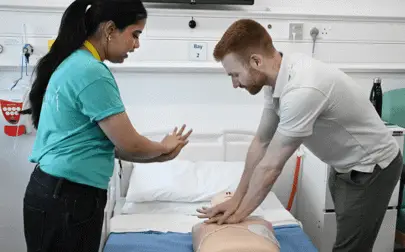
One of the most significant hurdles for any medical applicant is gaining relevant clinical experience. The Brunel program addresses this directly by partnering with clinical educators from local GP practices and major NHS trusts, including North West London and Frimley Health. Students participate in practical clinical sessions, such as specialized cardiology workshops. This hands-on approach allows future doctors to apply theoretical knowledge to practical scenarios, giving them a substantial advantage when writing their personal statements and discussing their experiences during medical school interviews.
Academic Preparation and Mentorship
Academic rigor is a cornerstone of healthcare education. The program combines online learning modules with an intensive residential stay. During this time, students interact with diverse medical student ambassadors who provide peer-to-peer mentorship. As noted by recent attendee Sarah Adams, a 17-year-old from Brighton, interacting with these ambassadors was instrumental in learning more about the realities of medical school. This mentorship component demystifies the application process and provides students with actionable advice on how to succeed academically.
Submit your application today to explore upcoming healthcare education programs and summer schools.
Residential Life and Campus Integration
Adjusting to university life is a transition that can dictate a student’s long-term academic success. By incorporating a residential stay, the Brunel summer school allows participants to live on campus, manage their own schedules, and collaborate with peers in a higher education environment. This immersion helps students build the independence required for a demanding MBBS program. Furthermore, activities like a West End trip to see The Lion King foster community building and stress management—essential skills for any future doctor.
Strategic Partnerships Elevating Healthcare Education
The effectiveness of the Brunel summer school is significantly amplified by its strategic partnerships, which expose students to a broader spectrum of the UK medical ecosystem. Delivering this program in isolation would yield results, but collaborating with leading institutions maximizes its impact.
Collaborating with Imperial College London
A standout feature of this medical outreach initiative is its partnership with Imperial College London. Students do not limit their experience to a single campus; they also attend an admissions talk and campus tour at Imperial. This dual-university exposure is highly beneficial. It allows students to compare different institutional cultures, teaching methodologies, and admission criteria. Understanding that different medical schools prioritize different attributes helps applicants tailor their applications more effectively.
NHS England and the Medical Schools Council Initiative
The program operates as part of a national Medical Schools Council initiative and is funded by NHS England. This backing is crucial. It signifies that the program meets rigorous national standards for widening participation. Katie Petty-Saphon, Chief Executive of the Medical Schools Council, emphasized that the goal is to ensure every young person, regardless of background, has the opportunity to pursue medicine. The involvement of NHS England also reinforces the connection between early medical outreach and the long-term workforce needs of the national health service.
Explore our related articles for further reading on strategic medical school partnerships and application strategies.
The Guaranteed Interview Advantage for MBBS Applicants
Perhaps the most concrete benefit of completing the Brunel summer school is the academic incentive tied to its conclusion. Students who successfully complete the program and meet the standard entry requirements are guaranteed an interview for Brunel’s MBBS Medicine programme.
In the highly competitive landscape of UK medicine, securing an interview is a massive hurdle. Many candidates with perfect grades fail to receive an interview invitation because their applications lack the specific contextual indicators universities look for. By guaranteeing an interview, Brunel University of London removes a significant layer of uncertainty. This policy acknowledges that the summer school itself serves as a rigorous vetting process, preparing students adequately for the demands of the MBBS course. For participants, this guarantee provides a clear, achievable goal to work toward during their final year of secondary education.
Building Confidence and Social Capital Through Medical Outreach
Dr. Chinedu Agwu, the Lecturer in Biosciences and Academic Lead for Widening Participation at Brunel Medical School, articulated a core philosophy of the program: making medicine a realistic ambition for students from any background. This speaks directly to the concept of social capital.
Students from traditional medical backgrounds often possess an inherent network of healthcare professionals, family friends who are doctors, and access to private tutoring. Medical outreach programs like this summer school actively build that social capital for students who lack it. By facilitating direct interactions with clinical educators, university lecturers, and current medical students, the program integrates the participants into the medical community before they even apply to university. This integration fosters a sense of belonging, which combats the imposter syndrome that frequently derails talented students from under-represented communities.
Take the Next Step in Your Medical Career
Addressing the diversity gap in UK medicine requires deliberate, well-funded, and highly structured interventions. The Brunel summer school exemplifies how universities can leverage partnerships with NHS trusts and institutions like Imperial College London to provide a comprehensive, actionable pathway for future doctors. By offering clinical exposure, academic mentorship, and a guaranteed interview pathway, the program removes the opaque barriers that often discourage talented students.
For Year 12 students considering a career in healthcare education, seeking out and participating in similar widening participation programs is a strategic imperative. These initiatives provide the knowledge, confidence, and credentials necessary to navigate the complex medical school admissions process successfully.
Have questions about navigating medical school admissions as a non-traditional applicant? Write to us in the comments below!