Drive Business Growth in the UK Through Student Consultancy at the University of Kent KBS Challenge
The transition from academic theory to practical application remains one of the most significant hurdles for recent graduates entering the competitive UK job market. Employers consistently seek candidates who possess not only foundational knowledge but also the ability to navigate complex, ambiguous workplace challenges. Recognizing this critical gap, the University of Kent has engineered a practical learning environment that directly connects academic study with the immediate needs of local businesses. At the center of this initiative is the KBS Challenge, a distinctive module that redefines student consultancy by placing learners directly into active business roles. Schedule a free consultation to learn more about partnering with academic institutions.
Bridging the Gap Between Academic Theory and Real-World Practice
Traditional lecture-based learning, while essential for building core competencies, often struggles to replicate the nuanced pressures of a professional environment. Problems in the real world rarely arrive fully defined, and professionals must frequently create structure out of ambiguity. The faculty at the University of Kent designed the KBS Challenge specifically to address this disconnect. Rather than removing the difficulty of business problem-solving, the program places a carefully considered support structure around it. This allows students to experience genuine pressure, uncertainty, and responsibility while remaining supported by academic faculty and industry leaders.
This pedagogical shift moves students away from asking, “What does the theory say?” and forces them to ask, “What does this organization actually need, and what can we realistically recommend?” By changing the fundamental nature of the question, the University of Kent ensures that graduates leave their programs with a highly developed sense of professional identity and practical capability.
The Rising Value of Student Consultancy in the UK
Across the UK, student consultancy is gaining substantial traction as a strategic resource for organizations of all sizes. Small and medium-sized enterprises (SMEs), which form the backbone of the British economy, often lack the financial resources to hire top-tier management consulting firms. However, they still require fresh, data-driven perspectives to optimize their operations, refine their marketing strategies, and navigate digital transformation.
Simultaneously, universities are under increasing pressure to demonstrate graduate employability and tangible societal impact. Student consultancy programs serve as a powerful mechanism to achieve both objectives simultaneously. Local businesses gain access to bright, motivated minds who can analyze operational data and provide actionable recommendations, while students build robust portfolios of real-world achievements. The UK higher education sector is increasingly viewing these partnerships not as extracurricular activities, but as fundamental components of modern business education.
Inside the University of Kent KBS Challenge
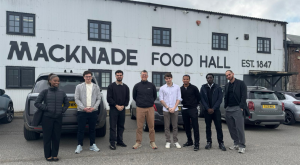
The KBS Challenge, organized by Kent Business School, operates on a scale that provides substantial value to the regional economy. In a recent cycle, over 100 students were organized into 15 separate consultancy teams to tackle 10 live projects. These were not hypothetical case studies; they were pressing operational and strategic challenges posed by recognizable local businesses, including the Port of Dover, Macknade, Barretts Kent, and Enterprise Mobility.
The structure of the program requires students to visit business sites, engage directly with senior stakeholders, and produce professional-grade presentations and reports. They are coached not just by academics, but by the business leaders who own the problems being solved. This dual-layer of feedback ensures that the students’ output meets both academic rigor and commercial viability. The range of work is deliberately broad, covering cross-functional challenges such as artificial intelligence integration, contract management, operations, marketing analytics, sourcing, and digital transformation. Submit your application today to study at a university that prioritizes real-world business experience.
Real Projects with Real Stakes
The effectiveness of student consultancy is best illustrated through the specific outcomes achieved by the KBS Challenge participants. For example, a student team led by Shalom was tasked with advising Barretts Kent on improving throughput and workforce planning within its Vehicle Preparation Centre. The team did not simply offer high-level suggestions; they analyzed operational data, mapped the entire vehicle preparation process, and benchmarked industry best practices to deliver validated, actionable recommendations.
Another team, working with Enterprise Mobility, focused on a distinct challenge: understanding student motivations and behaviors to improve the company’s graduate recruitment journey. By researching employer perceptions and competitor approaches, the students provided Enterprise Mobility with a clear roadmap to attract top talent into their placement roles and graduate training programmes. These projects require students to manage budgets, assess risks, and handle operational realities, resulting in a profound increase in their employability.
Mutual Benefits for Local Businesses and Students
The most successful student consultancy models are those that deliver unequivocal value to both the students and the corporate partners. The feedback from the local businesses involved in the KBS Challenge highlights the high commercial value of student work. Stephano Cuomo, CEO of Macknade, noted that the quality of work delivered by the students over a three-to-four-week period directly matched the output he has received from established commercial agencies. For a business leader, this represents an exceptional return on investment and a vital injection of external insight.
Neil Relph, Head of Business at Barretts, echoed this sentiment, emphasizing that the students managed to take suspected operational issues, rigorously validate the data, and provide concrete recommendations to guide future capital expenditure. Local businesses benefit from a fresh perspective free from institutional bias, often arriving at conclusions that mirror those of seasoned industry professionals.
Building a Pipeline of Future Talent
Beyond immediate problem-solving, student consultancy serves as a highly effective recruitment pipeline. Monica Fowler, a Talent Acquisition Marketing Specialist at Enterprise Mobility, pointed out that engaging with the KBS Challenge allowed the company to tap directly into its target audience. By understanding how students think and what they value in an employer, Enterprise Mobility could refine its broader recruitment strategy. Furthermore, businesses get a prolonged, low-risk opportunity to evaluate potential future employees in a working environment, which significantly reduces the risks associated with traditional graduate hiring. Have questions about integrating student consultancy into your business strategy? Write to us!
Developing Professional Identity Beyond the Classroom
While the tangible deliverables—presentations, reports, and strategic recommendations—are important, the most significant outcome of the KBS Challenge is the psychological and professional growth of the students. Being placed directly into complex scenarios forces rapid adaptation. Students must learn to speak to senior stakeholders with confidence, defend their analytical reasoning, and respond constructively to critical feedback.
Khawar Naveed Bhatti, the module organizer, observed that the primary goal was seeing students begin to recognize themselves as professionals. The experience shifts their self-perception from passive recipients of knowledge to active creators of business value. They gain the freedom, confidence, and practical tools necessary to succeed in high-pressure environments. This internal shift is precisely what UK employers are looking for when evaluating early-career candidates. Explore our related articles for further reading on UK higher education and business partnerships.
How to Get Involved with University of Kent Student Consultancy
For organizations operating in the UK, engaging with student consultancy programs like the KBS Challenge represents a strategic opportunity to access high-quality research, innovative solutions, and emerging talent. Universities are increasingly agile in how they structure these partnerships, offering various levels of engagement ranging from live project briefs and site visits to guest lecturing and long-term mentoring.
Business leaders who benefited from similar programs during their own education—such as Barry O’Donoghue of Barretts Kent, who completed his Master’s degree at Kent Business School—often become the most vocal advocates for these initiatives. They understand firsthand that the best learning occurs when the audience, consequences, and work are entirely real. Organizations interested in supporting the next generation of business graduates while gaining new perspectives on live operational challenges are encouraged to establish connections with local business schools.
Conclusion
The University of Kent KBS Challenge demonstrates that student consultancy is far more than an academic exercise; it is a vital business function that drives real economic impact for local businesses in the UK. By intentionally placing students in complex, high-stakes environments, the program bridges the gap between academic theory and professional practice. Students graduate with proven experience in stakeholder engagement, data analysis, and strategic recommendation, while businesses gain access to commercial-grade insights and a curated pipeline of future talent. As the UK economy continues to evolve, the synergy between ambitious students and forward-thinking local businesses will remain a critical driver of regional growth and innovation. Share your experiences with student consultancy projects in the comments below.