
Analyze How Loughborough University R3VTech Innovation Earned a UK Environment Award for Biodiesel Technology
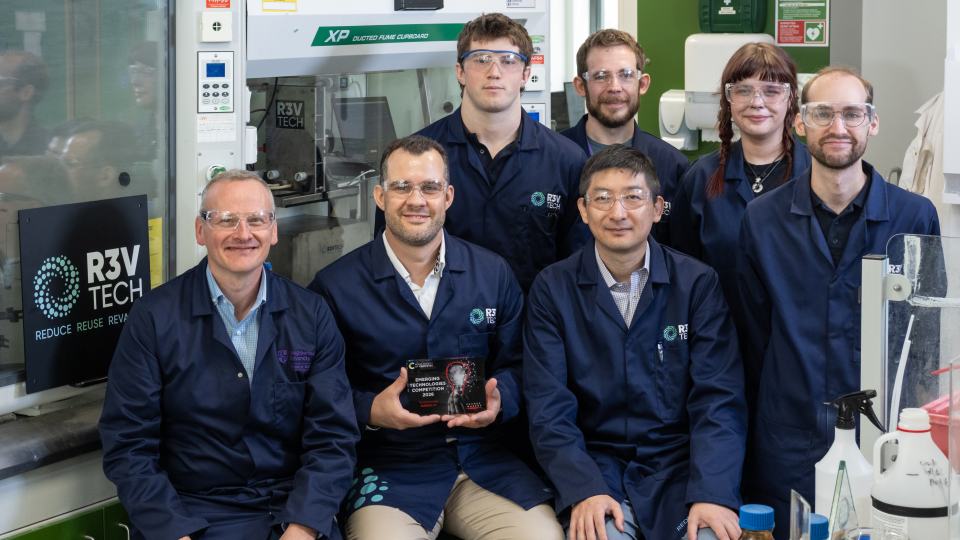
The biofuels sector constantly seeks methods to improve efficiency and reduce waste. Recently, a spin-out company from Loughborough University demonstrated a highly effective method to address one of the industry’s most persistent waste challenges. R3VTech secured the Runner Up position in the Environment category of the Royal Society of Chemistry’s Emerging Technologies Competition 2026. This recognition serves as a prominent UK environment award, highlighting the commercial viability of their sustainable chemistry approach to biodiesel technology.
Schedule a free consultation to learn more about how sustainable chemical processes can impact your business operations and waste management strategies.
Evaluating the Significance of the UK Environment Award
The Royal Society of Chemistry (RSC) Emerging Technologies Competition is a highly competitive platform that showcases the most promising chemistry-led innovations in the UK. Earning recognition in this forum requires more than just a theoretical concept; it demands demonstrable commercial potential and a clear mechanism for addressing pressing global challenges.
R3VTech’s achievement in the Environment category placed its founders directly in front of industry leaders and investors. The judging panel featured representatives from major global organizations, including bp, PETRONAS, Johnson Matthey, Unilever, Croda, GSK, AstraZeneca, and Future Planet Capital. Presenting at the RSC headquarters at Burlington House in London allowed R3VTech to validate its business model and technical approach to experts spanning the chemicals, energy, and investment sectors.
For stakeholders in the green technology space, this UK environment award signals that R3VTech’s solution has passed a rigorous vetting process. The competition evaluates entries based on their scientific innovation, market potential, and societal impact. By finishing as a top contender alongside other notable innovators like Brilliant Dyes, Demeter Bio, Metal Morph, and teams from Imperial College London and the University of Birmingham, R3VTech proved its capacity to compete at the highest levels of sustainable chemistry.
Examining the R3VTech Innovation in Sustainable Chemistry
At the core of R3VTech’s recognition is a proprietary electrochemical process designed to solve a specific, costly problem within biodiesel technology. To understand the value of this innovation, one must first examine the traditional biodiesel production cycle.
The Crude Glycerol Challenge in Biodiesel Technology
Biodiesel is typically produced through the transesterification of vegetable oils or animal fats. While this process successfully generates biodiesel, it also yields a substantial volume of crude glycerol as a by-product. For every 10 parts of biodiesel produced, roughly 1 part of crude glycerol is generated.
In its crude form, this glycerol contains impurities such as methanol, water, salts, and fatty acids. Purifying it to a commercial grade requires complex, energy-intensive refining processes. Consequently, crude glycerol is often considered a low-value or even negative-value waste product. Biodiesel producers frequently struggle to dispose of it responsibly or sell it at a profit, creating a significant bottleneck in the overall economics of biodiesel plants.
The Electrochemical Conversion Process
R3VTech’s sustainable chemistry innovation circumvents the need for traditional purification. Co-founded by Loughborough University chemistry academics Dr. Adriano Randi and Professor Benjamin Buckley, alongside Professor Jin Xuan from the University of Surrey, the company developed a patented electrochemical method.
Rather than refining crude glycerol, the R3VTech process converts it directly into solketal. Solketal is a highly valuable bio-derived compound utilized extensively as a solvent and a fuel additive. When blended with diesel fuel, solketal improves cold flow properties and can help reduce particulate matter emissions, enhancing the final fuel product.
Explore our related articles for further reading on the latest trends in green chemistry, biofuel advancements, and waste-to-value processes.
Assessing the Economic and Environmental Impact
The practical application of R3VTech innovation offers distinct advantages for biodiesel producers, addressing both environmental and economic bottom lines. The technology is explicitly designed for on-site deployment at biodiesel production facilities.
Reducing Logistics and Energy Costs
By processing crude glycerol directly at the point of generation, biodiesel plants eliminate the logistical burden of transporting this low-value, heavy by-product to separate refining facilities. This localized approach significantly cuts down on transportation-related greenhouse gas emissions. Furthermore, bypassing the conventional, multi-step thermal refining processes reduces the overall energy requirements associated with managing biodiesel waste.
Generating New Revenue Streams
From a business perspective, converting a waste liability into a marketable commodity fundamentally alters the financial landscape of a biodiesel plant. Solketal commands a substantially higher market price than crude glycerol. Industry analyses suggest that successfully integrating this type of technology could create millions in additional revenue for biodiesel producers over the lifespan of their facilities. This economic incentive is crucial for making sustainable chemistry solutions attractive to industrial operators who must prioritize return on investment.
Advancing the Circular Economy
This process is a clear example of circular economy principles in action. Rather than a linear take-make-dispose model, the R3VTech system creates a closed loop within the biofuel production process. Every part of the raw feedstock is utilized to generate valuable, commercially viable products, thereby maximizing resource efficiency and minimizing industrial waste.
Commercializing Sustainable Chemistry at Loughborough University
The success of R3VTech highlights the effectiveness of the university spin-out model in bridging the gap between academic research and industrial application. Loughborough University has fostered an environment where chemistry research can be scaled into viable commercial enterprises.
Dr. Adriano Randi, acting as CEO, successfully pitched the technology to a panel of elite judges, demonstrating not only scientific acumen but also commercial awareness. The company is currently focused on building its team and expanding its physical facilities to move toward broader industrial deployment. This commercial traction builds upon earlier support R3VTech received from the Royal Society of Chemistry’s 2025 Change Makers programme, an initiative specifically structured to accelerate chemistry-led start-ups that deliver positive environmental, social, and economic impact.
Professor Dan Parsons, Pro Vice-Chancellor for Research and Innovation at Loughborough University, emphasized that this award represents a strong endorsement of the commercial promise inherent in the technology and its potential to support more sustainable industrial processes globally.
Submit your application today if you are a researcher, student, or professional looking to join innovative academic programs focused on sustainable technologies and green chemistry.
Strategic Implications for the Biofuels Sector
For existing biodiesel producers, the R3VTech innovation represents a strategic opportunity to upgrade facility operations. As regulatory pressures regarding waste management and carbon emissions continue to tighten, technologies that offer both compliance advantages and revenue generation will become critical components of modern biofuel infrastructure.
Implementing modular electrochemical reactors allows plants to scale their solketal production in alignment with their core biodiesel output. The ability to produce a premium fuel additive on-site also provides biofuel manufacturers with greater control over their final product specifications, potentially opening access to new markets that require higher-performing, lower-emission fuel blends.
Furthermore, the validation from a UK environment award positions R3VTech favorably for future capital raising efforts. The visibility gained through the RSC competition, particularly the interactions with entities like Future Planet Capital and major energy corporations, provides a solid foundation for securing the partnerships necessary to commercialize the technology at a global scale.
Conclusion and Next Steps for Industry Stakeholders
The recognition of R3VTech at the Royal Society of Chemistry’s Emerging Technologies Competition underscores the vital role that sustainable chemistry plays in the future of energy and manufacturing. By turning the biodiesel by-product crude glycerol into high-value solketal, the Loughborough University spin-out provides a tangible, economically sound solution to a long-standing industrial waste problem.
As the company scales its operations and expands its facilities, biodiesel producers and investors in the green technology sector should monitor their progress. The transition from laboratory-scale electrochemistry to industrial-scale deployment is the next critical phase for this biodiesel technology. Stakeholders who engage early with such award-winning innovations will be best positioned to capitalize on the shift toward more profitable, circular biofuel production models.
Have questions? Write to us! We welcome inquiries from industry professionals and academics regarding the integration of advanced chemical processes in manufacturing.
Share your experiences in the comments below regarding the operational challenges of managing biodiesel by-products in your facility.