
Exploring Genetic Engineering and Queer Heritage: Dr Avey Nelson’s Research at the University of Sussex
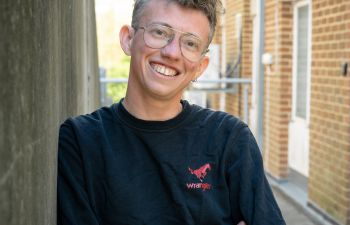
Bridging Disciplines: The Academic Foundation of Dr Avey Nelson
Academic research often follows predictable paths, but some scholars deliberately resist traditional disciplinary boundaries to pursue questions that span multiple fields. Dr Avey Nelson, a researcher at the University of Sussex in the UK, exemplifies this approach by combining interests in digital humanities, queer theory, and critical science studies into a cohesive research agenda. Understanding how researchers develop such interdisciplinary profiles provides valuable insights for aspiring academics considering non-traditional career trajectories.
Dr Nelson’s academic journey began at St. John’s University in Queens, New York, where undergraduate work in writing center tutoring sparked an early interest in communication and technology. Rather than remaining within a single field, this initial experience evolved into doctoral research examining the intersection of digital humanities and queer theory. The resulting PhD thesis, ‘Computers Can’t Get Wet: Queer Slippage and Play in the Rhetoric of Computational Structure,’ investigated how computational systems interact with queer communities, specifically analyzing biohacking, sex work, and video game speedrunning communities.
This unconventional academic background prepared Dr Nelson for the complex research challenges undertaken at the University of Sussex. The institution’s reputation for supporting interdisciplinary work has allowed this research to flourish in ways that might prove difficult in more traditionally structured academic environments.
Have questions about pursuing interdisciplinary research? Schedule a free consultation to learn more about how the University of Sussex supports innovative scholarship.
Understanding Genetic Engineering Through a Critical Lens
Genetic engineering technologies, particularly CRISPR-Cas9, have dominated scientific headlines over the past decade. While much research focuses on the technical capabilities or ethical implications of these tools, Dr Avey Nelson’s work at the University of Sussex approaches genetic engineering from a different angle: examining how these technologies are represented, discussed, and understood in public discourse.
The initial project in this area analyzed media representations of CRISPR across UK press and social media between 2012 and 2022. This timeframe captured several pivotal moments in genetic engineering history, including what researchers term the ‘CRISPR craze,’ the controversial He Jiankui embryo editing case, and the emergence of gene therapy clinical trials. Rather than assessing whether media coverage was accurate or sensationalized, the research examined three recurring figures in these narratives: the double helix as a visual symbol, the scientist as authority figure, and the human subject as recipient of intervention.
This approach reveals how public understanding of genetic engineering technologies takes shape through storytelling conventions as much as through scientific communication. The relationship between specialist science reporting and mainstream press coverage creates feedback loops that influence public expectations, policy debates, and ultimately how these technologies develop and deploy.
For researchers interested in science communication, this methodology demonstrates how humanities scholarship can contribute to understanding complex technological developments without requiring technical expertise in the underlying science.
The De-Extinction Stories Project: Mapping Science and Society
Following the CRISPR media analysis, Dr Nelson’s research team pivoted to examine de-extinction—the scientific effort to ‘revive’ lost species through genetic engineering of existing animals. The De-Extinction Stories project represents an ambitious attempt to understand this emerging field as a socio-technical phenomenon rather than purely a scientific endeavor.
The project currently tracks work on three species: the woolly mammoth, the Tasmanian tiger (thylacine), and the northern white rhino. Each case presents distinct challenges and involves different networks of researchers, institutions, funding sources, and public stakeholders. By mapping these actors, networks, and materials, the research constructs a comprehensive picture of how de-extinction science actually operates in practice.
What makes this research particularly valuable is its attention to impacts beyond the laboratory. De-extinction efforts do not exist in isolation—they affect conservation priorities, indigenous communities with connections to extinct species, environmental policy, and public expectations about humanity’s relationship with nature. The woolly mammoth project, for instance, raises questions about Arctic ecosystems and climate change. The thylacine de-extinction effort intersects with Australian colonial history and Tasmanian Aboriginal cultural heritage. The northern white rhino work connects to broader debates about conservation funding and priorities.
The De-Extinction Stories team presents annual updates at the Society for Social Studies of Science (4S) conference and has presented thylacine research at Cambridge’s History of Modern Medicine and Biology Seminar Series. Future plans include fieldwork in Australia and New Zealand, creative storytelling events in Brighton and Hobart, and a book presenting comprehensive findings. The team is also working to establish a ‘Critical De-Extinction Studies’ consortium, recognizing that this emerging discipline requires sustained scholarly attention.
Explore our related articles for further reading on critical approaches to emerging technologies and their social implications.
Why Critical De-Extinction Studies Matters
The push to establish Critical De-Extinction Studies as a recognized field reflects the scale of what is at stake. De-extinction technologies could reshape conservation biology, environmental policy, and public understanding of extinction itself. Without critical scholarship examining the assumptions, power dynamics, and cultural implications embedded in these projects, important questions may go unasked.
Dr Nelson’s contribution to this emerging field demonstrates how researchers trained in humanities methods can engage substantively with scientific developments. The work does not evaluate whether de-extinction will succeed technically, but instead asks what success would mean, who benefits from particular framings, and what alternative approaches might be obscured by dominant narratives.
Preserving Queer Cultural Heritage Through Creative Practice
Alongside work on genetic engineering, Dr Avey Nelson’s research at the University of Sussex addresses queer cultural and creative heritage. This strand of research moves beyond traditional academic outputs to engage directly with communities and creative practitioners.
The Diverse Alarums project, which secured over £1 million in funding from the Arts and Humanities Research Council (AHRC), exemplifies this approach. Dr Nelson served as co-investigator on the project, which included producing two theatre productions: a large-scale outdoor staging of John Lyly’s Galatea (1588) at the Brighton Festival and a queer cabaret featuring acts inspired by historical sources.
The ‘Queer Histories in Cabaret’ component of this work demonstrates how academic research can translate into accessible public programming. The project commissioned five queer cabaret artists to develop new performances staged at the Attenborough Centre for the Creative Arts (ACCA). Collaboration with Marlborough Productions, a Brighton-based queer production company, and local creative practitioners provided support throughout the artist residencies.
This work matters because queer history has often been marginalized, erased, or preserved only in fragmentary forms. Creative approaches to heritage can reach audiences who might never engage with traditional academic publications, while also building relationships between universities and the communities they study. The Brighton context proves particularly significant given the city’s established LGBTQ+ communities and cultural infrastructure.
Dr Nelson’s work with the Centre for the Study of Sexual Dissidence (‘Sex Diss’) and the Sussex Digital Humanities Lab continues this focus, currently developing digital archives of Sex Diss’s institutional history. This archiving project will contribute to broader understanding of how queer scholarship has developed within UK higher education.
Share your experiences in the comments below if you have participated in or attended academic-creative collaborations in heritage work.
Collaborative Research Models in Modern Academia
Dr Nelson’s research profile raises important questions about how academic work gets valued and recognized. Much of this scholarship involves team-based projects with multiple contributors and varied outputs—including performances, digital archives, and creative works alongside traditional publications. This approach resists the single-author monograph model that still dominates evaluation in many humanities disciplines.
The De-Extinction Stories project exemplifies non-hierarchical collaboration, with team members occupying different roles across the project’s lifespan. Dr Nelson has served in both leadership positions as principal investigator and in supporting roles, reflecting the fluid nature of collaborative work. This flexibility allows researchers to contribute according to project needs rather than rigid position descriptions.
However, as Dr Nelson acknowledges, collaborative and multi-modal work often receives different valuation than single-authored scholarship within traditional academic structures. Early career researchers considering similar paths should be aware of these tensions while recognizing that institutional attitudes continue to evolve. The University of Sussex’s support for such work suggests that change is underway, but researchers should still strategize about how to present interdisciplinary, collaborative outputs in contexts that may favor conventional forms.
Future Directions in Interdisciplinary Scholarship
Looking forward, Dr Avey Nelson’s research agenda continues to expand. A new project examines the intersection of gender, sexuality, and neoliberalism during the digital age, currently developing into a research article. Creative practice remains central, with work continuing on a novel, podcast, and film photography alongside academic scholarship.
The combination of critical science studies and queer heritage work might initially appear disparate, but underlying connections become apparent upon closer examination. Both areas involve examining how categories get constructed, maintained, and challenged—whether those categories are species boundaries or sexual identities. Both require attention to power dynamics, historical contexts, and the material conditions that shape what becomes possible. Both benefit from methodological approaches that resist simplistic binaries in favor of more nuanced, contextual analysis.
For prospective researchers considering the University of Sussex, Dr Nelson’s profile illustrates the institution’s capacity to support scholars who do not fit neatly into departmental boxes. The combination of the Sussex Digital Humanities Lab, the Centre for the Study of Sexual Dissidence, and collaborative research cultures creates infrastructure that enables unconventional scholarship to develop and thrive.
The field of Critical De-Extinction Studies represents one concrete example of how such work can contribute to new scholarly domains. As genetic engineering technologies continue to advance and queer heritage work gains recognition, researchers with the methodological flexibility to engage across traditional boundaries will be well-positioned to address emerging questions.
Submit your application today if you are interested in pursuing interdisciplinary research at the University of Sussex. Explore available programs and supervisor profiles to find the right fit for your research interests.
Key Takeaways for Aspiring Researchers
Dr Avey Nelson’s career offers several lessons for those considering academic research paths:
- Interdisciplinary work requires strategic positioning: While resisting disciplinary boundaries can be intellectually rewarding, researchers should consider how to frame their work for different audiences and evaluation contexts.
- Collaboration expands what is possible: Large-scale projects like De-Extinction Stories and Diverse Alarums achieve scope that individual scholarship rarely can, though they require different skills than solitary research.
- Multiple output formats serve different purposes: Academic publications, creative works, public events, and digital archives each reach distinct audiences and serve different functions within a research agenda.
- Local context matters: The Brighton context significantly shapes the queer heritage work, demonstrating how place-based research creates opportunities for meaningful community engagement.
- Build infrastructure alongside producing outputs: Dr Nelson’s emphasis on the ‘friends and colleagues’ who make research possible highlights the importance of relationship-building in academic careers.
The University of Sussex continues to support researchers who pursue questions that cross traditional boundaries. For scholars interested in the intersections of technology, culture, and critical analysis, institutions that value such approaches provide essential foundations for meaningful work.