
Explore How University of Kent Researchers Use Robots for Companionship in the UK
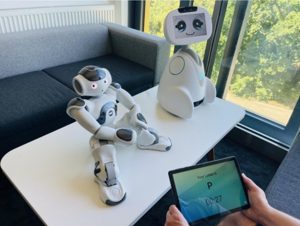
Two robots walk into a pub. While it sounds like the opening line of a joke, it is actually a real-world initiative happening in Canterbury this May. Researchers from the University of Kent are taking their advanced robotic systems out of the laboratory and into a public space to demonstrate the future of care and social interaction. As part of the international Pint of Science festival, these machines will interact with everyday people, offering a clear look at how technology can address some of the most pressing challenges in modern healthcare and social isolation.
Schedule a free consultation to learn more about the research opportunities and academic programs available at the University of Kent.
The Growing Need for Robotic Companionship in the UK
The UK, like many other nations, is experiencing a significant demographic shift. The population is aging rapidly, placing unprecedented pressure on the healthcare system, social care facilities, and familial support structures. With a growing number of older adults living alone, loneliness has become a critical public health issue. Studies consistently show that chronic loneliness can have detrimental effects on physical and mental health, contributing to conditions such as depression, cognitive decline, and cardiovascular disease.
Addressing this epidemic requires innovative solutions. Traditional approaches, such as increasing human caregiving staff or building more residential facilities, are often limited by budget constraints and a shrinking workforce. This is where technology steps in to bridge the gap. Researchers are increasingly looking toward artificial intelligence and robotics not as a replacement for human contact, but as a supplement to it. The goal is to create systems capable of providing consistent, patient, and engaging interaction that can alleviate the symptoms of isolation when human caregivers are unavailable.
The University of Kent has positioned itself at the forefront of this research. By focusing on the practical applications of robotic companionship, the institution is developing systems that directly respond to the needs of the UK’s aging population. These systems are designed to assist with daily tasks, provide memory support, and offer a conversational presence that helps individuals feel connected to the world around them.
Meet NAO and Buddy: Robots Designed for Human Interaction
Central to the University of Kent’s public demonstration are two distinct robotic platforms: NAO and Buddy. These machines represent different approaches to social robotics, each tailored to specific environments and therapeutic needs. Rather than the industrial robots found on manufacturing lines, these are designed with social intelligence in mind, capable of reading human cues and responding in ways that feel natural and non-threatening.
NAO in Education and Therapy
NAO is a small, humanoid robot that has become a staple in academic and therapeutic research globally. Its humanoid shape is intentional; humans are inherently social creatures who respond well to faces and body language. By giving NAO a recognizable form, researchers can study human-robot interaction (HRI) in a way that would not be possible with a mechanical arm or a disembodied voice assistant.
In practical terms, NAO is widely used in educational settings and therapy environments. For individuals with autism, NAO provides a consistent, patient interaction partner. Because robots do not exhibit the complex, sometimes unpredictable emotional responses of humans, they can create a safe, low-stress environment for individuals who struggle with social cues. NAO can lead games, guide simple exercises, and help users practice communication skills. During the Canterbury event, attendees will see NAO play interactive games like “Town-Country-River,” demonstrating its ability to process language and engage in structured social activities.
Buddy in the Home Environment
While NAO excels in structured, short-term interactions, Buddy is designed for a different purpose: long-term companionship in home and care environments. Buddy is a social companion robot built with expressive behavior at its core. It uses a range of facial expressions and body movements to mimic human emotions, making interactions feel more engaging and empathetic.
For an older adult living alone, a robot like Buddy can serve multiple functions. It can provide gentle reminders to take medication, prompt the user to stay hydrated, or simply offer a conversational partner to discuss the weather or reminisce about the past. By mimicking emotional responses—such as appearing happy when the user speaks or showing concern if a routine is missed—Buddy fosters a sense of connection. This emotional resonance is a critical component of effective companionship, distinguishing advanced social robots from standard smart home devices.
Have questions? Write to us! We welcome your inquiries about the future of social robotics and healthcare technology in the UK.
How the University of Kent Approaches Human-Centered AI
Developing effective social robots requires more than just advanced programming. It requires a deep understanding of human psychology, ethics, and social dynamics. The University of Kent’s School of Computing approaches this challenge with a strict focus on human-centered design. Dr. Giovanni Masala, a Senior Lecturer in Computer Science involved in the project, emphasizes that the question is no longer whether society will use robots in care, but how to design them to be truly supportive and respectful.
Preserving human dignity is a central tenet of this research. When introducing machines into care environments, there is a risk that individuals may feel infantilized, surveilled, or marginalized. The University of Kent’s research actively works to mitigate these risks by ensuring that robots operate using everyday language, respect personal boundaries, and empower the user rather than making them feel dependent. The technology is designed to assist with independent living, helping older adults remain in their homes for longer with a greater sense of autonomy.
Building Trust Between Humans and Machines
Dr. Ioanna Giorgi, a Lecturer in Artificial Intelligence at the university, points out that social robots are not about replacing human relationships. Instead, they are about supporting them. A robot cannot replace the warmth of a grandchild or the expertise of a nurse, but it can address the growing concerns around loneliness by strengthening social connections where they are most needed.
Building trust is a crucial step in this process. Humans are naturally skeptical of machines, especially those tasked with personal care. Trust is built through consistent, predictable, and empathetic behavior. Researchers at the University of Kent study how people respond to robotic cues, adjusting the programming of NAO and Buddy to ensure their interactions feel genuine. This involves refining their speech patterns, their physical movements, and their ability to recognize and respond to the emotional state of the human they are interacting with.
Pint of Science: Bringing Academic Research to the Pub
The decision to showcase these robots at The Foundry in Canterbury is part of a broader effort to democratize science. The Pint of Science festival is the world’s largest public science talk event, designed to break down the barriers between academia and the general public. Instead of presenting research in a formal lecture hall, scientists take to the stage in pubs, cafes, and community spaces across the UK.
This year, the festival will span more than 45 cities and 150 venues in the UK. The University of Kent, in partnership with the Medway School of Pharmacy and the University of Greenwich, has organized a robust series of talks under the local program, chaired by Dr. Romina Vuono. The events cover a wide array of topics, demonstrating the breadth of research happening in the region. Alongside the robotic companionship demonstration, attendees can learn about living well with chronic pain, the science behind snoring, what fruit flies can teach us about biology, and the complex role of gut bacteria in human health.
Bringing robots into a pub setting serves a specific purpose. It removes the sterile, clinical aura that often surrounds advanced technology. By interacting with NAO and Buddy in a relaxed, social environment over a drink, the public can see firsthand that these machines are approachable, non-intimidating, and designed with human warmth in mind. It shifts the narrative from fear of artificial intelligence to an understanding of its practical, empathetic applications.
Share your experiences in the comments below. How do you feel about integrating robots into daily care environments and social spaces?
The Future of Social Robots in Healthcare and Daily Life
The work being done at the University of Kent provides a clear window into the future of healthcare and assisted living. As AI continues to advance, the capabilities of social robots will only expand. Future iterations of machines like NAO and Buddy will likely feature enhanced natural language processing, allowing for more fluid and complex conversations. They may also integrate more deeply with smart home ecosystems, monitoring environmental factors and physical health metrics to provide a holistic support system.
In the context of dementia care, the potential is particularly significant. Social robots can provide the repetitive, patient reinforcement that is beneficial for individuals experiencing cognitive decline. They can play memory games, display familiar photos, and play favorite music, all of which can help reduce agitation and improve the quality of life for both the patient and their human caregivers.
However, the widespread adoption of robotic companions will depend heavily on public acceptance. Events like Pint of Science are vital for acclimating society to these technologies. By fostering open dialogue and transparent demonstrations, researchers can address ethical concerns, alleviate fears, and ensure that the development of social robotics continues to align with societal values and needs.
The integration of robots into daily life is not a distant sci-fi concept. It is a gradual process happening right now in labs and public houses across the UK. The University of Kent’s work ensures that as these technologies evolve, they do so with a focus on empathy, dignity, and genuine human benefit.
Explore our related articles for further reading on artificial intelligence, cognitive robotics, and healthcare innovations in the UK.