A New Hub for Digital Research and Cultural Exploration
The landscape of higher education is constantly shifting, demanding institutions not only teach current technologies but actively shape what comes next. For students and professionals focused on the intersection of technology, business, and culture, staying ahead of the curve is a necessity, not an option. The University of Wolverhampton is addressing this need directly with the establishment of a new initiative designed to lead this charge: the Digital Futures Lab. This new facility represents a significant investment in the practical application of emerging technologies, moving beyond theoretical study to tangible innovation.
This initiative is particularly relevant for those looking to specialize in digital transformation, computational arts, or technology-driven business solutions. By creating a dedicated space for collaboration, the university is fostering an environment where academic research meets real-world application. Discover how the University of Wolverhampton is preparing students for the future of work by exploring the specific opportunities this new lab presents.
What is the Digital Futures Lab?
The Digital Futures Lab is a pioneering initiative established by the University of Wolverhampton to explore the transformative power of emerging technologies. The lab is not a passive research center; it is an active hub designed to investigate how tools like Virtual Reality (VR) and Artificial Intelligence (AI) can fundamentally change how we approach research, conduct business, and engage with cultural practices. It serves as a collaborative nexus where academics, students, and external partners from the business and cultural sectors can converge to innovate.
The core mission of the lab is to bridge the gap between digital potential and practical implementation. It focuses on how computational methods can open new perspectives on literature, language, and society. This aligns with a broader trend in the UK’s higher education sector, where universities are increasingly expected to drive regional economic growth through technology. The lab is a tangible manifestation of this commitment, providing the resources and expertise needed to turn ideas into impact.
Core Focus Areas: VR, AI, and Cultural Transformation
The lab’s research agenda is ambitious and interdisciplinary, targeting specific areas where technology promises the most significant disruption and opportunity.
Virtual Reality (VR) and Digital Embodiment
One of the key research streams involves the application of VR beyond entertainment. Researchers are investigating how VR can be used for digital embodiment, allowing for new forms of expression and experience in literature and poetry. This has profound implications for creative industries, therapeutic applications, and educational methodologies. For instance, how can VR create more inclusive canons for literature, or how can it be used to simulate complex social environments for research purposes?
Artificial Intelligence (AI) in Analysis and Society
AI is another pillar of the lab’s focus, with research spanning from computational literary analysis to the societal impacts of AI. The lab will explore how algorithms can analyze authorship and influence, as seen in studies on authors like Margaret Atwood and Naomi Alderman. Furthermore, it will tackle critical ethical questions, such as the biases inherent in chatbot algorithms and the role of AI in addressing health challenges, including its potential application in understanding and supporting individuals on the autism spectrum.
Who Should Engage with the Digital Futures Lab?
The lab is designed to be a resource for a diverse audience. Its collaborative nature means it offers value to:
- Aspiring Students: Individuals looking to pursue postgraduate studies or research degrees (MPhil/PhD) in fields like Computational Literary Studies, Digital Humanities, or Computer Science will find a cutting-edge environment for their work.
- Industry Professionals: Businesses in the West Midlands and beyond seeking to leverage VR or AI for growth can find research partners, access specialized knowledge, and explore collaborative projects.
- Cultural Organizations: Museums, galleries, and arts organizations can partner with the lab to develop innovative digital experiences or explore how technology can preserve and interpret cultural heritage.
- Academics and Researchers: Scholars from various disciplines can utilize the lab’s resources to advance their research, secure funding for collaborative projects, and contribute to a growing body of knowledge in digital scholarship.
If you are a professional looking to upskill or pivot into a technology-focused role, learn more about the postgraduate courses available that align with these innovative research areas.
Launch Event: A First Look at the Future
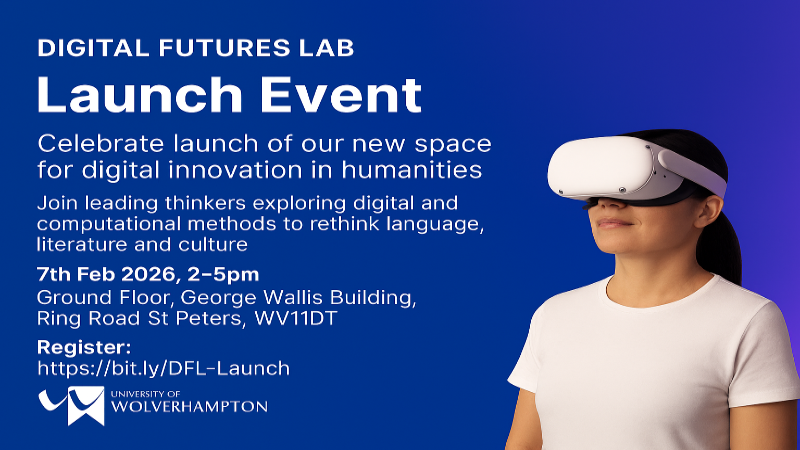
The official launch of the Digital Futures Lab is scheduled for 7 February 2026, from 2:00 PM to 5:00 PM. The event will be held at the George Wallis Building, Ring Road St Peters, WV1 1DT. This is a critical opportunity for interested parties to witness the lab’s capabilities firsthand and network with the key figures driving this initiative.
The agenda includes presentations from leading experts on the lab’s core topics. Attendees will gain insights into:
- The pursuit of an inclusive literary canon through digital tools.
- The intersection of poetry, VR, and digital embodiment.
- Computational analysis of authorship and influence.
- AI’s role in health and societal challenges.
Registration for this event is now open. It is highly recommended for anyone considering research partnerships or postgraduate study at the University of Wolverhampton. Secure your spot at the Digital Futures Lab launch event to connect with the academic team and explore potential collaborations.
The Strategic Vision: Innovation and Regional Impact
Under the direction of Professor Sebastian Groes, the Digital Futures Lab embodies a strategic vision for the University of Wolverhampton. It is a clear statement of intent to be at the forefront of digital scholarship in the UK. The lab is not an isolated academic exercise; it is intrinsically linked to the goal of supporting regional growth through technology-driven solutions. By combining expertise in computational literary studies with broader technological applications, the lab aims to develop creative solutions that address pressing social challenges, enhance health and wellbeing, and contribute to global sustainability goals.
This forward-thinking approach ensures that the research conducted within the lab has real-world relevance. It prepares graduates not just with theoretical knowledge, but with the practical, interdisciplinary skills required to innovate in a complex digital economy. For prospective students and partners, this means engaging with an institution that is actively building the future, not just commenting on it.
Next Steps for Engagement
The launch of the Digital Futures Lab marks a significant milestone for the University of Wolverhampton and the wider region. It offers a unique proposition for those dedicated to technology innovation and its application in cultural and business contexts. Whether you are a student planning your academic future, a researcher seeking a collaborative home, or a business looking for a technological edge, the lab provides a clear pathway to engagement.
For specific inquiries regarding the lab, its research agenda, or potential partnerships, you can contact the team directly led by Professor Sebastian Groes at [email protected]. To explore the broader academic landscape at the institution, including courses that feed into these research areas, submit your course enquiry today and take the first step toward engaging with this innovative environment.