
Exploring FHK Henrion’s Influence on Post‑War Design
From the fringe of the European art scene to the heart of London’s creative industry, Frederic Henri Kay Henrion left an indelible mark across branding, corporate identity, and public communication. The 16‑minute film, produced by the University of Brighton’s Design Archives and the Centre for Design History, opens a window on the domestic sphere that nurtured his prolific career. For designers, historians, and anyone interested in how personal space can shape creative output, the documentary is a case study worth watching.
Early Life and Migration
Henrion’s journey began in the art‑infused streets of early 20th‑century Berlin. His Jewish heritage forced him to flee the rising tide of Nazism in 1933, first to Paris and then to London by 1936. The transition from continental Europe to Britain was not merely a change of scenery; it was a cultural shift that influenced his visual language. He absorbed Parisian modernism, then blended it with British design pragmatism—a fusion that would later become a hallmark of his work.
Wartime Propaganda Work
During the Second World War Henrion worked on propaganda for the UK Ministry of Information and the US Office of War Information. Post‑war Britain was hungry for clear, bold messages to rebuild national identity, and Henrion’s posters and leaflets helped shape public sentiment. The documentary shows early sketches and archival photographs, giving insight into how political context fed into graphic form. For contemporary designers, these pieces illustrate the power of simplicity and clarity, lessons that remain relevant for today’s digital campaigns.
Design Studio as Family Hub
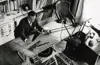
The film’s core narrative follows Henrion’s Hampstead flat, revealing how the studio functioned simultaneously as a family home and a creative workshop. His children appear as interview subjects, recounting the rhythms of daily life—school buses, tea breaks, and editing sessions atop a kitchen table. This interweaving of the personal and professional offers a concrete example of how domestic environments can serve as an incubator for design ideas. The documentary’s footage of scattered sketches, reference books, and late‑night illumination invite viewers to think of their own living spaces as potential laboratories.
Legacy Projects and Corporate Identities
Henrion’s portfolio stretches from iconic transportation logos to major cultural institutions. The documentary showcases the designs behind the National Theatre’s visual identity, KLM Royal Dutch Airlines’ emblem, and Tate’s early graphics, all of which remain touchstones in brand strategy education. Each segment provides analysis of the concept development process, from initial toviable drafts, allowing designers to study the evolution from idea to polished deliverable.
Explore Henrion’s KLM identity journey, which exemplifies the use of colour to convey trust and ownership in a post‑war European context.
Academic Contributions and Industry Impact
Besides his commercial work, Henrion imparted knowledge at the Royal College of Art and the London College of Printing. He was also a founding member of the Council of Industrial Design (later the Design Council) and played a pivotal role in the International Council of Graphic Design Associations. These affiliations demonstrate his belief that design should not be insular but rather an interdisciplinary conversation involving policy, education, and practice. For aspiring designers, understanding Henrion’s involvement with these institutions underscores the importance of networking and advocacy alongside creative practice.
Documentary Production and Archival Insights
Produced in partnership with Banyak Films, the documentary was funded by the Arts and Humanities Research Council, the University of Brighton’s School of Art and Media, and the School of Humanities and Social Science, as well as the Centre for Design History. Thanks to these grants, the film accesses a trove of archival materials: original posters, handwritten notes, and photographs that reveal the day‑to‑day life of a designer who balanced family, work, and research. The film’s visual strategy—interleaving archival footage with contemporary interviews—offers a model for documentary storytelling that blends historical research with personal narrative.
How Design Professionals Can Apply This Knowledge
Henrion’s story is not just historical curiosity; it contains actionable guidance for those in the design field today:
- Leverage Your Personal Space: The documentary illustrates how a home studio can double as a creative sanctuary. Set up a designated area in your living space to stimulate focused work.
- Blend Disciplines: Henrion’s success across branding, education, and social design shows that versatility can broaden impact. Experiment with adjacent fields such as motion graphics or interactive media.
- Prioritize Clean, Communicative Visuals: His wartime posters reveal the power of typography and colour synergy. Use these principles to build impactful messaging for contemporary audiences.
- Engage with Professional Bodies: Join design councils or networks to stay informed about industry best practices and advocate for design’s societal value.
These lessons translate directly into everyday practice, whether you’re drafting a brand guide or pitching a concept to a client. The documentary encourages you to use both your life and your craft as a source of inspiration.
Engage Further with Henrion’s Legacy
For those looking to dive deeper, the University of Brighton Design Archives holds an extensive collection of Henrion’s original artwork, photographs, and corporate identity briefs. Visiting or contacting the archives can provide hands‑on insight into how professional portfolios are assembled.
Schedule an archive tour to view rare materials and learn from the documentation process.
Next Steps for Design Students and Professionals
Whether you’re a student aspiring to study graphic design, a seasoned professional reviewing the field’s past, or a brand manager seeking historic case studies, the University of Brighton offers resources to help you progress:
- Explore undergraduate design courses that emphasize research‑based learning.
- Apply for postgraduate study focused on brand strategy and corporate identity.
- Contact us for career guidance and learn how to translate history into contemporary design solutions.
Below, we invite you to leave your thoughts:
Submit your application today if you want to build a career that thrives on creative innovation and historical insight. Write to us with questions about how design history can inform your practice. Share your experiences in the comments below and join a community of designers who value context as much as creation.
For more stories on how design evolves and shapes culture, explore our related articles and stay updated on upcoming screenings and events.