
Study AI in Art: How Loughborough University Uses Visual Mapping for Brushstroke Analysis
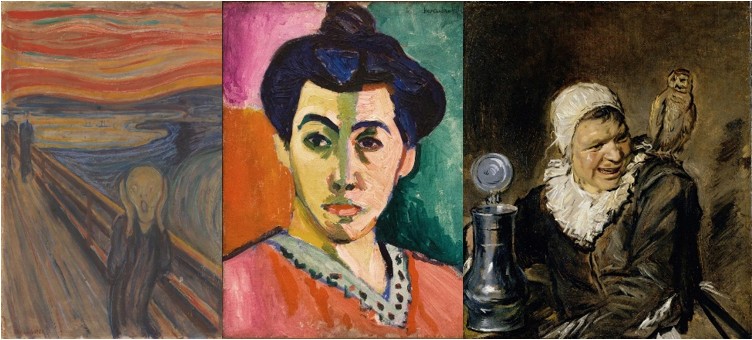
Art historians and critics have long debated the specific physical gestures artists use to construct a painting. Viewers often describe a Claude Monet canvas as calm or an Edvard Munch piece as chaotic, but articulating the exact physical mechanics behind these subjective perceptions remains a persistent challenge. A recent collaborative study from Loughborough University in the UK addresses this issue by applying advanced computational methods to create detailed visual maps of painted surfaces. This research demonstrates how AI in art can provide objective, data-driven insights into brushstroke analysis, offering scholars and institutions a new methodology to evaluate artistic techniques.
By translating microscopic paint details into comprehensive flowcharts, this cross-disciplinary effort provides a framework for understanding the hidden structures within iconic artworks. Schedule a free consultation to learn more about our digital humanities programs.
Understanding the Mechanics of Paint Application Through Computer Vision
Traditionally, the study of an artist’s hand relies heavily on connoisseurship—the expert eye developed through years of viewing and comparing works. While invaluable, this approach is inherently subjective. Human vision struggles to isolate individual brushstrokes when they are layered, irregular, and deeply intertwined with the painting’s color, texture, and overall composition.
As James Wang, Distinguished Professor in Informatics and Intelligent Systems at Penn State and a co-author of the study, points out, brushstrokes are surprisingly difficult to analyze manually. They do not follow uniform patterns, and the physical act of painting often involves scraping, repainting, and blending that obscures the initial gesture. Computer vision offers a solution to this limitation. By processing high-resolution images of paintings, algorithms can detect subtle variations in texture and direction that are virtually invisible to the naked eye. This technological intervention does not replace art-historical judgment; rather, it enhances the data available to scholars, allowing them to ground their interpretations in quantifiable visual evidence.
The Process Behind Visual Mapping and Brushstroke Analysis
To achieve these results, the research team developed a computational process known as streamline visualization. In the context of this study, streamline visualization involves analyzing the local orientation of paint textures across a canvas and connecting these microscopic directional cues into continuous, flowing lines. The output is a colorful visual overlay that sits atop a grayscale rendering of the original painting.
These visual maps act as a diagnostic tool. Where a human viewer sees a unified field of color, the AI in art reveals a complex network of directional forces. The lines indicate the speed, direction, and physical rhythm of the brush as it moved across the canvas. This method bridges the gap between macro-level art appreciation and micro-level material analysis, providing a systematic approach to brushstroke analysis that can be replicated across different styles and eras.
Analyzing Claude Monet’s Haystacks Series
The researchers applied this visual mapping technique to Claude Monet’s famous Haystacks series, yielding fascinating results. Monet was deeply interested in the transient effects of light and atmosphere, painting the same subject under varying conditions—morning light, snow, and harsh shadows. The streamline visualizations revealed that Monet’s physical gesture shifted significantly depending on the atmospheric condition he was attempting to capture.
In sunlit scenes, the visual maps show longer, more sweeping brushstrokes that follow the contours of the haystacks and the landscape. In contrast, snowy or shadowed scenes exhibit tighter, more varied directional flows. This data provides concrete evidence of how the artist adapted his physical interaction with the paint to evoke specific environmental conditions. It moves the critical conversation beyond vague descriptions of “light” and “atmosphere” into the realm of measurable physical action.
Examining Edvard Munch and Diverse Artistic Traditions
While the Impressionists provide an obvious starting point due to their visible, expressive brushwork, the true test of a new analytical method is its versatility. The Loughborough University study demonstrated that visual mapping is equally effective on artworks from vastly different traditions.
When applied to Edvard Munch’s The Scream, the streamline visualizations captured the painting’s inherent chaos and anxiety. The lines are fractured, overlapping, and highly turbulent, visually codifying the emotional intensity of the work. The team also analyzed Henri Matisse’s Portrait of Madame Matisse (The Green Line) and Frans Hals’s Malle Babbe, a 17th-century Dutch masterpiece. Despite the centuries separating Hals from Munch, the AI successfully mapped the distinct rhythmic structures of their paint application. This adaptability proves that visual mapping can become a standard tool in the technical art history toolkit, applicable to everything from Baroque portraiture to modern expressionism.
Bridging the Gap Between Computer Science and Art History
The success of this project hinges on cross-disciplinary collaboration. Dr. Kathryn Brown, Reader in Art Histories, Markets and Digital Heritage at Loughborough University and co-author of the study, emphasizes that creating bespoke AI models helps open new trajectories in art history. Simultaneously, the complex, subjective questions posed by the humanities generate new computational challenges for computer scientists.
This symbiotic relationship is crucial. An AI model designed without art-historical input might misinterpret visual data, such as mistaking the craquelure (cracking) of an old painting for deliberate brushwork. By working closely together, the team ensured that the computational output remained meaningful and contextually accurate. The result is a new way of writing art history—one that preserves essential human insight while leveraging enhanced data for close visual analysis. Submit your application today to join our leading research community in the UK.
Practical Applications for Museums and Art Educators
The implications of this research extend far beyond academic publishing. Museums, galleries, and educational institutions stand to benefit significantly from the integration of AI-driven visual mapping into their operations.
Enhancing Museum Exhibitions and Curation
Imagine walking into a gallery and viewing a classic painting alongside a digital display showing its brushstroke flow map. This juxtaposition can dramatically alter the visitor experience, making the artist’s process tangible and immediate. Curators can use these visual maps to highlight specific aspects of a painting’s construction, guiding the viewer’s eye to the physical genius of the artist. For traveling exhibitions, these digital overlays can provide a consistent, engaging narrative thread that transcends language barriers.
Supporting Art Conservation and Authentication
Conservation science relies heavily on understanding how a painting was built from the ground up. Visual mapping can assist conservators in identifying areas where an artist’s gesture differs abruptly, which might indicate later restorations, overpainting, or damage. While not a standalone authentication tool, brushstroke analysis provides a layer of forensic data that can support or question a painting’s attribution. Establishing a “gesture fingerprint” for a known artist offers a baseline against which questionable works can be compared.
Transforming Art Education
For students learning to paint or analyze art, understanding the physical mechanics of brushwork is essential. Visual maps can deconstruct masterpieces in a way that traditional studio critiques or slide lectures cannot. By seeing the exact trajectory and rhythm of a brushstroke, students can better grasp how to manipulate their own tools to achieve specific atmospheric or emotional effects. Explore our related articles for further reading on technology in the arts.
The Future of Computational Art History in the UK and Beyond
The research conducted by Loughborough University and its international partners represents a clear shift in how cultural heritage is studied. As imaging technology improves and AI models become more sophisticated, the granularity of visual mapping will only increase. Future iterations of this technology might integrate three-dimensional surface scanning, allowing researchers to map not just the direction of a brushstroke, but its physical depth and the volume of paint applied.
Furthermore, as datasets of mapped paintings grow, machine learning algorithms could identify broader stylistic trends across entire artistic movements or geographical regions. This macro-level analysis could rewrite our understanding of how artistic techniques migrated and evolved over centuries.
The integration of AI in art is not about diminishing the role of the human artist or the art historian. Instead, it provides a sharper lens through which to view the physical labor of creation. By turning paintings into visual maps that chart the artist’s every movement, researchers are preserving and amplifying the humanity embedded in the paint.
The intersection of Loughborough University’s art historical expertise with advanced computer science serves as a model for future research. It proves that when disciplines collide, the resulting innovations can illuminate the past in ways previously thought impossible. Have questions about this research or our academic programs? Write to us!