
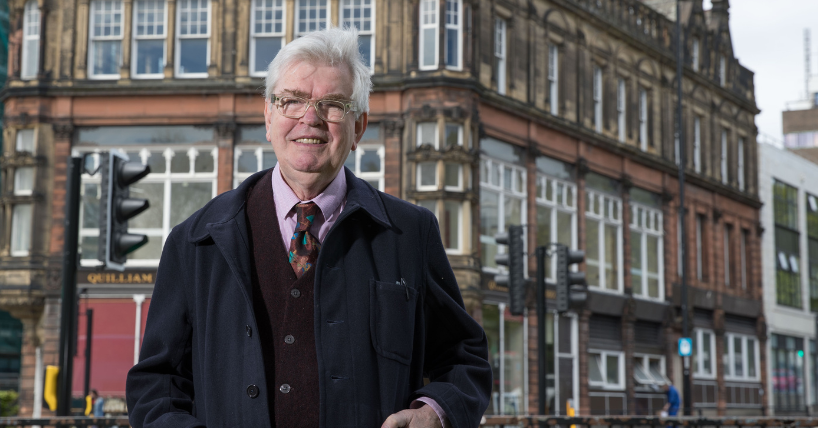
Heritage and Innovation: The Legacy of a Newcastle Graduate
Sir Terry Farrell entered Newcastle University’s School of Architecture in 1956, a time when modernist ideals dominated the curriculum. His formative years provided a foundation that would later enable him to challenge conventions and deliver iconic works that melded context, community, and bold vision.
From Quayside to Global Landmarks
The Newcastle Regeneration Masterplan
Upon returning to his hometown after initial work in London, Farrell championed the redevelopment of the Newcastle Quayside. Rather than discarding historic facades, he proposed a strategy that preserved architectural heritage while introducing new civic structures. The outcome— a cohesive riverfront that now hosts the Great North Museum, the International Centre for Life, and contemporary mixed‑use buildings—demonstrated how public space can be revitalised without sacrificing local identity.
Landmark Projects in London
Farrell’s influence expanded across the United Kingdom. The TV‑AM building in Camden, with its triple‑faceted design, reflected his belief in architecture as a dialogue between industrial heritage and modern media production. Embankment Place – an office tower built over Charing Cross Station’s air rights – showcased advanced engineering and a creative approach to site constraints.
MI6’s Vauxhall Cross
While the MI6 building, often called Vauxhall Cross, remains shrouded in secrecy, its architectural language speaks aloud. Designed from the ground up, the structure features a distinctive façade that references the surrounding financial district, exemplifying how security and functionality can coexist with aesthetic ambition.
Asia: Scaling Ambition across Continents
Peak, Hong Kong
Winning a highly competitive international design competition, Farrell transformed a rugged terrain into the Peak’s retail complex. The building’s upward‑curving roof, visible from the peak’s viewpoint, became a new landmark and a testament to sustainable, yet striking design.
Guangzhou South Railway Station, China
When the most extensive high‑speed rail network was under construction, Farrell was commissioned to design Guangzhou South. The station’s towering roof echoes the grandeur of Victorian cathedrals while accommodating the flow of millions of passengers every day. Its vertical stratification—separating arrival and departure flows—illustrates how scale can be managed through clear spatial hierarchy.
KK100, Shenzhen
The 100‑storey KK100, once the tallest building by a British architect, was another milestone in Farrell’s portfolio. Though its construction pushed the limits of steel and concrete, the tower’s design incorporated open atria and daylight penetration, mitigating the canyon effect that often plagues supertalls.
Championing Urban Policy and Education
Throughout his career, Farrell held leadership roles that shaped governmental planning policy. He served as an adviser to major city councils and advised on transport and land use strategies. His engagement with academia—most notably his position as Visiting Professor at Newcastle’s School of Architecture, Planning and Landscape—ensured that his practical insights were integrated into the next generation of designers.
The Farrell Centre: An Urban Room for Engagement
The Farrell Centre, inaugurated in 2023 on the Newcastle campus, embodies the former architect’s ethos. The space functions as a public gallery, academic forum, and interactive classroom where community members can experience contemporary research, urban simulations, and workshops. The facility’s open layout encourages dialogue about how citizens can participate in future city‑making.
Using the Center for Learning
Students and alumni alike can book studio sessions, attend lectures from industry leaders, and contribute to community‑driven design competitions. Faculty members have utilised the center to host live case‑study analyses of large‑scale infrastructure projects, offering students a chance to apply theory directly to practice.
Key Principles from Sir Terry Farrell’s Work
- Contextual Sensitivity: Every building respects its surrounding architecture and cultural significance.
- Community‑Centred Design: Successful cities grow from well‑planned public spaces that invite social interaction.
- Innovation Through Constraints: Complex urban sites can inspire solutions that advance engineering and sustainability.
- Inter‑Disciplinary Collaboration: Blending architecture, engineering, and planning yields outcomes that meet both aesthetic and functional expectations.
These tenets are reflected across Sir Terry’s portfolio— from the historic quayside in Newcastle to the soaring sky‑rails of Asia—and remain a compass for modern architectural practice.
What Next for Newcastle Students and Alumni?
Newcastle University continues to nurture innovation in architecture and planning. Current students can gain internships with local firms that collaborate on city‑scale projects, and alumni have access to exclusive forums, mentorship programmes, and professional development workshops. The university’s annual ‘Urban Futures’ symposium invites scholars, practitioners, and residents to explore emerging trends such as resilient design, digital fabrication, and inclusive city planning.
Take Action: Engage, Learn, Contribute
There are practical avenues for you to participate in the legacy of bustling, thoughtful architecture.
- Explore alumni resources to stay connected with peers and industry professionals.
- Enroll in a short course that focuses on sustainable urban design.
- Check the alumni portal for upcoming events like the Urban Futures symposium.
Embark on a volunteer project in your local neighbourhood—many campus partners partner with community groups to design shared spaces or retrofit existing buildings for better energy efficiency.
Final Reflections
Sir Terry Farrell’s career serves as a reminder that architecture is not merely about constructing structures; it is about crafting environments that resonate with people’s needs and aspirations. His projects across Newcastle, the UK, and Asia provide tangible templates that merge heritage, innovation, and community focus—values that Newcastle University will carry forward.
For more detailed insights and to celebrate the achievements of alumni, consider joining the university’s alumni network or attending the next Urban Futures lecture.