
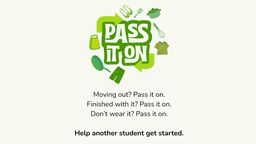
At the end of every academic year, universities across the UK face a significant logistical and environmental challenge: the mass student move-out. Tens of thousands of students vacate their accommodations within a tight timeframe, often resulting in a sudden surge of discarded items. The University of Sheffield has addressed this issue head-on through its “Pass it on” campaign, a structured approach to managing UK student donations that prioritizes sustainability and waste reduction. By collecting over 5,000 items in a single season and distributing them through Free Shops, the university is building a circular economy on campus that benefits both the environment and the student body.
Share your experiences with end-of-term move-outs and sustainability initiatives in the comments below.
The Environmental Challenge of UK Student Move-Outs
The end-of-term transition places immense pressure on local infrastructure, particularly in cities with large student populations like Sheffield. When tens of thousands of students change tenancies simultaneously, local streets, waste services, and residential neighborhoods experience significant strain. Items that are still fully functional—such as kitchenware, clothing, and books—often end up in landfills simply because students lack the time, resources, or knowledge to dispose of them responsibly.
This annual cycle of waste contradicts broader environmental goals. Effective waste reduction requires intervening at the exact moment this waste is generated. The University of Sheffield recognized that to make a measurable impact, it had to create an infrastructure that made donating items easier than throwing them away. This proactive stance is essential for any UK institution aiming to improve its sustainability metrics and reduce its local footprint.
Structuring Effective Student Donations
The success of the “Pass it on” campaign lies in its simplicity and accessibility. Organized jointly by the University of Sheffield and Sheffield Students’ Union, the initiative targets students as they pack up their accommodations. Instead of leaving items on the curb, students are directed to donate kitchenware, homeware, books, and clothes to designated collection points.
Gathering over 5,000 donated items requires clear communication and logistical planning. The university provides explicit instructions on what can be donated and where to take it, removing the friction that often prevents students from participating in such programs. By standardizing the collection process, the University of Sheffield ensures that the maximum volume of usable goods is captured before it becomes municipal waste.
The Free Shop Model
Collecting items is only the first half of the equation; distributing them is what closes the loop. The University of Sheffield utilizes a “Free Shop” model to redistribute the collected student donations. Since 2021, these shops have provided over 11,500 kitchen items alone to new and returning students.
This model directly addresses financial barriers to higher education. By providing free kitchenware and homeware, the university helps students save money at the start of the academic year when expenses are highest. The Free Shop ensures that the items retained through waste reduction efforts are immediately put back into circulation, proving that environmental sustainability and student welfare can complement one another.
Short-Term Loans for International Students
The program also includes a specific provision for international students attending summer programs. Rather than expecting these students to purchase new kitchen items for a short stay, the university loans them the necessary supplies. This targeted approach prevents the unnecessary manufacturing and shipping of new goods, further reinforcing the university’s commitment to waste reduction.
Collaborative Strategies for Community Waste Reduction
Managing end-of-term waste extends beyond the boundaries of the university campus. The University of Sheffield understands that true sustainability requires regional collaboration. To manage the high volume of waste generated during the move-out period, the university partners with Sheffield Hallam University, Sheffield City Council, and local charities.
This coalition implements a coordinated response between June 22 and July 6. Strategies include organizing extra waste collections in neighborhoods with high student populations, deploying volunteer-led street clean-ups, and distributing clear recycling guidance. Student volunteers actively monitor streets for overflowing bins and litter, ensuring that issues are addressed quickly before they impact local residents.
Explore our related articles for further reading on collaborative sustainability models in higher education.
Furthermore, the university actively communicates with students about how to use Sheffield City Council’s excess waste collection scheme correctly. Students are instructed to view this municipal service as a last resort, to be used only after items have been reused, donated, or recycled. This hierarchy of waste management—prevent, reuse, recycle, dispose—is a cornerstone of modern environmental sustainability.
Actionable Steps for Students to Minimize Move-Out Waste
While institutional support is critical, individual student actions drive the success of waste reduction initiatives. Students moving out of accommodations can adopt several practical strategies to minimize their environmental impact:
- Sort items early: Begin packing and sorting weeks before the move-out date to separate recyclables, donations, and trash.
- Identify donation programs: Look for university-sponsored programs like “Pass it on” or local charity shops that accept student donations.
- Understand local recycling rules: Follow the specific recycling guidelines set by the local city council to ensure materials are processed correctly.
- Avoid excess waste services: Use municipal bulk waste collections only for items that cannot be reused or recycled through other channels.
- Connect with incoming students: Use university forums or social media groups to sell or give away items directly to students moving in for the next term.
By taking these steps, students actively contribute to a circular economy, ensuring their discarded items retain their value rather than becoming environmental liabilities.
Applying the Pass It On Framework to Other UK Universities
The framework established by the University of Sheffield offers a replicable model for other institutions. The key components of this success include strong partnerships between university facilities management and student unions, clear and timely communication to the student body, and established redistribution channels like Free Shops.
Other UK universities can adapt this model by assessing their specific local challenges. Institutions must identify where their students generate the most waste—whether in private housing, university-managed residences, or off-campus apartments—and place donation points accordingly. Engaging student volunteers to act as neighborhood liaisons, as Sheffield does, also helps bridge the gap between the student population and permanent local residents, reducing friction during a stressful time of year.
Schedule a free consultation to learn more about implementing sustainability programs in your institution or community.
Measuring the Long-Term Impact of Campus Sustainability
The “Pass it on” campaign is not an isolated event; it is a concrete manifestation of the University of Sheffield’s Environmental Sustainability Strategy. The long-term goal is to make reuse and circularity the norm across the entire campus. Tracking metrics—such as the 5,000 donations received and the 11,500 kitchen items distributed since 2021—allows the university to measure its progress and refine its approach year over year.
Shifting the culture of consumption on a university campus requires consistent effort. When students participate in programs that normalize giving and receiving second-hand goods, they carry those habits into their post-graduate lives. The financial and environmental benefits of waste reduction become tangible, proving that sustainable practices are not merely theoretical but highly practical.
Conclusion
The University of Sheffield has demonstrated that managing the end-of-term move-out does not have to result in overwhelming waste. Through the “Pass it on” campaign, the institution has successfully redirected thousands of student donations away from landfills and back into the hands of students who need them. By combining robust logistical planning with cross-institutional collaboration and a clear focus on waste reduction, the university protects the local environment while supporting student financial well-being. As the UK higher education sector continues to prioritize sustainability, the Sheffield model serves as an effective, actionable blueprint for keeping useful items in circulation.
Submit your application today to join a sustainability-focused campus community.