
Prepare for a Career in Broadcast Media with the University of Wolverhampton BA BSL Interpreting
Bridging the Gap Between Classroom Theory and Live Broadcast Practice
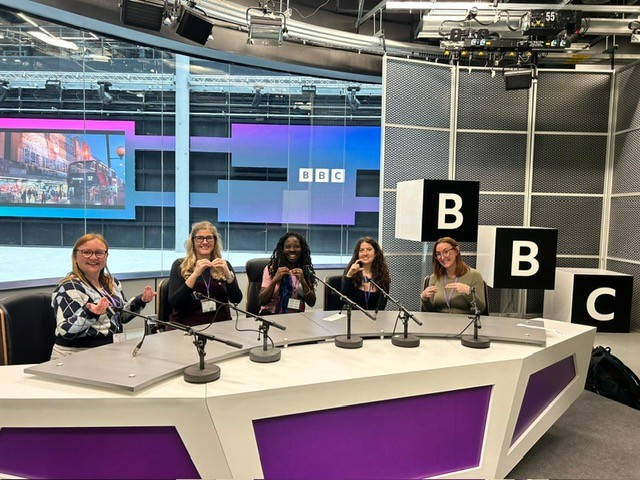
Transitioning from academic study to professional practice is one of the most critical phases for any student, particularly in a demanding field like sign language interpreting. For final-year students enrolled in the BA BSL Interpreting programme at the University of Wolverhampton, this transition is supported by structured, high-stakes practical experiences. Recently, a cohort of students concluded their degree with a highly informative BBC Wales visit, providing a clear view of what it takes to work as a broadcast interpreter in the UK.
Interpreting in a live television environment requires a distinct set of skills that differ significantly from community or one-on-one interpreting. Broadcast interpreters must manage rapid speech, complex terminology, and the visual constraints of a television screen, all while maintaining absolute accuracy and composure. Reading about these challenges in a textbook is useful, but observing them in a functioning newsroom provides an educational depth that cannot be replicated in a standard lecture hall. This hands-on approach is a central component of the student experience at the University of Wolverhampton.
Inside the BBC Wales Visit: What Students Experienced
The recent BBC Wales visit was designed to expose final-year students to the realities of media interpreting. During their time at the broadcast facility, students had the opportunity to shadow Tony Evans, a working professional interpreter with extensive experience in live media. Shadowing allows students to observe the nuanced, often unseen preparation that occurs before the cameras start rolling.
Students watched firsthand how news headlines are prepared, how scripts are analyzed for potential linguistic hurdles, and how interpreters position themselves to ensure maximum clarity for Deaf viewers. The session included detailed observations of live broadcast interpreting, followed by a Q&A segment where students could ask specific questions about managing on-air errors, pacing, and the technical aspects of working with broadcast equipment. This direct interaction with a seasoned practitioner helps demystify the profession and sets realistic expectations for emerging interpreters.
Schedule a free consultation to learn more about our interpreting programs.
Developing Essential Skills for BSL Interpreters in the UK
The UK has a rigorous standard for sign language interpreters, often requiring registration with the National Registers of Communication Professionals working with Deaf and Deafblind People (NRCPD). Achieving this status demands more than just fluency in British Sign Language; it requires advanced cognitive processing, ethical decision-making, and the ability to adapt instantly to new environments.
Cognitive Agility and Linguistic Precision
Interpreters must listen to a source language, process its meaning, and produce an accurate equivalent in a completely different visual-gestural language in real-time. In a news broadcast setting, the pace is unforgiving. The University of Wolverhampton curriculum focuses heavily on building this cognitive agility through simulated interpreting exercises, rigorous language analysis, and continuous feedback from experienced Deaf and hearing lecturers.
Professionalism and Ethical Conduct
Broadcast settings often involve high-profile, sensitive, or fast-breaking news stories. Interpreters must maintain strict neutrality, accurately conveying the tone and intent of the speaker without interjecting personal bias. The BBC Wales visit allowed students to see how professional interpreters navigate these ethical boundaries under the pressure of a live feed.
The Value of Industry Connections During Your Degree
Securing employment after graduation requires more than a degree certificate; it requires professional networks and a demonstrated understanding of industry environments. The University of Wolverhampton actively fosters these connections by integrating field visits, guest lectures, and placement opportunities into the BA BSL Interpreting programme.
Visiting a major national broadcaster like BBC Wales reinforces the prestige and rigorous standards of the interpreting profession. It also allows students to visualize themselves in these roles, which is a powerful motivator. Building relationships with working interpreters and media organizations can lead to mentorship opportunities, freelance work, or invaluable references upon graduation. For prospective students evaluating different UK universities, the quality and frequency of these industry engagements should be a primary deciding factor.
Explore our related articles for further reading on deaf studies and interpreting.
Student Perspectives: From Academic Study to Professional Ambition
The impact of practical experiences is best understood through the lens of the students themselves. Kelly Turner, a final-year BA (Hons) British Sign Language (Interpreting) student, reflected on the BBC Wales visit as a definitive step toward her career goals. For Kelly, watching a professional interpreter prepare behind the scenes clarified the intense focus and skill required in a media environment.
Feedback like this highlights a crucial aspect of the University of Wolverhampton student experience: the alignment of academic modules with actual industry practice. When students can directly connect a classroom lesson on media translation to a live observation at a national broadcaster, the theoretical knowledge solidifies into practical competence. The motivation generated by these experiences often carries students through the demanding final months of their degree, including the completion of complex portfolios and dissertations.
Final Year Milestones: Portfolios and Dissertations
The BBC Wales visit served as a fitting conclusion to the academic journey for the interpreting cohort, but it was not the final hurdle. The BA BSL Interpreting programme differentiates its final-year assessment based on the specific route a student has chosen.
Students on the Interpreting route spend their final months compiling professional and reflective portfolios. These portfolios are extensive collections of evidence demonstrating a student’s ability to interpret across various domains, reflect critically on their own performance, and identify areas for continuous professional development. In the UK, this portfolio process closely mirrors the evidence required for professional registration, giving University of Wolverhampton graduates a significant advantage when applying for NRCPD status.
Conversely, students on the British Sign Language (Deaf Studies) route focus on completing extensive academic dissertations. These research projects allow students to explore specific sociological, linguistic, or cultural aspects of the Deaf community, contributing valuable academic discourse to the field. Both pathways are designed to ensure that graduates leave the university as highly skilled, critically thinking professionals.
Submit your application today to start your journey in BSL interpreting.
Career Pathways for BSL Interpreting Graduates
While broadcast media is a highly visible and sought-after niche, graduates of the BA BSL Interpreting programme qualify for a wide array of professional settings. The demand for registered interpreters in the UK continues to grow as organizations strive to meet legal obligations under the Equality Act 2010 and improve accessibility.
Graduates frequently find employment in:
- Healthcare: Interpreting in medical consultations, mental health settings, and public health campaigns.
- Legal: Providing accurate interpretation in courts, police interviews, and solicitor meetings.
- Education: Supporting Deaf students in mainstream schools, colleges, and universities.
- Corporate and Conference: Facilitating communication in business meetings, training sessions, and large-scale conferences.
- Community and Social Services: Working within local government, housing associations, and social care settings.
The versatility of the training provided at the University of Wolverhampton ensures that graduates are not limited to a single sector. The skills in rapid processing, cultural mediation, and ethical reasoning are highly transferable.
Choosing the Right University for Your BSL Degree
Selecting where to study is a major decision. Aspiring interpreters should look beyond course titles and evaluate the specific opportunities a university provides to bridge the gap between study and employment. Key factors to consider include the qualifications and background of the teaching staff, the presence of Deaf instructors on the team, and the institution’s relationships with external employers.
The University of Wolverhampton has established a strong reputation in this sector, largely due to its commitment to practical, industry-relevant education. Initiatives like the BBC Wales visit do not happen by accident; they are the result of faculty members like Senior Lecturer Sandra Pratt actively maintaining professional networks and designing curricula that prioritize student employability. The programme team’s pride in their students’ development is evident in their continuous efforts to secure these high-quality experiential learning opportunities.
Next Steps for Aspiring Sign Language Interpreters
If you are considering a career as a BSL interpreter in the UK, laying the groundwork early is essential. Before applying to a university programme, consider engaging with the Deaf community, taking introductory BSL courses, and researching the professional standards required by the NRCPD. Understanding the cognitive and emotional demands of the job will help you make an informed decision about your education.
Choosing a programme that offers robust practical experience, like the BA BSL Interpreting at the University of Wolverhampton, provides a strong foundation for your future career. By prioritizing real-world application, industry exposure, and rigorous academic standards, the right degree programme will prepare you to enter the profession with confidence and competence.
Speak to a current student to hear more about the student experience.