
COP30 Highlights: Loughborough University’s Impact on Sustainable Energy
In December 2025, the United Nations Climate Change Conference (COP30) in Belém, Brazil, served as a global stage for researchers, policymakers, and civil society to chart a path toward a low‑carbon future. Loughborough University’s Centre for Sustainable Transitions – Energy, Environment and Resilience (STEER) was at the forefront of this dialogue, showcasing two flagship programmes that translate climate science into actionable policy and technology: the Climate Compatible Growth (CCG) initiative and the Modern Energy Cooking Services (MECS) platform.
Data‑Driven Finance with Climate Compatible Growth
The CCG programme is a data‑centric approach that links energy modelling, climate finance, and national policy. By collaborating with the Green Grids Initiative (GGI) and the UK Secretary of State for Energy Security and Net Zero, Ed Miliband, the project secured official endorsement at COP30. This endorsement helped unlock hundreds of billions of dollars in global grid and storage pledges, a critical step for countries that need to modernise their electricity infrastructure.
One of CCG’s most tangible achievements is the Data‑to‑Deal (D2D) framework, a guide co‑developed with 30 organisations. D2D bridges the gap between complex energy models and the financial mechanisms that fund them. The framework has already helped three small countries attract more than USD 11 billion in climate finance, and its open‑source tools are now the backbone of Turkey’s national greenhouse gas (GHG) modelling system – the first government‑run system built on CCG’s platform.
For professionals working in climate finance, energy policy, or development, the D2D framework offers a practical toolkit. By following the step‑by‑step methodology, you can translate a country’s energy transition plan into a finance‑ready proposal that meets the expectations of international donors and private investors.
Advancing Clean Cooking through Modern Energy Cooking Services
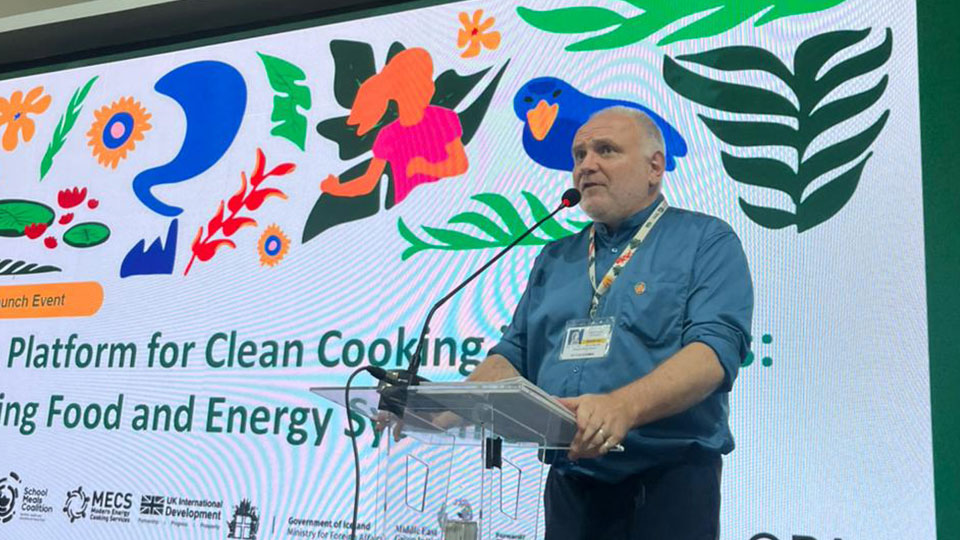
Parallel to CCG, the MECS programme has redefined clean cooking in schools and communities worldwide. At COP30, MECS launched the Platform for Clean Cooking in Schools, a partnership that brings together SEforALL, SNV, the World Food Programme, and several governments. The goal is simple yet ambitious: replace polluting cooking fuels with electric or gas‑based alternatives in educational institutions, thereby improving health outcomes and reducing household emissions.
MECS’s work is embedded in the COP Action Zone, where it has influenced the Global Mutirão – a voluntary action agenda for 2026‑2030. By collaborating with the World Bank and Sustainable Energy for All, MECS has produced “Plans to Accelerate Solutions” (PAS), roadmaps that help countries align finance commitments with on‑the‑ground implementation.
Clean cooking is not just a technical challenge; it is a social one. MECS’s school‑based approach demonstrates how technology can be coupled with community engagement to achieve lasting change. For NGOs, local governments, and private sector partners, MECS offers a proven model that can be replicated in other contexts.
Building Global Capacity for Climate Action
The presence of both CCG and MECS at COP30 underscores STEER’s unique position at the intersection of research, policy, and implementation. By integrating macroeconomic planning with localized energy solutions, the centre provides tools that enable countries to lead their own transitions.
Key takeaways for stakeholders include:
- Leverage open‑source tools: CCG’s modelling software is freely available, allowing national agencies to build their own GHG scenarios.
- Adopt a phased finance strategy: Use the D2D framework to break down large projects into finance‑ready milestones.
- Engage schools as pilots: MECS’s school‑based pilots demonstrate the scalability of clean cooking solutions.
- Collaborate across sectors: Partnerships between academia, governments, and the private sector are essential for scaling up.
How Professionals Can Engage with Loughborough’s Initiatives
Whether you are a researcher, a policy adviser, or a sustainability consultant, there are several ways to get involved:
- Apply for a research fellowship: Loughborough offers postgraduate research degrees that focus on climate finance and clean energy. Explore research programmes.
- Attend STEER workshops: The centre regularly hosts webinars and in‑person workshops on D2D and clean cooking. Register for upcoming events.
- Partner on pilot projects: NGOs and local governments can collaborate with STEER to implement school‑based clean cooking pilots. Contact the team.
- Contribute to open‑source tools: Developers can help improve CCG’s modelling platform. Visit the GitHub repository.
Next Steps for Students and Researchers
Students interested in climate science, energy economics, or sustainable development should consider the following actions:
- Enroll in Loughborough’s undergraduate programmes in Geography, Environmental Science, or Energy Systems.
- Apply for the university’s summer research internships focused on climate finance.
- Join student societies that collaborate with STEER on real‑world projects.
- Publish a paper or case study on the impact of clean cooking in schools.
By aligning academic pursuits with global climate priorities, students can build a career that contributes directly to the transition to a sustainable future.
Take Action Today
Ready to make a difference? Here are a few ways to get started:
- Submit your application today and join a community of innovators.
- Schedule a free consultation with STEER experts to discuss potential collaborations.
- Have questions? Write to us!
- Share your experiences in the comments below or on our news page.
- Explore our related articles for further reading on climate finance and clean cooking.
By engaging with Loughborough University’s cutting‑edge research and global partnerships, you can help accelerate the transition to sustainable energy and clean cooking worldwide.