
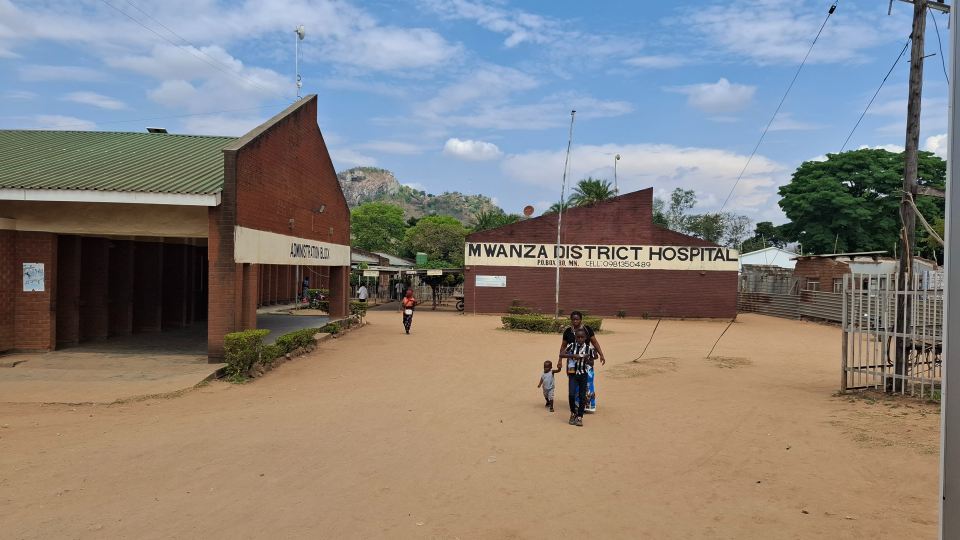
Background: Green Hydrogen as a Clean Cooking Solution
Traditionally, rural health facilities in sub‑Saharan Africa have relied on firewood, charcoal and kerosene for domestic heating and food preparation. These fuels contribute to indoor air pollution, cause respiratory illnesses and deplete local forests. Green hydrogen—produced from water electrolysis powered by renewable energy—offers a clean, carbon‑free alternative. When burned in a specially adapted stove, hydrogen releases only water vapor, reducing particulate matter to negligible levels and improving indoor air quality.
The concept is simple but the implementation requires a reliable supply chain. A high‑purity stream (≥99%) must be generated, stored, and delivered safely to the cooking unit. Loughborough University’s Centre for Renewable Energy Systems Technology (CREST) has addressed these challenges through an innovative battery‑electrolyser hybrid that couples photovoltaic energy, battery storage, and on‑site hydrogen production.
Loughborough University’s Battery‑Electrolyser Test Unit
In the spring of 2025, a fully‑scaled lead‑acid‑battery electrolyser system was shipped from CREST’s laboratories to Mwanza District Hospital. The unit, part of the £1.5 million Innovate UK MESCH (Modular Energy Storage with Clean Hydrogen) project, incorporates:
- Production capacity: Approximately 2 kg H₂ h⁻¹, sufficient for the hospital’s daily cooking demands.
- Purity: Over 99 % volumetric hydrogen, measured through on‑site mass spectrometry.
- Storage: A 350‑metre long buried pipe system built from flexible polypropylene, allowing safe containment and distribution to the kitchen.
- Power source: A 20 kW photovoltaic array coupled with a bank of lead‑acid batteries to smooth intermittent solar output.
- Control system: Integrated SCADA for real‑time monitoring, safety interlocks, and automated load balancing.
During the first month of operation, the team—led by Professor Dani Strickland and supported by researchers Dr. Jonathan Wilson, Dr. Lizzie Ashton, Dr. Martin Bliss, Dr. Toby Reisch and PhD candidate Soustain Chigalu—commissioned the electrolyser, installed the storage loop, and connected the system to the hospital’s utility network. The result: a continuous supply of clean hydrogen powering a customised stove for bean stew and other staple dishes.
Operational Highlights
Because the electrolyser is battery‑powered, it can operate even in periods of low solar irradiance, ensuring cooking is never interrupted. The integration with the hospital’s micro‑grid also supplies backup power for lighting, refrigeration and essential medical equipment. Beyond the kitchen, the surplus electric output can be fed back to the public grid, creating a modest revenue stream and reinforcing local energy resilience.
Impact on Mwanza District Hospital and the Community
Replacing polluting fuels with hydrogen reduces indoor air pollutants by up to 90 %. Patients and staff experience lower incidences of cough, wheezing and eye irritation, and the hospital can meet stricter health and environmental standards without compromising service quality.
Community acceptance was a central theme in Dr. Soustain Chigalu’s research. Early outreach sessions helped local hospital staff understand the safety profile of hydrogen and its benefits. The success of the pilot has spurred interest among neighboring clinics and community centers, who now view green hydrogen as a viable path toward cleaner, safer cooking.
Community Feedback
Interviews conducted in the hospital’s new kitchen reveal high satisfaction:
- “The air feels cleaner, and the stove runs smoothly.” – Chief Kitchen Officer, Mwanza District Hospital
- “Patients recover faster because they’re not exposed to smoke.” – Head of Nursing Services
- “We can reduce firewood collection costs by 30 %.” – Local NGO Representative
Future Outlook and Scaling Opportunities
With the successful demonstration in Malawi, Loughborough University is preparing to expand the battery‑electrolyser framework to other underserved regions. Key steps include:
- Design optimization: Shifting from lead‑acid to lithium‑ion battery back‑ups to reduce maintenance and increase energy density.
- Modular deployment: Fabricating smaller electrolyser units that can serve schools, primary health centres and community kitchens.
- Policy integration: Working with Malawi’s Ministry of Energy and local governments to secure incentives and streamlined permitting for green hydrogen projects.
- Training programmes: Developing a curriculum for local technicians to operate and maintain hydrogen generation units.
Financially, the pilot demonstrated a return‑on‑investment (ROI) of roughly 6.5 years when accounting for reduced fuel costs, improved patient outcomes and potential grid feed‑in credits. With government subsidies for renewable projects and the scalability of the battery‑electrolyser, the model becomes increasingly attractive to investors and development agencies.
Operational and Economic Considerations
While the hydrogen system requires upfront capital (~£600,000 for the combined solar–battery–electrolyser), operating costs are dominated by the water input and spare parts. Using locally sourced de‑ionised water and a robust maintenance schedule keeps annual expenses under £15,000.
By contrast, a conventional kerosene‑based cooking system costs more than £40,000 per year in fuel for a facility of comparable size. The cost differential also translates into fewer indoor air–related health complaints, saving the health system and patients significant treatment costs.
Engage with Loughborough University’s Renewable Energy Programme
Researchers at CREST continue to refine the electrolyser technology and its application in low‑resource settings. If you represent a health facility, a NGO, a government body, or an academic institution, there are several avenues to get involved:
- Explore our list of research projects under the EnerHy CDT EnerHy CDT and consider a collaboration.
- Apply for a postgraduate degree focused on renewable energy systems: Postgraduate programmes.
- Schedule a consultation with our renewable energy experts to assess the feasibility of a green hydrogen pilot in your region.
Contact Loughborough University’s research services ([email protected]) for detailed technical queries or partnership discussions.
Take the Next Step Towards Cleaner Cooking
Green hydrogen is a proven technology that can transform health facilities worldwide. The Mwanza District Hospital pilot demonstrates that, with the right integration, high‑purity hydrogen can power kitchens safely, sustainably, and cost‑effectively. If your organization is considering a transition to cleaner cooking solutions, we encourage you to explore partner opportunities at Loughborough University and assess hydrogen’s potential as part of a broader renewable energy strategy.
For more information on green hydrogen and its applications across sectors, visit the University’s renewable energy research portal.