
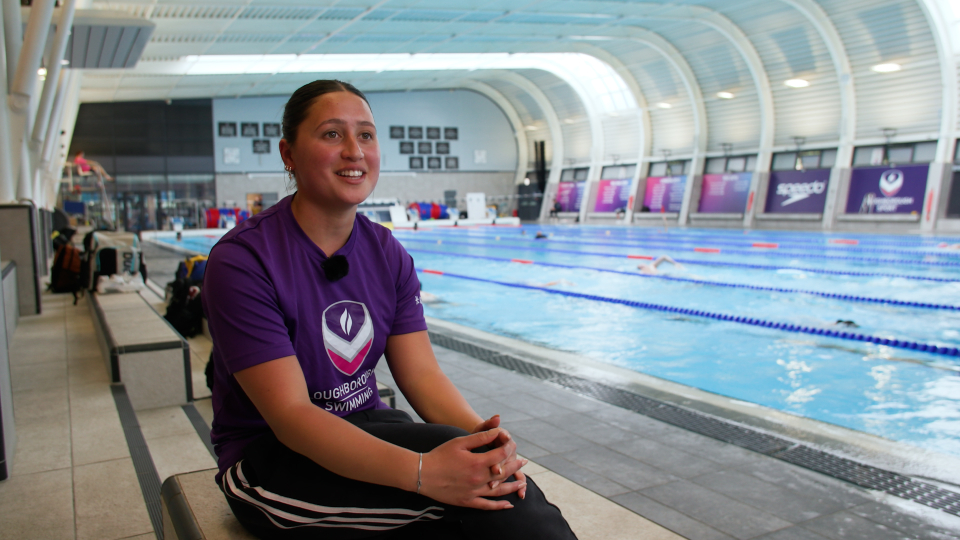
Transitioning from Youth Competitor to Senior Commonwealth Games Athlete
Moving from a successful youth career to the senior international stage is one of the most challenging steps in any athlete’s career. For 19-year-old Asia Kent, this transition is currently underway as she prepares to represent Gibraltar at the upcoming Commonwealth Games in Glasgow. Her progression offers a clear example of how sustained effort, strategic coaching, and the right training environment dictate long-term success in competitive swimming.
Kent’s foundational success came at the 2023 Commonwealth Youth Games, a pivotal event where she established herself as a formidable competitor in the breaststroke disciplines. By breaking three national records—specifically in the 50m, 100m, and 200m breaststroke events—she proved her capacity to perform under pressure. For many young athletes, a breakout performance like this can create a paradox: it raises expectations while simultaneously requiring the athlete to completely rebuild their training methodology to handle the increased physical demands of senior competition.
The psychological shift is equally important. At the youth level, raw talent and basic endurance often suffice to reach the podium. At the senior level, particularly at an event as large as the Commonwealth Games, every fraction of a second is contested through meticulous technique, refined race strategies, and advanced strength conditioning. Kent’s ability to navigate this shift relies heavily on her current training base, where she is surrounded by senior athletes who have already made that leap. Schedule a free consultation to learn more about how structured athletic programs support this critical transition phase.
The Role of Early International Experience
Participating in the Commonwealth Youth Games provided Kent with more than just medals and records; it provided essential exposure to the logistical and emotional realities of multi-sport international events. Managing travel schedules, adjusting to different time zones, and coping with the unique atmosphere of a global athlete village are skills that cannot be fully simulated in domestic training. By successfully managing these variables in 2023, Kent has built a mental framework that will allow her to focus purely on her performance when she arrives in Glasgow.
Why Loughborough University Leads in UK Swimming Development
When aspiring athletes look for the optimal environment to develop their talents, the choice of training facility and academic institution becomes a defining factor in their career trajectory. Asia Kent’s decision to relocate from the south coast of Spain to the East Midlands of England highlights the magnetic pull of Loughborough University in the realm of UK swimming and elite sports development.
Loughborough University does not simply offer a pool and a weight room; it provides a comprehensive high-performance ecosystem. The institution has been ranked as the best university in the world for sports-related subjects in the 2026 QS World University Rankings—a distinction it has held for ten consecutive years. This sustained excellence is not accidental. It is the result of deliberate investment in facilities, coaching infrastructure, and sports science research that directly benefits the athletes training on campus.
For a breaststroke specialist like Kent, access to world-class facilities is a non-negotiable requirement. Breaststroke is widely considered the most technically complex of the four competitive strokes, demanding precise timing between the arm pull, the kick, and the breathing cycle. Training at a facility equipped with advanced stroke analysis technology, underwater filming capabilities, and elite-level coaching allows for the micro-adjustments necessary to shave off crucial milliseconds. Explore our related articles for further reading on the technical advancements in UK swimming training facilities.
The Advantage of a High-Performance Athletic Environment
Kent noted that moving to Loughborough meant being surrounded by athletes who inherently understand the demands of elite competition. Swimming is often described as a lonely sport, involving hours of solitary laps staring at a black line at the bottom of a pool. However, the communal environment at Loughborough mitigates this isolation. When an athlete finishes a grueling set, their training partners know exactly how it feels. This shared understanding fosters a culture of accountability and mutual support that pushes athletes beyond their perceived limits.
Furthermore, the coaching staff at Loughborough bring extensive experience from various tiers of international competition. They provide individualized training plans that account for an athlete’s specific physiological strengths and weaknesses. For Kent, this has recently translated into tangible results, including a significant personal best in the 200m breaststroke—a time she had not achieved since 2023. This kind of progression indicates that her training block is peaking at the right time ahead of the Commonwealth Games.
Elevating the Profile of Gibraltar Sports on the International Stage
Representing a smaller nation or territory brings a distinct set of challenges and rewards. Gibraltar sports teams frequently compete against nations with vastly larger populations, deeper talent pools, and significantly larger sports funding budgets. In this context, the achievements of athletes like Asia Kent carry an amplified significance. She is not merely participating; she is actively raising the standard and visibility of Gibraltar sports on a global platform.
To compete effectively against larger nations, athletes from smaller territories often must seek out the best possible training environments, even if it means leaving home at a young age. By integrating into the UK swimming system at Loughborough University, Kent is leveraging British sporting infrastructure to elevate her performance for Gibraltar. This symbiotic relationship benefits both parties: the athlete receives world-class training, and the university benefits from the diverse perspectives and sheer determination that internationally recruited athletes bring to the program.
When Kent steps onto the starting blocks in Glasgow, she will carry the expectations of her home community. The visibility generated by her performances at the Commonwealth Games can inspire the next generation of athletes in Gibraltar, potentially leading to increased local investment in grassroots swimming programs and sports education. Share your experiences in the comments below if you have ever competed internationally for a smaller nation or territory.
Managing the Technical Demands of Elite Breaststroke
While Kent competes in the 50m, 100m, and 200m breaststroke events, she identifies the 100m as her primary focus. The 100m breaststroke is a unique physiological challenge. It requires the explosive power of a sprinter combined with the lactic acid tolerance of a middle-distance swimmer. The race is often won or lost in the third 25 meters, where fatigue begins to compromise stroke mechanics, leading to disqualifications or significant time penalties.
Maintaining form under extreme fatigue requires rigorous physical conditioning and highly repetitive technical drilling. Kent’s recent personal best in the 200m breaststroke indicates a strong aerobic base, which will serve her well in the closing stages of the 100m event. Her training likely involves a mix of high-resistance swimming, plyometric exercises to build lower-body power for the breaststroke kick, and extensive dryland training to strengthen the core and upper back.
Balancing these demanding physical requirements with academic responsibilities is another hurdle student-athletes must clear. Loughborough’s integrated approach allows athletes to structure their academic timetables around their training schedules, ensuring that neither pursuit is compromised. Kent has stated that her university experience has exceeded her expectations, a testament to the effectiveness of this support system. Submit your application today if you are a student-athlete looking for a university that prioritizes both academic and athletic excellence.
Looking Ahead to the Commonwealth Games in Glasgow
As the Commonwealth Games approach, the focus for Asia Kent and her coaching team will shift from heavy physical loading to tapering—a carefully managed reduction in training volume designed to allow the body to fully recover and achieve peak physical readiness. The strategic execution of a taper is a science in itself, requiring coaches to interpret physiological markers and adjust training daily to ensure the athlete hits their peak exactly on the day of their race.
Kent will face the unique dynamic of competing against her own training partners, a common occurrence in UK swimming due to the centralized nature of the country’s elite training programs. Racing against familiar faces requires strong mental fortitude, as the tactical advantages and weaknesses of opponents are well-known. However, it also provides a measurable benchmark; if an athlete can perform well in training against high-caliber teammates, they can translate that confidence into official competition.
The Commonwealth Games represent the pinnacle of Kent’s career thus far. Her journey from a record-breaking youth competitor in 2023 to a senior international athlete in 2026 underscores the importance of environment, coaching, and perseverance. As she prepares to race in Glasgow, the broader sports community will be watching closely to see how the foundations built at Loughborough University translate onto the international stage. Have questions? Write to us! to learn more about the pathways available for international student-athletes in the UK.