
Examine the Appointment of Former UK Space Agency CEO Paul Bate to the University of Surrey Space Institute
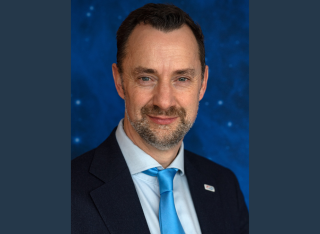
The recent news surrounding the UK space sector highlights a significant strategic move: Dr. Paul Bate, the former CEO of the UK Space Agency, has joined the University of Surrey as a Professor in Practice. This appointment directly supports the newly established Surrey Space Institute. For industry professionals, academics, and students following space news, this development signals a concerted effort to align academic research, international policy, and commercial space enterprise under one institutional roof.
Understanding the Strategic Role of the Surrey Space Institute
The creation of the Surrey Space Institute represents a deliberate structural shift in how the University of Surrey approaches space research and development. Rather than operating solely as a traditional academic department, the Institute functions as a convening authority. Its primary objective is to bring together industry leaders, government bodies, and researchers to address complex challenges both in orbit and on Earth.
Under the leadership of Professor Adam Amara, Head of the School of Mathematics and Physics, the Institute is building a leadership team designed to bridge the gap between theoretical research and practical, mission-ready application. The team now includes Professor in Practice Doug Liddle, who concurrently serves as the Chair of UKspace, the sector’s leading trade body, and Dr. Louise Butt, who joined as Head of Operations in April from Space South Central. This combination of academic rigor and commercial acumen ensures the Institute remains agile while pursuing large-scale strategic goals.
Schedule a free consultation to learn more about how academic-industry partnerships can accelerate your organization’s technical capabilities.
Paul Bate’s Track Record at the UK Space Agency
Dr. Bate’s arrival at the Surrey Space Institute brings a wealth of high-level governmental and international experience. Leading the UK Space Agency for more than four years, Bate stepped down earlier this year during the Agency’s transition into the Department for Science, Innovation and Technology (DSIT). His tenure was marked by a strong emphasis on international collaboration and securing the UK’s position as a global player in space activities.
Building Global Partnerships in Space Exploration
During his time at the UK Space Agency, Paul Bate successfully led two delegations to the European Space Agency (ESA) Council of Ministers. These ministerial councils are critical junctures for defining Europe’s space exploration priorities and securing funding for flagship programs. Bate’s ability to navigate these complex multilateral environments demonstrates the exact skill set required to help the Surrey Space Institute forge its planned international partnerships.
Furthermore, Bate cultivated bilateral relationships with space agencies and governments around the world. For a newly formed institute looking to establish a global partner network, having a leader who already possesses established relationships with international decision-makers drastically reduces the friction typically involved in cross-border research collaborations.
Chairing Global Committees and Regulatory Alignment
Beyond bilateral relations, Bate has played a prominent role in shaping global space governance. He chaired the Committee on Earth Observation Satellites (CEOS), an international coordination body that ensures civil Earth observation programs are executed as efficiently as possible. Additionally, his membership in His Majesty the King’s Astra Carta Advisory Council highlights his involvement in developing sustainable and ethical frameworks for space activity.
As the commercial space sector grows, regulatory alignment across nations becomes a pressing issue. Bate’s background in these areas will allow the Surrey Space Institute to not only focus on hardware and software but also actively participate in the policy discussions that will govern the future of space utilization.
Have questions? Write to us! to discuss the implications of shifting space policies on international research initiatives.
Expanding Educational and Professional Development Opportunities
A core component of the Surrey Space Institute’s mission is the development of human capital. The UK space sector requires a steady pipeline of highly trained professionals capable of designing, building, and operating complex space systems. The Institute aims to build upon the University of Surrey’s established success in growing space engineering and satellite communications skills.
Masters Courses and Continuous Professional Development
The Institute will leverage its newly assembled leadership team to enhance its academic offerings. This includes refining existing masters courses and developing new curricula that reflect the current state of the space industry. By integrating insights from professionals like Paul Bate and Doug Liddle, the University can ensure its academic programs remain tightly aligned with the evolving needs of the commercial space sector.
Equally important is the focus on Continuous Professional Development (CPD). Space technology advances rapidly, and professionals already working in the field require opportunities to upskill without leaving their jobs. The Institute plans to offer specialized CPD programs for industry professionals, allowing them to stay current with the latest advancements in satellite communications, mission operations, and space systems engineering.
Hands-On Training for the Next Generation
Theoretical knowledge alone is insufficient in the space sector. The Surrey Space Institute is prioritizing hands-on training opportunities for young people and university students. By involving students directly in real-world research projects and potential space missions, the Institute provides an educational experience that translates directly to workplace readiness. This practical approach ensures that graduates are not just familiar with concepts, but have actively participated in the engineering lifecycle.
Submit your application today to join the next cohort of students shaping the future of space engineering and satellite communications.
Defining the Research Agenda for the Space Institute
The research focus of the Surrey Space Institute is divided into three distinct but interconnected areas. This structured approach ensures that the Institute’s output delivers both immediate societal benefits and long-term strategic advantages for the UK space sector.
Managing Water and Climate on Earth
Space-based Earth observation is a critical tool for addressing climate change. The Institute will focus on utilizing satellite data to monitor water resources, track environmental shifts, and provide actionable data to governments and organizations tasked with managing climate impacts. Given Paul Bate’s previous role as Chair of CEOS, the Institute is well-positioned to contribute to and lead international Earth observation initiatives.
Strengthening Space Systems and Cybersecurity
As reliance on satellite infrastructure grows, so does the threat landscape. The Institute is dedicating significant research resources to strengthening space systems, with a particular emphasis on satellite communications and cybersecurity. Protecting orbital assets from interference or cyberattacks is a national security priority. Research in this domain will involve developing robust, resilient communication protocols and hardware that can withstand the unique challenges of the space environment.
Preparing for Deep Space Exploration and Settlement
Looking beyond Earth orbit, the Institute will conduct research into the requirements for deep space exploration and eventual settlement. This is a highly interdisciplinary challenge. It requires not only advanced engineering solutions for life support and propulsion but also physiological research to understand human endurance in space. Furthermore, it demands the development of legal and economic governance frameworks to manage operations in deep space, ensuring that activities are sustainable, regulated, and commercially viable.
Share your experiences in the comments below regarding the technical challenges of deep space exploration and satellite cybersecurity.
The Future of the UK Space Sector and Surrey’s Legacy
The UK space sector has a long and proud heritage, and the University of Surrey has been a central figure in that history. Surrey was instrumental in driving the small satellite revolution, a paradigm shift that proved space could be accessible and cost-effective, rather than being the exclusive domain of superpowers. This legacy of disruption and accessibility forms the foundation upon which the new Surrey Space Institute is built.
The Institute plans to take this historical legacy further by actively forging new industry partnerships and opening up space sector facilities to small businesses. Historically, the high cost of entry has been a barrier for small and medium-sized enterprises (SMEs) in the space sector. By providing access to facilities and expertise, the Institute can lower these barriers, fostering innovation across the broader supply chain.
The appointment of Paul Bate is a clear indicator of the University of Surrey’s ambitions. By combining academic excellence with top-tier governmental and commercial experience, the Surrey Space Institute is positioning itself as a central hub for the UK’s space ecosystem. The focus on international partnerships, specialized skills development, and interdisciplinary research provides a comprehensive framework for addressing the multifaceted challenges of modern space activity. For the UK to maintain and expand its sovereign space capabilities, institutions like the Surrey Space Institute will be essential in convening the right talent, resources, and partnerships to make sustained progress.
Explore our related articles for further reading on the evolving dynamics of the UK space sector and academic research initiatives.