
Evaluate Loughborough University R3VTech Biodiesel Innovation as UK Finalists in the Emerging Technologies Competition
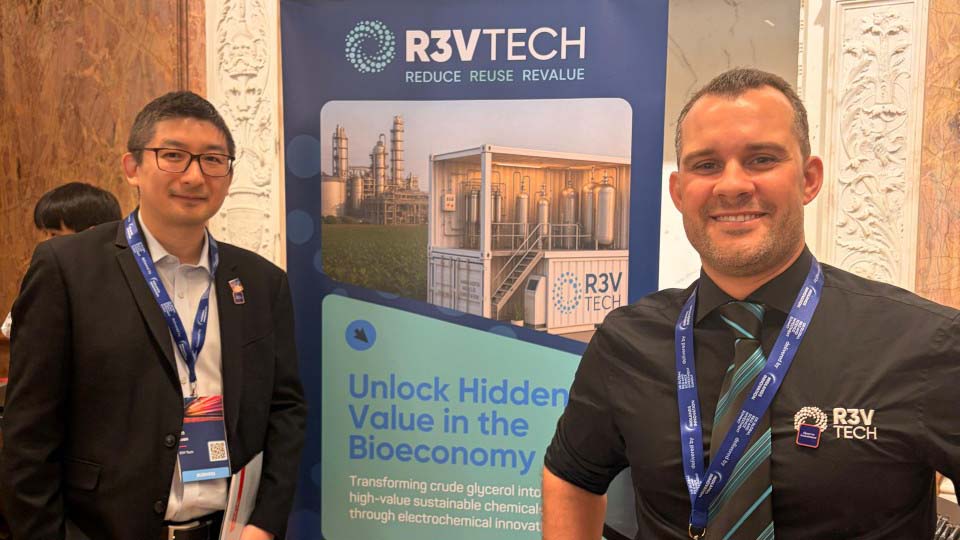
Understand the Impact of the RSC Emerging Technologies Competition
The Royal Society of Chemistry (RSC) Emerging Technologies Competition serves as a critical platform for identifying and supporting early-stage, chemistry-led innovations that have the potential to solve pressing global challenges. For a university spin-out, being named among the UK finalists in this prestigious event provides much more than just a ceremonial acknowledgment. It acts as a rigorous vetting process by leading industry experts, investors, and academic peers, validating both the scientific foundation and the commercial viability of a proposed technology.
Each year, the competition draws entries from a wide array of sectors, but the Environment category consistently highlights the most pressing chemical engineering challenges of our time. Advancing to the finalist stage indicates that a company has successfully demonstrated a scalable concept that aligns with national and global sustainability targets. For R3VTech, achieving this status as one of only six UK finalists in the Environment category underscores the significance of their work in altering traditional biofuel production paradigms.
The networking and visibility provided by this competition are invaluable for early-stage companies. Finalists gain direct access to industry leaders who can facilitate pilot trials, provide strategic mentorship, and offer the capital necessary to transition from laboratory-scale experiments to industrial deployment. Schedule a free consultation to learn more about university spin-out support and commercialization pathways.
Examine R3VTech’s Electrochemical Biodiesel Innovation
At the core of R3VTech’s recognition is a specialized electrochemical process designed to address a long-standing inefficiency in the biodiesel supply chain. To appreciate the magnitude of this biodiesel innovation, one must first understand the chemical economy of biodiesel production. When vegetable oils or animal fats undergo transesterification to produce biodiesel, roughly 10% of the resulting mass is crude glycerol. While biodiesel serves as the primary revenue-generating product, crude glycerol is treated as a low-value, often problematic by-product.
R3VTech has developed a method to upgrade this crude glycerol into solketal. Solketal is a highly valued bio-derived compound that functions effectively as a solvent and a fuel additive. By shifting crude glycerol from the waste column to the revenue column, R3VTech is fundamentally changing the economics of biodiesel refineries.
Why Solketal Matters for Renewable Energy
Solketal is not merely a niche laboratory chemical; it holds substantial value in the renewable energy sector. When blended with conventional diesel or biodiesel, solketal improves the cold flow properties of the fuel. This means the fuel is less likely to gel in low temperatures, a common issue with pure biodiesel that limits its usability in colder climates. Furthermore, the incorporation of solketal can lead to a reduction in particulate matter emissions during combustion, helping fuel producers meet increasingly stringent environmental regulations.
The Advantage of On-Site Electrochemical Processing
Historically, refining crude glycerol into valuable derivatives required transporting the waste material to large, centralized chemical plants. This transportation adds significant logistical costs and increases the carbon footprint associated with the process. Furthermore, conventional chemical conversion routes often rely on high temperatures and pressures, demanding substantial energy inputs.
R3VTech bypasses these inefficiencies by designing an electrochemical system intended for on-site use directly at biodiesel plants. Electrochemical synthesis typically operates under milder conditions compared to thermochemical methods, resulting in lower overall energy consumption. By eliminating the need to transport crude glycerol, R3VTech’s technology reduces both the logistical burden and the greenhouse gas emissions tied to the upgrading process.
Review Key Milestones Achieved by the Loughborough University Spin-out
R3VTech’s trajectory from a university research project to a nationally recognized competitor did not happen overnight. The company was co-founded by Loughborough University chemistry academics Dr Adriano Randi and Professor Benjamin Buckley, alongside Professor Jin Xuan. This academic foundation provided the deep technical expertise required to tackle complex electrochemical challenges, while the university’s enterprise ecosystem offered the necessary support to spin out the technology into a commercial entity.
A critical milestone occurred earlier this year when R3VTech completed its first pilot trial. During this trial, the system achieved more than 20 hours of continuous operation. In the field of electrochemical engineering, continuous operation is a vital metric. It proves that the system can maintain stability, that the catalysts or electrodes do not rapidly degrade, and that the mass balance of the chemical reaction remains consistent over time. This successful trial helped validate a scalable route toward commercial deployment, giving potential investors and partners concrete data regarding the technology’s reliability.
This progress builds upon earlier support from the RSC, which selected R3VTech for its 2025 Change Makers programme. This initiative is specifically designed to accelerate chemistry-led start-ups and scale-ups that demonstrate clear potential for positive social, environmental, and economic impact. Additionally, R3VTech recently participated in the Midlands Spinout Showcase during the UK Global R&D and Science Investment Summit at The Royal Society, further cementing its reputation within the broader investment community. Explore our related articles for further reading on green chemistry advancements and pilot trial methodologies.
Analyze the Commercial and Environmental Potential of Crude Glycerol Upgrading
The biodiesel industry operates on relatively tight margins, where the fluctuating costs of feedstocks heavily influence profitability. The inability to monetize crude glycerol effectively has long been a drag on these margins. Refineries often have to pay to dispose of the crude glycerol or sell it at rock-bottom prices to large-scale refineries that possess the capability to purify it.
By implementing R3VTech’s technology, biodiesel producers can effectively integrate a secondary revenue stream into their existing facilities. The ability to produce solketal on-site allows producers to capture the full value of their feedstock, improving the overall economics of the plant. Furthermore, as regulatory bodies continue to implement stricter lifecycle greenhouse gas reduction targets, the ability to point to an upgraded, low-carbon by-product provides a significant compliance advantage.
From an environmental perspective, the reduction in transport emissions and the lower energy requirements of the electrochemical process directly contribute to a smaller carbon footprint for the final fuel product. This aligns perfectly with global decarbonization efforts and the transition toward a circular bioeconomy, where waste streams are systematically minimized and utilized. Have questions about integrating bio-derived additives into your supply chain? Write to us!
Prepare for the Final Pitch at Burlington House
The next critical juncture for R3VTech occurs on 21 July, when the UK finalists will pitch their technologies at Burlington House, the RSC’s historic London headquarters. This event is not merely a formality; it is a high-stakes opportunity to secure further funding, establish corporate partnerships, and gain media visibility.
In the Environment category, R3VTech faces stiff competition from other innovative UK finalists, including Brilliant Dyes, Demeter Bio, Metal Morph, Imperial College London (FluoroCycle), and the University of Birmingham. Each of these entities brings a unique technological solution to environmental challenges, ranging from advanced materials to novel recycling methods. Standing out in this crowd will require R3VTech to clearly articulate not only the scientific merits of their electrochemical process but also their roadmap for commercialization, scaling, and customer acquisition.
Dr Adriano Randi, CEO and co-founder of R3VTech, has explicitly stated that the company is actively looking for partners and early adopters to host pilot trials and provide crude glycerol samples for testing. The pitch at Burlington House is perfectly positioned to attract exactly this type of industry engagement. Submit your application today if you are developing early-stage, chemistry-led innovations and seeking commercialization support.
Monitor the Future of Sustainable Industrial Processes
The success of R3VTech highlights a broader trend in the UK’s innovation landscape: the vital role of university spin-outs in bridging the gap between fundamental research and industrial application. Institutions like Loughborough University provide the fertile ground necessary for deep-tech innovations to take root. Through dedicated research centers, technology transfer offices, and innovation programs, universities are increasingly adept at shepherding laboratory discoveries through the perilous ‘valley of death’ that separates academic research from viable commercial enterprises.
Professor Dan Parsons, Pro Vice-Chancellor for Research and Innovation at Loughborough University, emphasized that this recognition is a strong endorsement of the commercial promise of R3VTech’s technology and its potential to support more sustainable industrial processes. As industries face mounting pressure to decarbonize and optimize resource utilization, the demand for precisely these types of targeted, chemistry-led innovations will only increase.
The advancement of R3VTech to the finals of the Emerging Technologies Competition serves as a case study for how targeted electrochemical solutions can resolve specific inefficiencies within established industrial processes. By turning a waste product into a valuable asset, R3VTech exemplifies the principles of the circular economy. Stakeholders across the chemical, fuel, and environmental sectors should watch closely as this technology progresses through its upcoming pilot stages and commercial negotiations. Share your experiences in the comments below regarding the challenges of scaling sustainable technologies in the chemical industry.