
Analyzing the First Enhanced Games: Loughborough University Researchers Report from Las Vegas
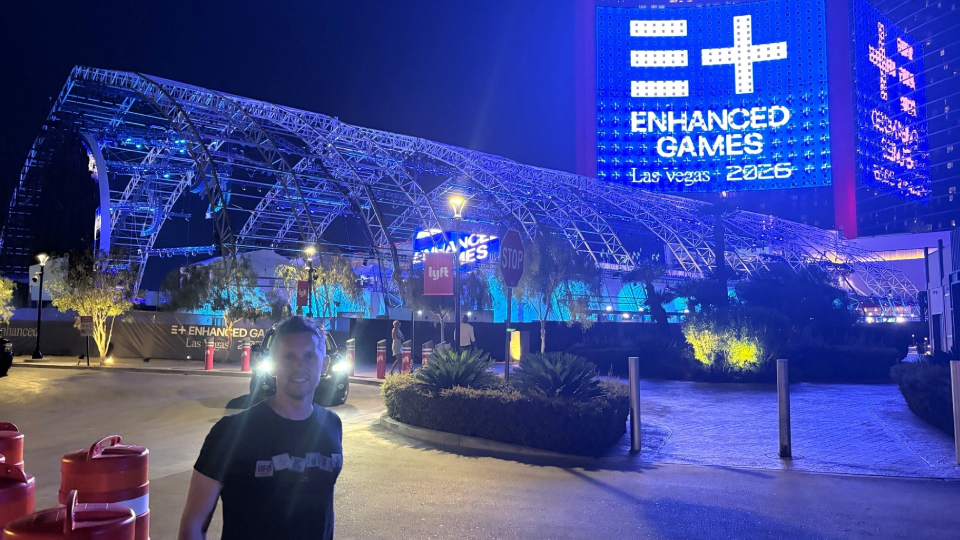
What the Inaugural Enhanced Games Mean for Performance Enhancement
The landscape of international athletics is constantly evolving, but few developments have sparked as much debate as the introduction of the Enhanced Games. Held on May 24, 2026, in Las Vegas, this inaugural event was designed to showcase athletes who openly utilize legal performance-enhancing drugs (PEDs) to maximize their physical capabilities. With a staggering $25 million (approximately £18.6 million) in prize money distributed across track, swimming, and weightlifting disciplines, the event immediately captured global attention. For researchers and professionals focused on sports science, the games present a complex case study in modern performance enhancement and the commercialization of athletics.
The core premise of the event challenges decades of established anti-doping protocols. By creating a regulated space where athletes can use specific PEDs without the threat of bans, the organizers have forced a conversation about the boundaries of human physical limits. This paradigm shift raises critical questions about fairness, health, and the fundamental definition of sport. As the sports community continues to process the implications, academic institutions are stepping up to provide objective, evidence-based analysis of what these games truly represent.
Schedule a free consultation to learn more about our sports science programs and how they explore the frontiers of athletic performance.
Loughborough University Experts Evaluate the Las Vegas Event
To cut through the hype surrounding these unprecedented sports events, Loughborough University researchers Dr. Mathew Dowling and Dr. Alex Thurston from the School of Sport, Exercise and Health Sciences traveled to Las Vegas to observe the competition firsthand. Their objective was to move beyond the promotional material and assess the reality of the event on the ground. Loughborough University, recognized as the best university in the world for sports-related subjects for ten consecutive years according to the 2026 QS World University Rankings, is uniquely positioned to provide authoritative commentary on such a disruptive force in athletics.
The researchers attended the event independently, paying their own way to ensure an unbiased perspective. What they found diverged significantly from the traditional structure of international sporting competitions. Rather than witnessing a pure athletic contest, Dr. Dowling and Dr. Thurston observed a highly orchestrated production that blurred the lines between competition and corporate marketing. Their findings highlight the importance of critical academic analysis in an era where sports entertainment is increasingly driven by private technology and wellness enterprises.
The Reality of “Sportainment” in Modern Arenas
According to the Loughborough University researchers, the most accurate descriptor for the Las Vegas event is “sportainment.” While the athletes themselves were competing in traditional track and swimming events, the surrounding environment was meticulously curated to prioritize spectacle over sport. Las Vegas, with its inherent reputation for glitz and excess, served as an appropriate backdrop for an event designed primarily to capture attention rather than uphold classic sporting traditions.
Every aspect of the arena was tightly controlled to maximize brand visibility and social media engagement. The focus was not solely on the timing of a sprint or the distance of a throw, but on how those moments could be packaged and distributed across digital platforms. This shift mirrors broader trends in the entertainment industry, where live events are often treated as content generation engines first and competitive arenas second. For UK sport professionals, this raises questions about how traditional athletics can maintain its authenticity while competing for audience share in an increasingly fragmented media landscape.
The Audience and Atmosphere at Modern Sports Events
One of the most striking observations from the Loughborough University delegation was the composition of the audience. Unlike the Olympic Games or World Athletics Championships, which are populated by dedicated fans, families, and general sports enthusiasts, the Enhanced Games operated as an invitation-only affair. The stands were filled predominantly with content creators, social media influencers, potential investors, and individuals affiliated with the bio-hacking and transhumanist movements.
Many attendees reportedly received all-expenses-paid trips in exchange for their presence and their promotional power online. Consequently, the atmosphere often felt manufactured and, at times, noticeably flat compared to the organic energy of traditional sports events. Complimentary food, drinks, and branded merchandise were freely distributed, serving as transactional tools to incentivize posts pushing the brand to hundreds of millions of followers across health, wellbeing, and lifestyle coaching channels. This strategic audience curation underscores the event’s true priorities: generating digital metrics and attracting venture capital rather than fostering a genuine sporting community.
Share your experiences in the comments below regarding how audience demographics impact the atmosphere of sporting competitions.
The Business Strategy Behind the Enhanced Games
Understanding the Enhanced Games requires looking past the track and examining the underlying business model. Masterminded by the sports media and wellness company Enhanced Group Inc., the event functions as a massive, live-action marketing funnel. The primary objective appeared to be driving brand awareness and funneling traffic toward the company’s digital platforms, specifically its telehealth platform and its range of performance and longevity products.
The integration of transhumanist ideology—defined by the pursuit of optimizing human performance and extending lifespan through technological and chemical interventions—was highly visible. The event served as a physical manifestation of this philosophy, attracting bio-hacking billionaires and venture capitalists looking to capitalize on the growing intersection of technology, wellness, and athletics. By positioning legal performance enhancement as both a sporting choice and a lifestyle aspiration, the organizers are attempting to normalize a product ecosystem that extends far beyond the boundaries of the athletic track.
Implications for UK Sport and Athletic Integrity
The emergence of the Enhanced Games presents a distinct set of challenges for UK sport. The United Kingdom has historically maintained some of the strictest anti-doping standards in the world, fostering a culture of clean athletic competition. The existence of a high-profile, well-funded alternative that celebrates chemical performance enhancement creates a philosophical and practical friction point. It forces governing bodies to clearly articulate the value of natural competition and the long-term health protections offered by traditional anti-doping frameworks.
The Ethical Dilemma in Athletics
At the heart of the Loughborough University researchers’ analysis is an ethical dilemma that will define the next decade of sports governance. While proponents argue that legalizing and regulating PEDs removes the danger of black-market substances and creates a more transparent environment, critics point to the irreversible long-term health risks associated with such interventions. The Enhanced Games normalize the use of powerful substances for financial gain and fleeting fame, potentially sending a dangerous message to amateur and youth athletes.
For the broader athletic community, the question is not necessarily whether traditional sports events can compete with a $25 million prize pool, but whether they should even try. The strength of UK sport lies in its community roots, its emphasis on holistic athlete development, and its commitment to fair play. Preserving these values requires proactive education and a clear delineation between entertainment-driven spectacles and legitimate athletic competition.
Rethinking the Boundaries of Human Athletic Performance
Despite the controversies, the Enhanced Games force a necessary re-evaluation of what we consider “natural” in high-performance sport. Elite athletes already operate at the extreme limits of human biology, utilizing altitude tents, hyperbaric chambers, and highly specialized nutritional protocols to gain marginal advantages. The line between acceptable technological intervention and prohibited performance enhancement is increasingly blurred.
However, the Las Vegas event bypassed this nuanced debate in favor of a binary, commercially driven approach. By framing performance enhancement purely as a consumer choice, the event ignored the complex physiological, psychological, and ethical ramifications. Rigorous academic research remains essential to untangle these complexities, ensuring that policy decisions are guided by scientific evidence rather than marketing rhetoric.
Explore our related articles for further reading on the ethics of sports science and human performance limits.
The Role of Academic Research in New Sports Paradigms
The presence of Loughborough University researchers at the Enhanced Games highlights a critical function of higher education in the modern sports ecosystem. As private enterprises increasingly attempt to dictate the terms of athletic competition, independent academic analysis serves as a vital check on corporate claims. With over 90% of its research rated as ‘world-leading’ or ‘internationally excellent’ in the Research Excellence Framework (REF) 2021, Loughborough University provides the rigorous analytical framework necessary to evaluate these disruptive sports events.
Academics can look past the flashing lights and influencer campaigns to assess the actual physiological impacts on the athletes, the economic viability of the business model, and the sociological effects on sports culture. This objective scrutiny ensures that the public, policymakers, and future athletes have access to factual, unbiased information when forming their own opinions on the future of performance enhancement.
Conclusion: Separating Spectacle from Sport
The first Enhanced Games in Las Vegas was undeniably successful at generating attention, but according to Loughborough University’s on-the-ground analysis, it functioned far more effectively as a “sportainment” marketing campaign than as a legitimate athletic competition. By prioritizing bio-hacking ideology, influencer demographics, and product funnels over genuine sporting spirit, the organizers have created a new category of event that sits adjacent to, but distinctly apart from, traditional sports.
For those involved in UK sport, the event serves as a wake-up call regarding the commercial forces seeking to disrupt athletics. It reinforces the necessity of maintaining robust, ethical frameworks that protect athletes and preserve the integrity of competition. As the line between technology, wellness, and sport continues to blur, the insights provided by dedicated sports science researchers will be more valuable than ever in navigating the future of human performance.
Submit your application today to study sports science at a world-leading institution and contribute to the future of athletic research.
Have questions? Write to us to learn more about Loughborough University’s research initiatives in sport and exercise health sciences.